

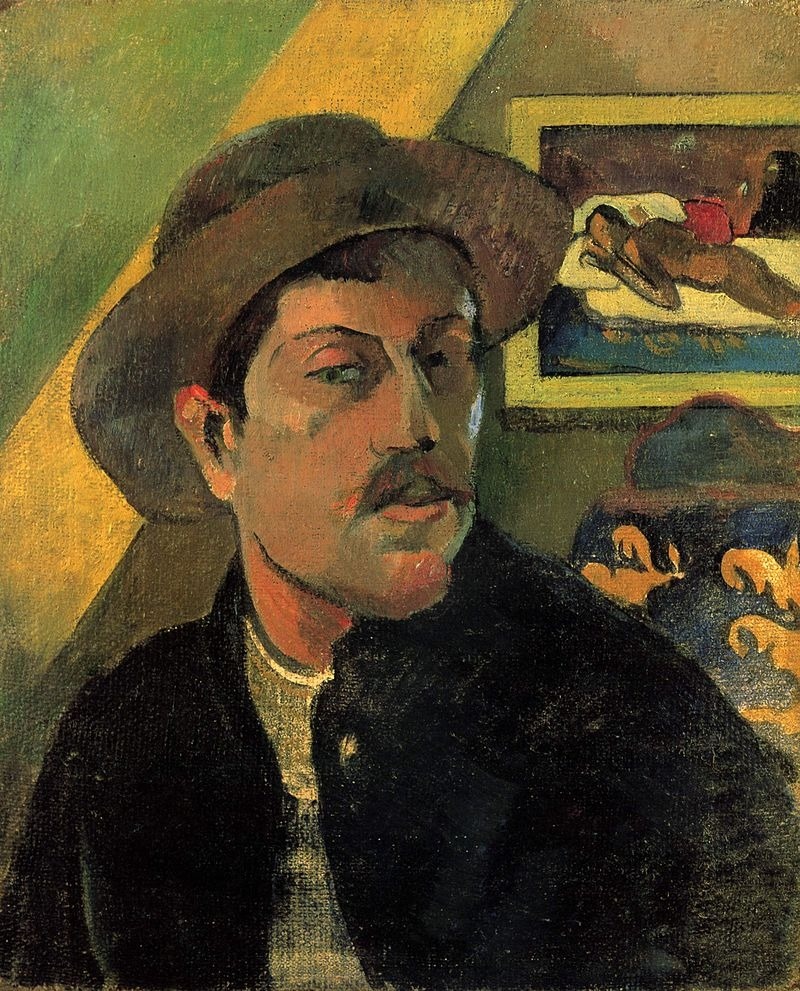
Inspired by the life of the renowned painter Paul Gauguin—who left behind a life of luxury, family, and status to pursue painting on the deserted island of Tahiti—Maugham created the character of Charles Strickland: a man who is considered eccentric, selfish, and immoral, but also the purest embodiment of artistic ideals.
The Moon and Sixpence is not merely an art novel, but also a profound inquiry into the boundaries between genius and sin, between love of beauty and indifference to humanity.
Strickland - Artist or Monster?
Charles Strickland appears in the early pages of the novel as an ordinary Englishman: a middle-class accountant, with a family, a beautiful wife, well-behaved children, and a peaceful life. However, he unexpectedly abandons it all to flee to Paris and begin a life of poverty and solitude to pursue painting.
Strickland's actions cannot be explained by romantic or noble reasons. He offers no explanations, no apologies, no justifications. For him, painting is not a "choice" but an instinct, an obsession that penetrates to the very core of his being.
Maugham portrays Strickland as a character completely detached from conventional moral standards. He is cruel to his wife, indifferent to his lover, and insensitive to the suffering of others.
Strickland evokes outrage, confusion, and ultimately, fascination in the reader—and the narrator as well. For within that cruelty lies something terrifyingly authentic and primal: the yearning to live as an artist fully, without constraints or compromise.
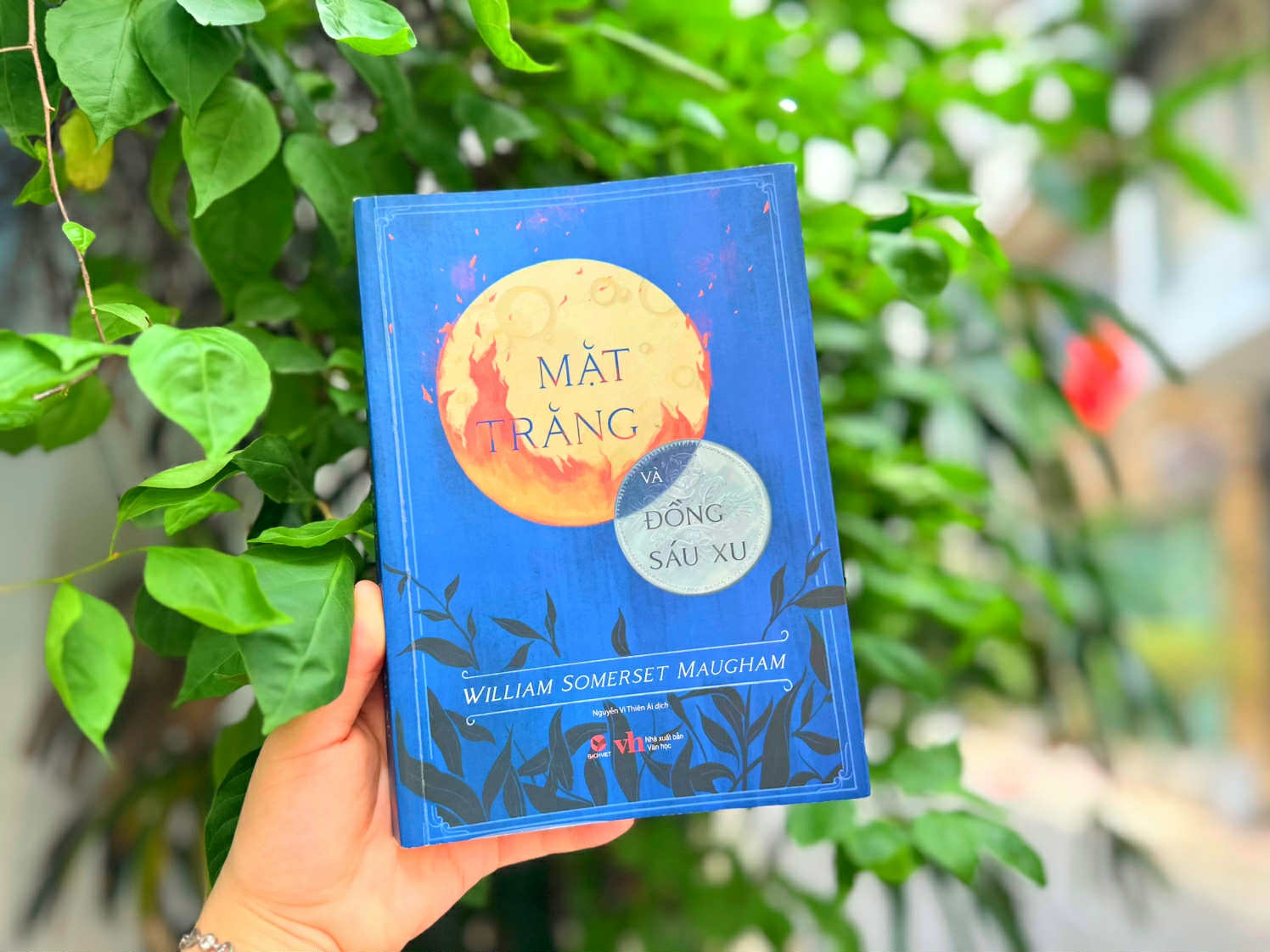 |
The book The Moon and Sixpence. |
Art: Absolute ideal or a justification for selfishness?
The most compelling aspect of *The Moon and Sixpence* lies in the fact that Maugham never directly judges Strickland. He allows the narrator—an observer and non-interfering writer—to recount the artist's life as an incomprehensible journey. The reader is invited to participate in a moral game: can we forgive the harm Strickland inflicted if we understand that he lived and died for art?
In a way, Strickland was like a devout believer whose religion was painting. Everything else—money, love, fame—was frivolous. He was willing to live in poverty, be scorned by society, be considered insane, as long as he could paint. For him, art was not a means of earning a living or gaining recognition, but the ultimate goal, the very essence of existence.
But this also raises a troubling question: Can artistic ideals be used to justify all actions, including cruelty and irresponsibility? Or, in other words, if someone is willing to inflict pain on others simply to pursue "beauty," is that beauty still worthy?
The novel's title— The Moon and Sixpence —is a multi-layered metaphor. "The moon" represents ideals and lofty aspirations, while "sixpence" symbolizes mundane and insignificant reality. As the writer GK Chesterton once wrote: "He gazed up at the moon but did not see the sixpence at his feet."
Strickland was such an aestheticist that he rejected everyday life. He disregarded food, shelter, and social relationships—the "six-cents" of life—and focused solely on the moon, that is, painting. But in this pursuit, he also lost his connection with humanity, becoming an outcast, isolating himself.
Strickland's story is an allegory for all artists, who must choose between dreams and duty, between passion and reality. Not everyone has (or dares to) give up six cents to search for the moon.
Strickland's story is an allegory for all artists—and ordinary people alike—who must choose between dreams and duty, between passion and reality. Not everyone has (or dares to) give up six cents to search for the moon. But not everyone who searches for the moon is willing to pay the price Strickland paid: absolute solitude and death in a foreign land.
Although Maugham never claimed his novel was a fictional biography of Paul Gauguin, the similarities are undeniable. Gauguin was once a wealthy stockbroker with a family who abruptly left it all to live and write in Polynesia. He is also seen as a pioneering artist with a strong personality and unconventional style—much like Strickland.
However, Maugham did not simply recreate Gauguin's life; he transformed the character of Strickland into an idealized archetype: a person who lived entirely for art, to the point of not caring whether that art was recognized or not. The contrast between Strickland and the civilized world also reflects Maugham's disillusionment with Western society: where people live by appearances, by hypocritical kindness, rather than by genuine passion.
The Moon and Sixpence is not a pleasant novel. It sometimes leaves the reader feeling uncomfortable, annoyed, even indignant. But that is precisely what gives the work its power. Somerset Maugham doesn't offer answers, neither praise nor condemnation. He leaves it to the reader to define: can greatness in art justify smallness of character? Is the "moon" worth more than "sixpence"?
And finally, the work serves as a profound reminder: behind every great painting lies a price – and sometimes, that price is a life.
Source: https://znews.vn/bi-kich-cua-mot-thien-tai-nghe-thuat-post1560291.html









































































































Comment (0)