After struggling with psychological trauma, A – one of the students who survived the 2014 Sewol ferry disaster – chose to end her own life. South Korea was once again shaken when Yoo Kyung-geun, former CEO of the Sewol Disaster Victims' Family Association, shared this information on social media on June 21.
"A had repeatedly considered ending his life amidst the overwhelming pain following the Sewol disaster. Finally, he has come to be with his friends at Haneul Park in Ansan," he wrote.
Haneul Park in Ansan City, Gyeonggi Province, is the resting place of many Danwon High School students who died in the Sewol ferry disaster.
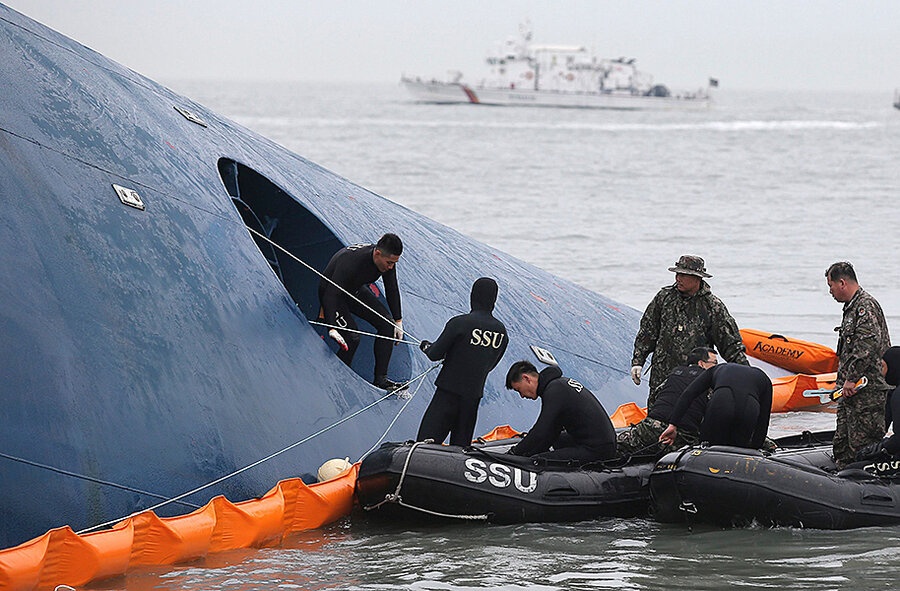 |
The pain of the Sewol ferry tragedy has lasted for more than 14 years. Photo: Reuters. |
The pain has been simmering for over a decade.
As one of the 172 people rescued from the tragedy in April 2014, A struggled with survivor's guilt and suffered from persistent psychological trauma for many years afterward.
In a previous interview, A's father stated that his son's life was not easy. Each time the ferry sinking anniversary came around, A's mental state, as well as that of the other surviving students, would worsen.
He also said that the children frequently read negative comments on social media and are deeply hurt by those attacks.



Relatives of victims who died in the 2014 Sewol ferry disaster attend a memorial service on board the ship in waters off Jindo County, South Jeolla Province. Photo: Yonhap
Yoo Kyung-geun also shared that the surviving students often carry a heavy sense of guilt for many years. According to him, asking them to "live for their lost friends" is not encouragement but could become another form of psychological trauma for those who have already suffered so much.
Besides the victims who died and their families, the surviving students and the civilian divers who participated in the rescue are also victims of the disaster. They continue to face serious physical and mental health problems every day.
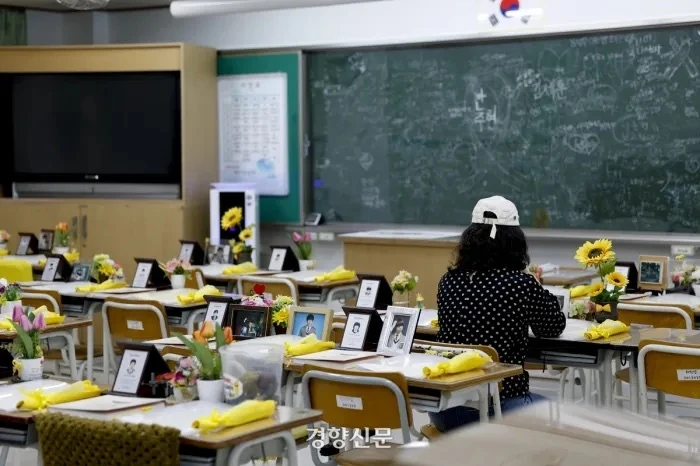 |
People visit the Memorial Classroom for victims of the Sewol ferry sinking. Photo: Kyunghyang Shinmun . |
Long-term support for victims
Jung Chan-seung, head of the Korean Psychiatric Association, said there is no fixed timeframe for the recovery process after trauma.
According to him, some people may recover relatively quickly, but there are also cases where people have to live with psychological trauma for life or experience relapses after many years.
Therefore, treatment and support programs should not be limited by time. Instead, society needs to maintain long-term care, while ensuring that victims always know they can seek help whenever they need it.



He emphasized that anyone could experience similar events and any community could face disaster. "Helping them is also helping ourselves and building a safer society," he said.
A's passing serves as a reminder, once again, for many survivors of the Sewol ferry disaster, that the battle doesn't end when they are rescued from the water. The wounds continue to linger for years afterward and require sustained care and support from the community.
Source: https://znews.vn/bi-kich-cua-nguoi-may-man-post1663380.html



![[Photo] "Hanoi Lotus Festival" honors the lotus flower that has been associated with Vietnam for thousands of years.](https://vphoto.vietnam.vn/thumb/1200x675/vietnam/resource/IMAGE/2026/06/27/1782516943048_sen-ha-noi-2026-minh-duy-1-jpg.webp)























































![[Infographic] 16 fireworks display locations to celebrate the 50th anniversary of Ho Chi Minh City being honored with the name of President Ho Chi Minh](https://vphoto.vietnam.vn/thumb/402x226/vietnam/resource/IMAGE/2026/06/27/1782539591308_man-ban-phao-hoa-ruc-ro-dem-khai-mac-638jpg-17242995540161175940469.jpeg)