

We arrived at Mr. Nguyen Van Ut's lotus field in An Trung village, Binh An commune, while his family was wading through the field harvesting fresh lotus flowers. Under the blazing midday sun, vibrant pink lotus petals were blooming profusely.
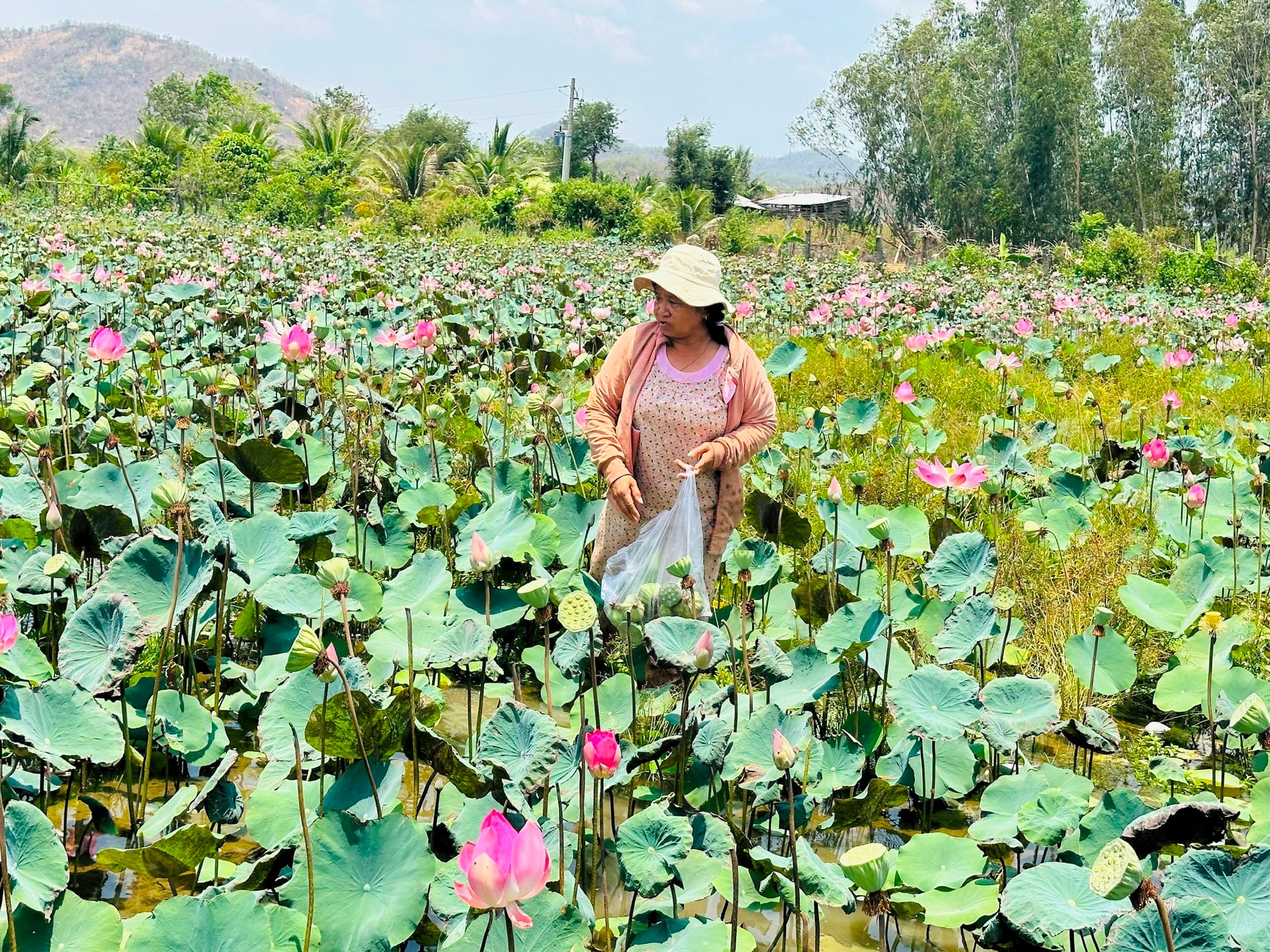
Nestled beneath the lush green foliage are lotus buds of various stages: young, mature, and slightly older. Mr. and Mrs. Ut shared: "Our family has 4 sao (approximately 0.4 hectares) of land planted with lotus for the past 6-7 years. Although the investment isn't much, it provides a stable income, helping to improve our family's economic situation . After harvesting, the fresh lotus is sold at the market. While the market for this agricultural product is very active and there's no worry about demand, it does depend on market prices."

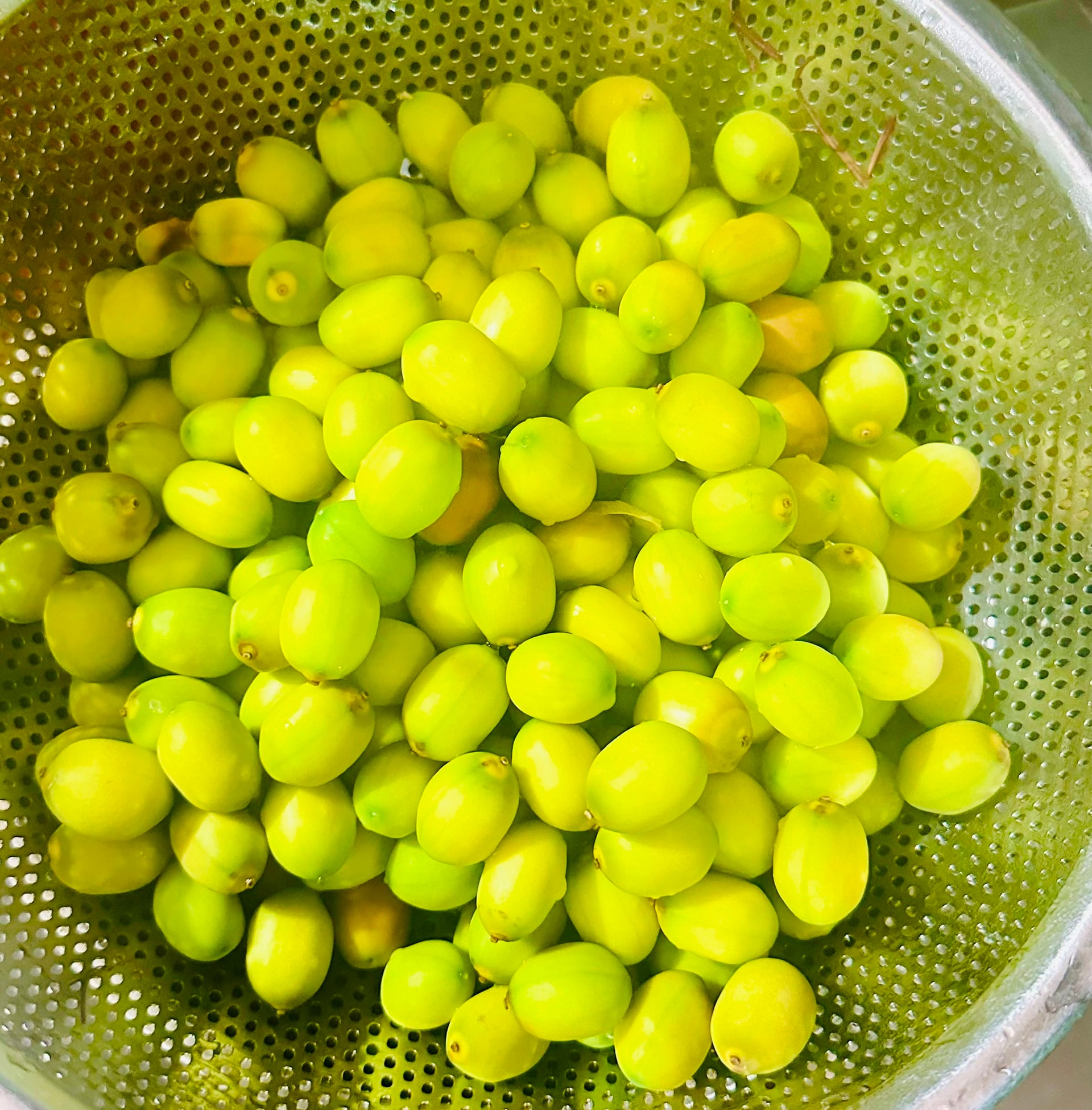
Mr. Ut said: "Currently, due to the peak lotus harvest season in the Mekong Delta provinces, the price of lotus in Binh Thuan is also low. For the past 10 days, the price of fresh lotus pods has been around 17,000 - 20,000 VND/kg. Before that, when supplies were scarce, fresh lotus pods were sold for over 40,000 VND/kg, but there was no supply. However, traders will not buy lotus that is too old or too young, or sell it at a lower price. Fresh lotus seeds from Bac Binh are also being sold by small traders at markets in Phan Thiet for 180,000 VND/kg of shelled seeds."
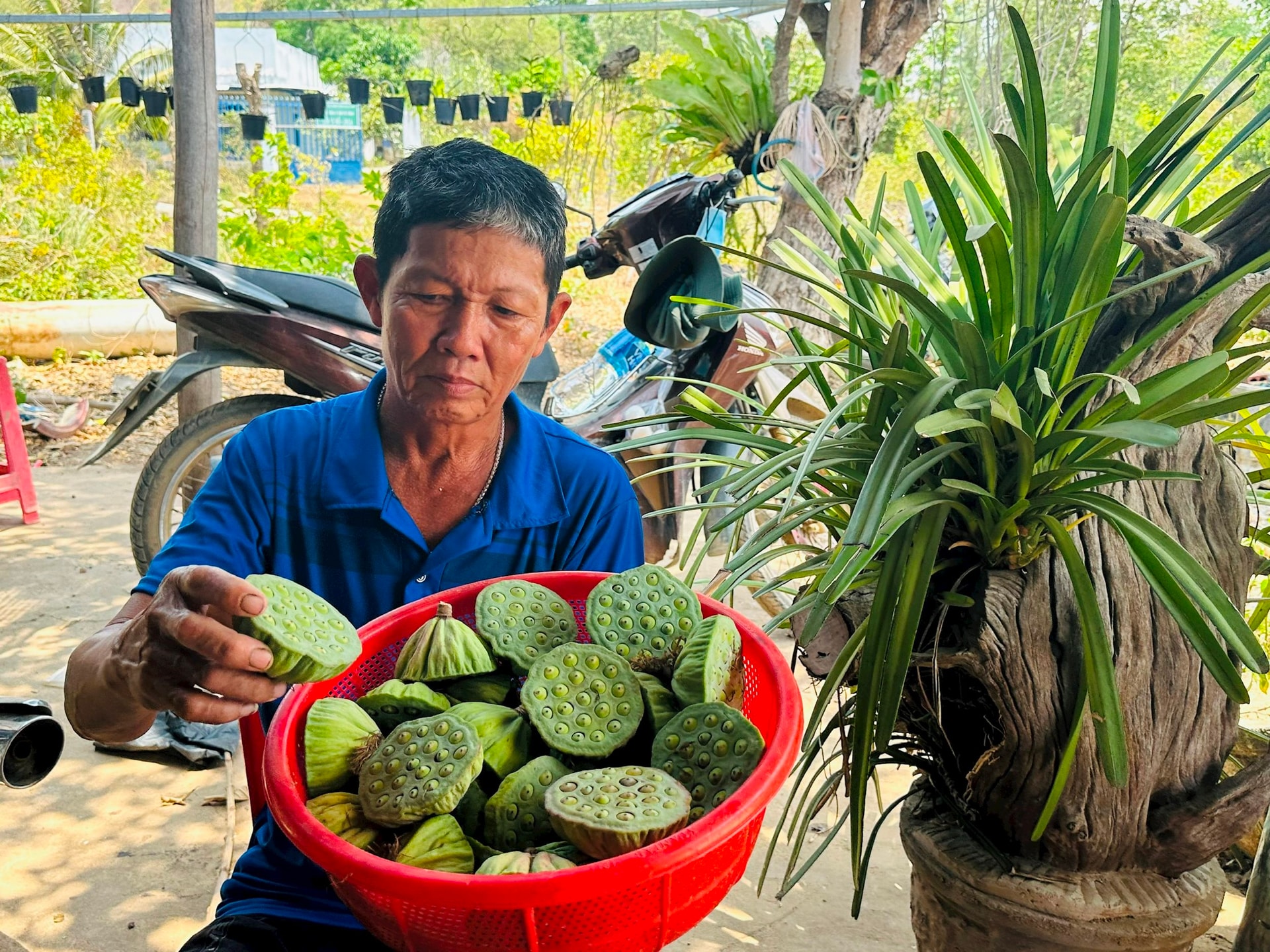
Mr. Ut's family harvests lotus every few days, yielding about 60 kg each time. According to their calculations, although the investment in lotus cultivation is low, only about 5 million VND per 4 sao (approximately 1,200 square meters) per crop, if sold at an average price of 20,000 VND/kg, his family will earn about 60 million VND per 4 sao per crop (3 crops per year), thus contributing to stable income and improved living standards. According to the landowner, his family's lotus plants have been grown for over two years and yield a regular harvest. After three years, when the lotus plants are no longer productive, the family will plow the land to encourage new growth, or they may switch to rice cultivation to increase land use efficiency. Mr. Ut's family, and farmers in Binh An commune in particular, say that because lotus prices are high this year, many households have expanded their cultivation area. Pointing to a basket of freshly harvested lotus seeds, Mr. Ut shared his experience with us about the delicious taste of young lotus seeds when eaten raw. Slightly older lotus seeds are very fragrant and have a rich, nutty flavor when cooked.
According to our research, in the 2025 winter-spring season, Bac Binh district had approximately 60 hectares of lotus, with Binh An commune alone accounting for 20 hectares. Along with rice cultivation, farmers in Bac Binh in particular and the entire province in general have been focusing on crop diversification to maximize land use efficiency.
Passing by the fields of lotus flowers ablaze with captivating colors, one might think that, in addition to the economic value that lotus cultivation brings to local households, this is also an ideal place for sightseeing, photography, and developing rural tourism for those who love the beauty of nature.
Lotus seeds are considered a food that is good for digestion, cardiovascular health, sleep, relaxation, lowering blood sugar, and has antioxidant and anti-inflammatory properties. Lotus seeds are not only used as a snack, in desserts, jams, and many other delicious and nutritious dishes, but are also a valuable medicinal ingredient. These seeds are rich in nutrients, cholesterol-free, contain many vitamins, and have beneficial plant compounds and antioxidants such as flavonoids, glycosides, phenolics, and alkaloids. Therefore, lotus seeds are considered a rich source of nutrients and offer many health benefits.
Source: https://baobinhthuan.com.vn/binh-an-mua-sen-no-ro-129277.html


![[Photo] General Secretary To Lam attends the inauguration ceremony of Si Pa Phin multi-level boarding school.](/_next/image?url=https%3A%2F%2Fvphoto.vietnam.vn%2Fthumb%2F1200x675%2Fvietnam%2Fresource%2FIMAGE%2F2026%2F01%2F31%2F1769840655651_ndo_br_z7486540481209-f37c7e00a962aec2a061c64b7db569ef-jpg.webp&w=3840&q=75)


![OCOP during Tet season: [Part 3] Ultra-thin rice paper takes off.](/_next/image?url=https%3A%2F%2Fvphoto.vietnam.vn%2Fthumb%2F402x226%2Fvietnam%2Fresource%2FIMAGE%2F2026%2F01%2F28%2F1769562783429_004-194121_651-081010.jpeg&w=3840&q=75)


![OCOP during Tet season: [Part 2] Hoa Thanh incense village glows red.](/_next/image?url=https%3A%2F%2Fvphoto.vietnam.vn%2Fthumb%2F402x226%2Fvietnam%2Fresource%2FIMAGE%2F2026%2F01%2F27%2F1769480573807_505139049_683408031333867_2820052735775418136_n-180643_808-092229.jpeg&w=3840&q=75)


Comment (0)