

On the morning of March 21st, a delegation from the Ministry of Education and Training , led by Deputy Minister Pham Ngoc Thuong, inspected the management of extracurricular tutoring in Ho Chi Minh City.
Parents send thank-you message to the Ministry for their children not attending extra classes.
Deputy Minister of Education and Training Pham Ngoc Thuong assessed that Ho Chi Minh City has many advantages in implementing the program because it has good facilities and many schools organize classes for two sessions per day. Furthermore, the education sector in Ho Chi Minh City is free from the focus on achievements, teaching is genuine, and national and student competitions are conducted objectively and fairly, with teachers wholeheartedly dedicated to their students during regular class time.
After more than a month of implementing Circular 29 on tutoring and extra classes, the Ministry of Education and Training has received many thank-you letters from parents and students. Some sent handwritten letters, some sent emails, and some parents even included photos with captions about the first time their family gathered for dinner because their child didn't have to attend extra classes.
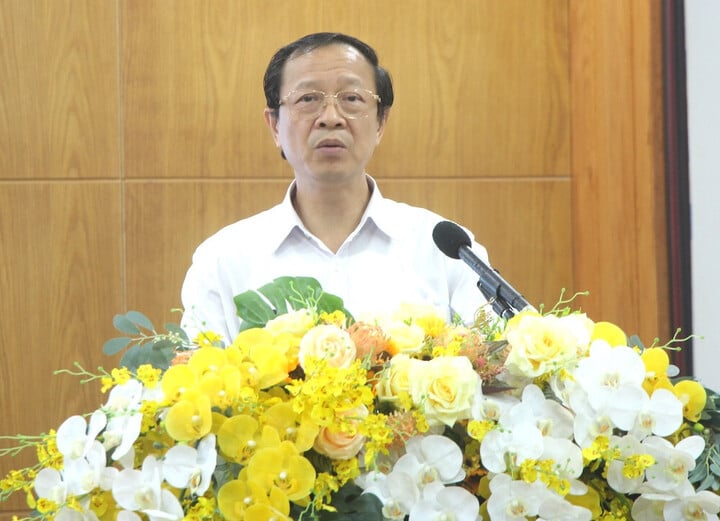
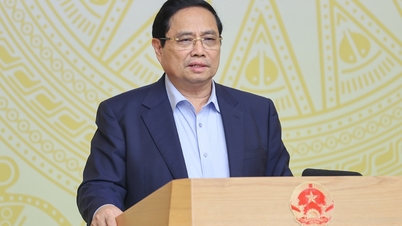
Deputy Minister of Education and Training Pham Ngoc Thuong. (Photo: Huy Phuc)
According to Mr. Thuong, managing extracurricular tutoring is not a new issue, as the 8th Central Committee Resolution in 1996 clearly stated the alarming reality of widespread tutoring that wastes students' time and money, negatively impacts students' holistic development, and affects teacher-student relationships.
Over the past period, numerous regulations have been issued to address this issue, particularly Circular 17. However, the widespread practice of private tutoring has not decreased and shows signs of distortion, causing significant negative consequences that affect the holistic development of students.
Many students suffer from academic pressure, leading to social isolation and self-harm. Most dangerously, if students remain dependent on teachers and constantly need extra tutoring, they will gradually lose their ability to learn and research independently, remaining forever within their small comfort zone. For teachers, focusing solely on extra tutoring leaves them no time for self-study and professional development.
The Deputy Minister of Education and Training stated that the Ministry's stance is not to prohibit tutoring but to control the widespread practice of tutoring, and violations will be dealt with.
"The reason tutoring exists is because many public schools in large cities have overcrowded classrooms, with up to 50 students per class. With such a large number of students, teachers cannot pay attention to each student during regular class time. In addition, the quality and quality of education vary significantly between schools."
"The pressure of grades and parents' expectations for their children's academic achievements have also increased the need for extra tutoring. Inappropriate assessment methods, exams that are too difficult for students, and a lack of effective coordination between families, society, and schools—with everything relying solely on the school—have increased pressure on teachers," Mr. Thuong said.
According to Mr. Thuong, the goals of education have changed. With the current curriculum, teachers not only teach knowledge but, more importantly, focus on methods and fostering a sense of self-learning. "A teacher's happiness lies in ensuring that students are not dependent on them in the shortest possible time," Mr. Thuong said.
5 don'ts and 4 emphasizes
To effectively implement Circular 29, Mr. Thuong clearly stated "5 don'ts and 4 things to emphasize." These are: during the implementation of Circular 29, there should be no half-hearted efforts, no excuses, no compromises, no exceptions, no leniency; no distortions, no circumvention of the law; no hesitation due to difficulties or complexities; and no additional costs.
In implementing regulations on supplementary tutoring, it is necessary to emphasize the role of management officials at all levels, from department heads and office leaders to principals and teachers; to promote the self-respect and dignity of teachers and management officials; to promote the self-reliance, self-awareness, and self-learning spirit of students; and finally, to strengthen coordination between families, localities, and society in education.
"It is especially important to innovate assessment methods and ensure exam questions are appropriate to the curriculum. Under no circumstances should students be forced to attend tutoring centers to learn the official curriculum. If the entrance exam for grade 10 or the graduation exam are too difficult or tricky, forcing students to take extra classes, it is a waste and means we haven't fulfilled our duty. Exam questions must be appropriate for the students and the curriculum," Mr. Thuong emphasized.
Mr. Nguyen Bao Quoc, Deputy Director of the Ho Chi Minh City Department of Education and Training, said that for many years, Ho Chi Minh City has stopped organizing extracurricular tutoring within schools. Schools proactively plan their teaching. When Circular 29 of the Ministry of Education and Training was issued, the Department advised the City People's Committee to issue documents and guidelines directing many implementation contents, resolutely preventing illegal extracurricular tutoring within schools, directing the design of test questions to not put pressure on students, and not neglecting the preparation and review of students, identifying this as the responsibility of the schools.
In addition, the Department of Education and Training also directed schools to review their educational plans, strengthen the management of two-session-per-day teaching, and assign teachers to support students, especially those in their final year. The Department of Education and Training has also established inspection teams to monitor the management of extracurricular tutoring in the area, with each district/county proactively forming its own inspection team.


![[Photo] Prime Minister Pham Minh Chinh presides over a meeting on private sector economic development.](/_next/image?url=https%3A%2F%2Fvphoto.vietnam.vn%2Fthumb%2F1200x675%2Fvietnam%2Fresource%2FIMAGE%2F2025%2F12%2F20%2F1766237501876_thiet-ke-chua-co-ten-40-png.webp&w=3840&q=75)































































Comment (0)