

A time of anxiety
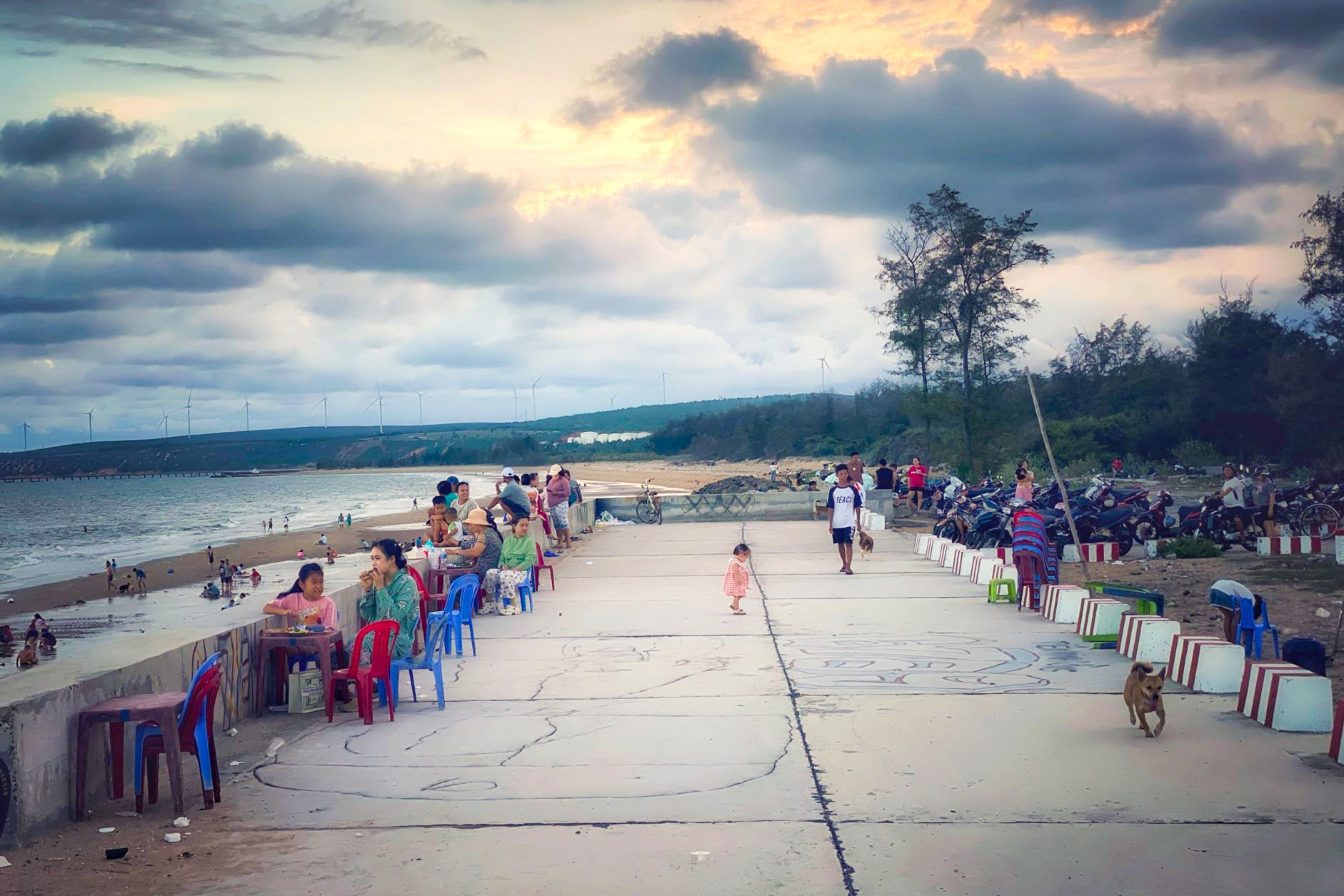
Returning to Hoa Phu fishing village nearly two years after the completion of the seawall, the atmosphere is different from usual. What once instilled fear in people is now a place they come to relax, breathe fresh air, and feel the new rhythm of life. Before the seawall was built, this stretch of coastline offered no place for leisurely evenings. The locals still vividly remember the monsoon seasons, when waves surged, eroding the edges of their houses. Some years, the water reached their doorsteps, forcing the entire village to pack up their belongings and flee the storm in the middle of the night. Around 553 households in Phu Tan village lived in constant anxiety, watching the white-capped waves threatening to sweep everything away. The sea became a constant source of worry.
Mr. Le Tam, a local resident, shared: “At that time, people around here didn't dare build sturdy houses. Every monsoon season, the sea would encroach, and no matter how much stone we built, we couldn't escape the fierce waves. When the sea 'rages,' people would flee for safety, because some houses were half-eaten away overnight.” Faced with this reality, a 1,000-meter-long seawall was built at a cost of nearly 80 billion VND to protect the land, houses, and a fishing village facing the sea. When the tide receded, the area inside not only became more peaceful but also opened up enough space for life to flourish.
In the summer, mobile vending vehicles reappear, albeit in small-scale business models, but this service activity is gradually forming a new way of life. The transformation is subtle but noticeable, from a sense of safety to the way of organizing life, from "fleeing the storm" to proactively adapting.
The project not only protects the residential area but also retains the local workforce. Previously, many households considered moving elsewhere. Now that things have settled down, they stay and continue their livelihoods at sea, as over 97% of the local population depends on the sea for their living.
Mr. Truong Nhan, head of Phu Tan village, said.
New rhythm of life
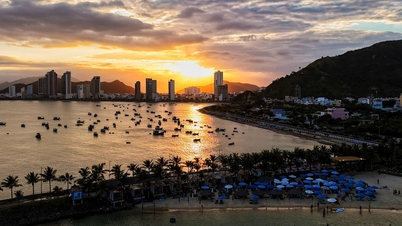
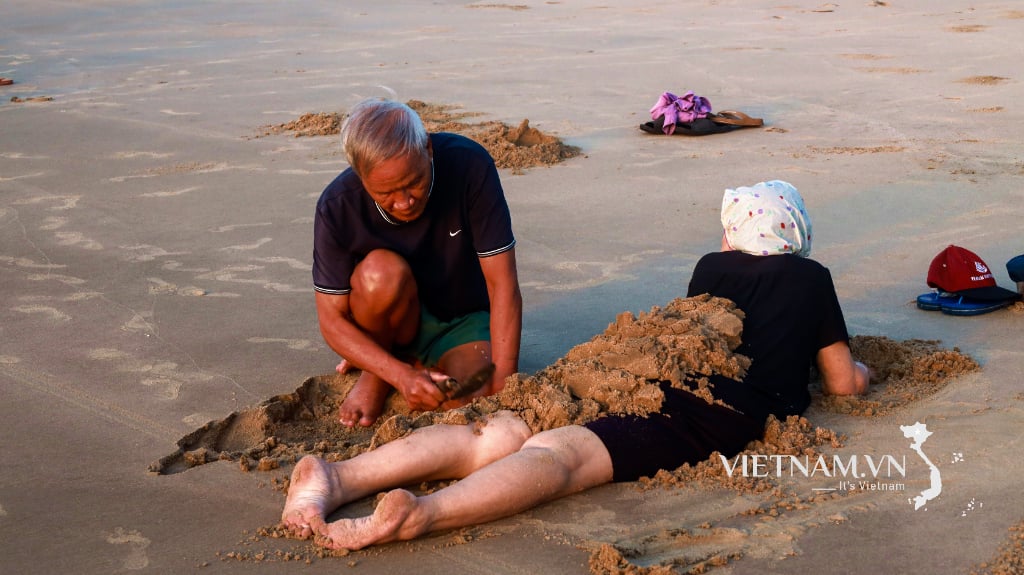
Every afternoon, the embankment becomes peaceful with elderly people strolling for exercise, children riding bicycles, flying kites, swimming in the sea, and women sitting to enjoy the cool breeze. Along the embankment are small drink stalls and long benches serving locals and tourists. On moonlit nights, the area becomes even more lively as people come to the beach to admire the moon, drink beverages, and chat. The appeal of the embankment lies not in its elaborate design but in the relaxed, intimate feeling of being close to the sea. Besides traditional fishing, many households also earn extra income from services, helping to stabilize their lives and extending the rhythm of life in the fishing village into the night.
Recently, the Provincial People's Committee announced the General Planning for the Mui Ne National Tourist Area until 2040, with a vision to 2050, based on the model of "One coastal corridor - 3 centers - multi-directional access to the sea". In this plan, Phan Ri Cua commune is one of the three centers, along with Hoa Thang - Mui Ne, located on the main axis linking the entire area, connecting coastal landscapes, resorts, services, and community spaces. The aim is to develop a coastal resort town, offering long-term accommodation, healthcare, and spaces serving both residents and tourists.
This information has given the people of Hoa Phu fishing village in particular, and Phan Ri Cua commune in general, more hope for the future. As tourism develops, the embankment area will gradually form a "night street" along the coast with bustling shops and lights that illuminate the nightlife. The development of services also opens up opportunities for community accommodation; many households can renovate their homes and turn them into homestays to welcome guests. With the current trend of experiential and healing tourism, Hoa Phu fishing village is considered a destination with great potential.
Life along the Hoa Phu embankment is gradually becoming more vibrant in its own way. More than just a disaster prevention and mitigation project, it also opens up opportunities for community-based livelihoods and tourism development. With proper investment, coupled with environmental protection and the preservation of the unique character of the coastal village, the Hoa Phu embankment could become a vibrant, community-oriented coastal destination, contributing to the diversification of tourism products for Phan Ri Cua commune and the Mui Ne National Tourist Area.
Source: https://baolamdong.vn/bo-ke-bien-and-ky-vong-lang-chai-du-lich-443862.html






































































Comment (0)