

For the 2025 summer-autumn crop season, Ms. Tran Thi Phuong (Luong Hoi village, Khanh Vinh Yen commune, Can Loc district) planted nearly 9 sao (approximately 0.9 hectares) of rice, but only bought new rice seeds for 3 sao, using seeds from the previous season for the rest. Ms. Phuong shared: “For many years, my family has kept the old seeds from our fields, selecting the healthy plants from the spring crop and leaving them behind. Doing so saves nearly 200,000 VND in seed costs each season.”
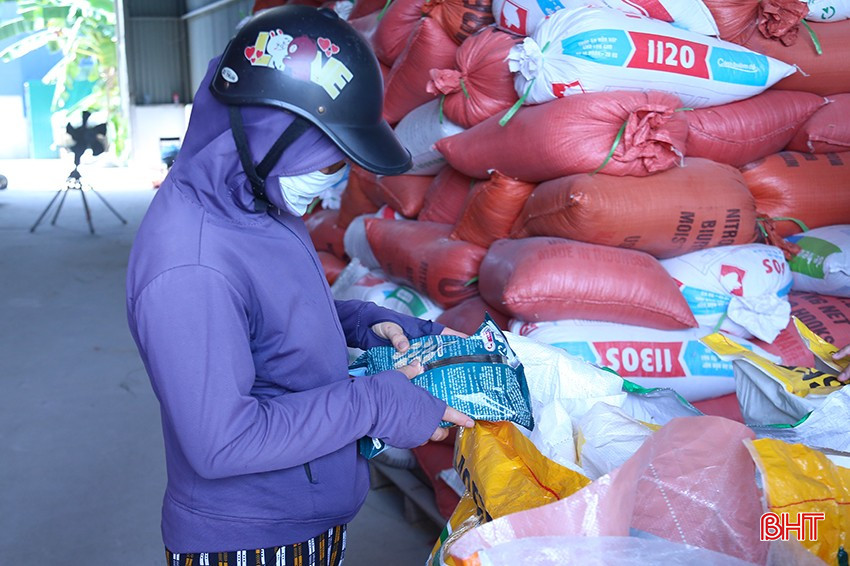
Not only Mrs. Phuong's household, but the practice of using seeds from the same crop in the same season is also common in many other localities. This year's summer-autumn crop in Luu Vinh Son commune (Thach Ha district) planted nearly 870 hectares of rice, mainly with varieties such as Khang Dan 18, Nep 98, Xuan Mai, Bac Thinh… Although the commune government has actively disseminated recommendations from the professional sector, due to the pressure of the summer-autumn crop in terms of timing, following the motto "harvest as soon as possible, prepare the land and sow seeds immediately," along with the desire to save costs, many households still prioritize using seeds from the spring crop to plant within the timeframe.
Observations at agricultural supply stores in the province show that, despite being in the peak season for planting the summer-autumn rice crop, the amount of seeds sold is very low. This clearly reflects the trend of using old varieties, which are still prevalent in farmers' production. Mr. Phan Van Hung - representative of the Central Vietnam Agricultural Seed and Supply Company Limited (Nghen town, Can Loc district) said: "For the summer-autumn crop, the company only expects to sell about 2 tons of rice seeds (equal to 1/10 of the spring crop), mainly TBR97, Bac Thinh...".
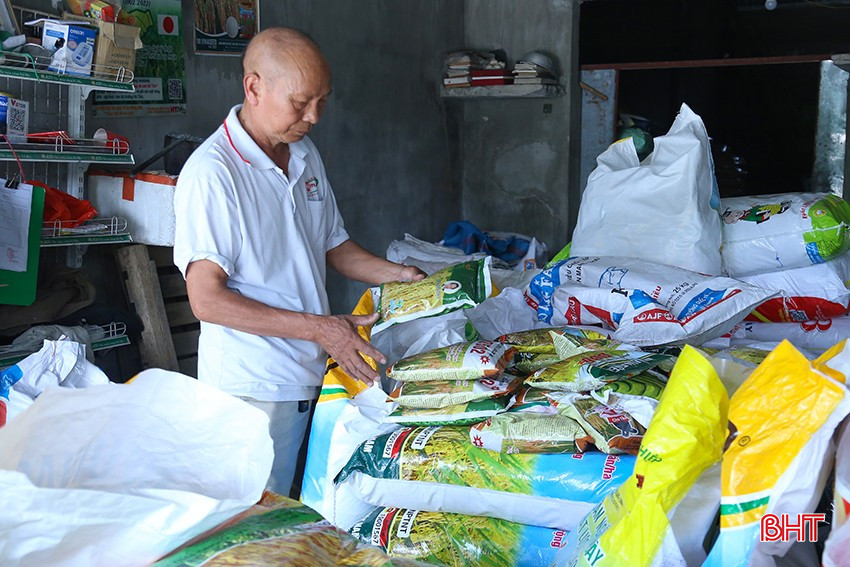
According to the agricultural sector in Ha Tinh province , for the 2025 summer-autumn crop, the entire province will plant over 45,170 hectares of rice, equivalent to a demand of approximately 2,500 tons of seeds. However, farmers mainly use seeds left over from the spring rice harvest. The rate of self-saved seeds accounts for about 70%; only about 30% purchase new seeds, mainly certified seeds. This situation is one of the reasons for the yield disparity between regions, unstable quality, and increased barriers to the implementation of large-scale farming and the development of the rice commodity value chain.
According to Mr. Duong Cao Son, Vice Chairman of the People's Committee of Dong Mon Ward (Ha Tinh City), in recent years, the yield of summer-autumn rice in the area has improved, but the highest yield has only reached nearly 50 quintals/hectare. Besides the short growing season and improved farming techniques, the continued use of leftover rice seeds from the previous season by farmers also contributes to uneven plant growth, resulting in rice fields with varying heights and a higher percentage of empty grains compared to the spring crop.
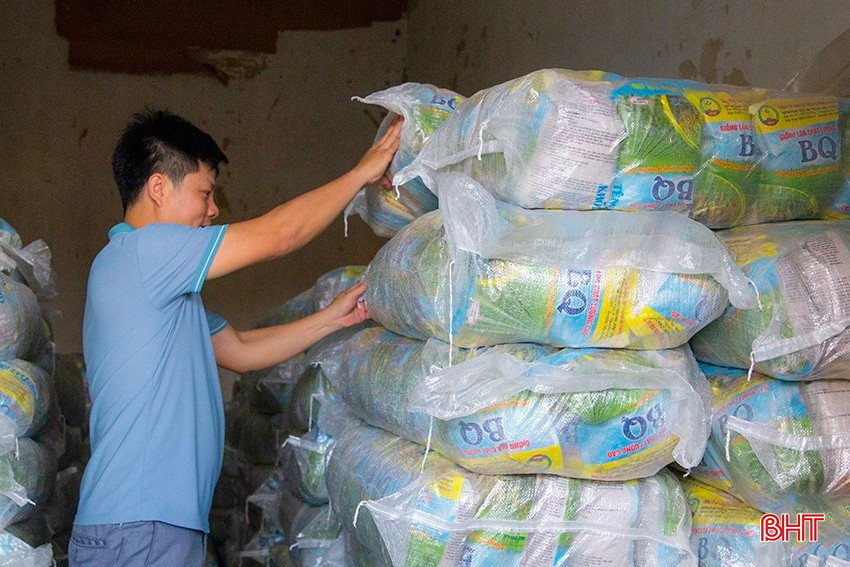
Furthermore, rice seeds planted in consecutive seasons are not subject to the same quality control as original or certified seeds provided by seed production facilities. After each season, the seeds gradually degrade genetically and physiologically, and their natural resistance to pests and diseases decreases. The seeds easily carry pathogens from the previous season (such as blast, brown spot, bacterial leaf blight, brown planthopper, etc.), which continue to spread widely when planted in the fields.
According to Mr. Le Tung Duong, Deputy Head of the Rural Development and Quality Management Sub-Department (Department of Agriculture and Environment), the habit of saving seeds for the next crop is one of the major limitations in current rice production. This not only affects yield and seed purity but also leads to poorer plant growth, reduced commodity value, and difficulty in controlling quality in mass production. The industry recommends that people invest rationally in seed production, especially prioritizing the use of certified seeds of level 1 or level 2 to ensure stable yields, improve agricultural product quality, and reduce pest risks. The province has directed seed suppliers to increase production and distribution capacity, creating conditions for people to easily access quality-standard seeds.
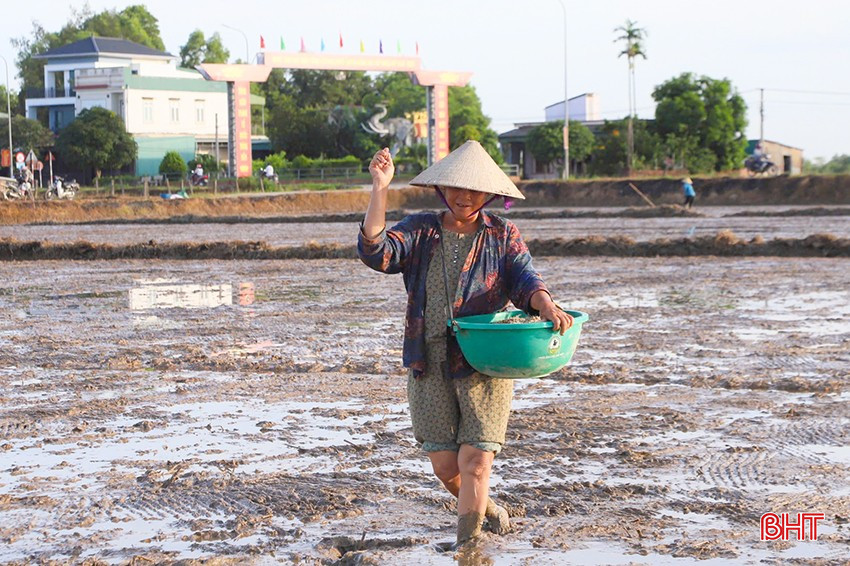
In fact, in some localities, it has been shown that when people change their production mindset, switch to using new, high-quality varieties, and organize their farming practices systematically, production efficiency has seen significant improvements. Mr. Nguyen Bang Tan - representative of Dong Tien Agricultural Cooperative (Dong Mon Ward, Ha Tinh City) said: “On a concentrated field of nearly 7 hectares, in the past few seasons, the cooperative has completely switched to using newly purchased varieties. Choosing standard varieties from the beginning, combined with applying technical measures, has helped the plants develop uniformly, and the yield has increased significantly, reaching nearly 2.55 quintals/sao, about 0.3 quintals/sao higher than before. At the same time, the quality of commercial rice has also improved significantly, with fewer empty grains and a milling rate of over 70%.”
Eliminating the practice of using seasonal seeds cannot happen overnight; it requires a synchronized and long-term roadmap. This necessitates a combination of raising awareness through education, providing technical support, adjusting seed pricing policies appropriately, and building strong linkages between businesses, cooperatives, and farmers. Simultaneously, promoting land consolidation and the formation of concentrated production areas geared towards commercial production is a key solution, contributing to a shift in production mindset and fostering a modern, efficient, and sustainable agricultural development.
Source: https://baohatinh.vn/bo-thoi-quen-su-dung-giong-lua-lien-vu-trong-gieo-cay-he-thu-post289371.html

![[Image] First Congress of the Vietnam Science and Technology Trade Union](/_next/image?url=https%3A%2F%2Fvphoto.vietnam.vn%2Fthumb%2F1200x675%2Fvietnam%2Fresource%2FIMAGE%2F2025%2F12%2F24%2F1766552551054_ndo_tr_img-1801-jpg.webp&w=3840&q=75)



































































Comment (0)