

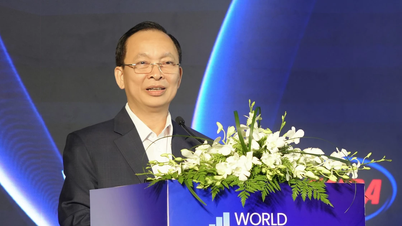
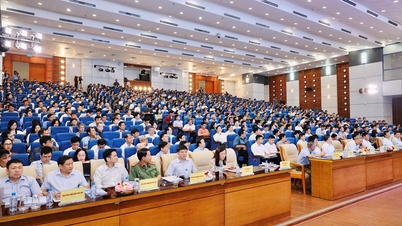
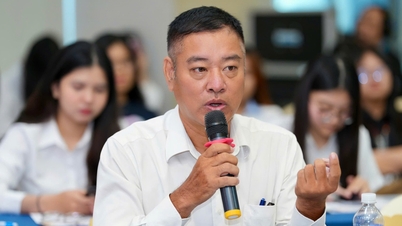
This was shared by Mr. Tran Quang Hung, Deputy Director of the Information Security Department (Ministry of Information and Communications), at the Ministry of Information and Communications' regular monthly press conference on March 6th, in response to questions from the press regarding the Facebook "incident".

Mr. Tran Quang Hung, Deputy Director of the Information Security Department
According to Mr. Tran Quang Hung, the Facebook "incident" on the evening of March 5th, which prevented millions of users from logging into the platform, shows that users in Vietnam are quite dependent on Facebook and other social networks.
Immediately after the incident, users switched to other social networks such as Zalo, Viber, Telegram… Mr. Hung believes that the Facebook outage is actually a "good sign," not because Vietnam now has a social network for sharing information, but more importantly, because after the incident, users of this cross-border social network will be "shocked" and worried about whether they are victims of hackers. Most users have security authentication measures in place, such as changing passwords.
Warning about the risk of scams exploiting the Facebook 'incident'.
From another perspective, the Deputy Director of the Information Security Department believes that the Facebook outage also brings "positive value" to Vietnamese users. Currently, many users are dependent on social media platforms; without them, or without using account security measures, most would lose their accounts.
"When people have basic knowledge and measures to protect their accounts even when attacked, they won't be so worried or panicked," Mr. Hung said.
According to the National Cybersecurity Monitoring Center (Ministry of Information and Communications), when detecting unusual activity on Facebook, users should change their passwords and use a strong password that includes uppercase letters, lowercase letters, numbers, and special characters.
The next step is to report the incident through social media or other contacts such as phone or email. Inform friends and family on your friend list about the situation and warn them not to trust or respond to scam messages.
Additionally, always stay vigilant and adhere to basic security measures such as: enabling two-factor authentication; not sharing personal information and passwords with anyone; not clicking on links from unknown sources or suspicious messages; and regularly updating security software to avoid security vulnerabilities.
Quick update at 12 PM on March 6th: Billionaire Elon Musk posts a sarcastic message on X after Facebook outage.
Meanwhile, cybersecurity experts are also warning about "services" that offer to recover Facebook accounts and passwords, with the aim of scamming and stealing accounts and passwords.
Earlier, on the evening of March 5th, millions of Facebook, Instagram, and Messenger users worldwide were suddenly disconnected from these platforms and unable to log back in. Many users reported that Facebook automatically logged them out without an option to log back in, and this issue occurred on both the Facebook app and website. The cause of the outage has not yet been confirmed.
Source link






















































































Comment (0)