

 |
Oscar has left China. |
From a "retirement paradise" for European stars, Asia's richest league is now back to square one. No more million-dollar contracts, no more dreams of continental dominance. Chinese football is entering a cautious rebuilding period, where domestic players are once again at the center and all plans must be based on merit rather than money.
From millionaire's paradise to financial wasteland
There was a time when the Chinese Super League was the promised land for players seeking their final contract. Paulinho, Tevez, Hulk, Bakambu, Fellaini, Witsel, Carrasco… they came to China not only for the experience, but also because of the compensation that exceeded European football standards. Chinese clubs were willing to pay double, even triple, what players could earn in the Premier League or La Liga.
That craze began in 2013, when Xi Jinping came to power and identified football as a national strategic project. Three goals were set: qualify for the World Cup, host the World Cup, and win the World Cup before 2050.
To realize this, a package of 50 measures was enacted. Hundreds of football stadiums were built. Football became a compulsory subject. Large corporations like Evergrande and Wanda were encouraged to invest in clubs.
That plan had an immediate effect. Within a few years, the Chinese Super League became the most vibrant transfer market in Asia.
But behind those high-profile contracts lies a fragile financial foundation. Many clubs spend far more than they earn, relying entirely on money from real estate. When the property bubble bursts, the football ecosystem cracks along with it.
By 2017, the Chinese government began tightening regulations on transfers and imposing salary caps. This move aimed to curb corruption and salvage a system that was spiraling out of control.
 |
Tevez had a brief stint playing football in China. |
But that was just a stopgap measure. The clubs were too dependent on outside funding. When funding dried up, many teams fell into wage debt, or even dissolved. Jiangsu, the national champions, is a prime example.
Then Covid-19 dealt a fatal blow. The league was interrupted. Stadiums were empty. Spectators lost their habit of attending matches. Ticket revenue, advertising, and broadcasting rights all plummeted simultaneously. The Chinese Super League, once a symbol of ostentation, became a costly lesson in rapid, uncontrolled development.
The journey of starting over.
2025 marks a sad turning point. Oscar, the last remaining star of the money-driven era, leaves China and returns to Brazil. According to Transfermarkt , transfer spending for the 2024/25 season will be even lower than in the 2006/07 season, long before the dream of national football was conceived.
In the ashes of that era, Chinese football was forced to change. The pursuit of star players at all costs was over. Clubs turned to placing their faith in domestic players. The league accepted the loss of its former glory in order to regain sustainability. This wasn't a romantic choice, but a necessity.
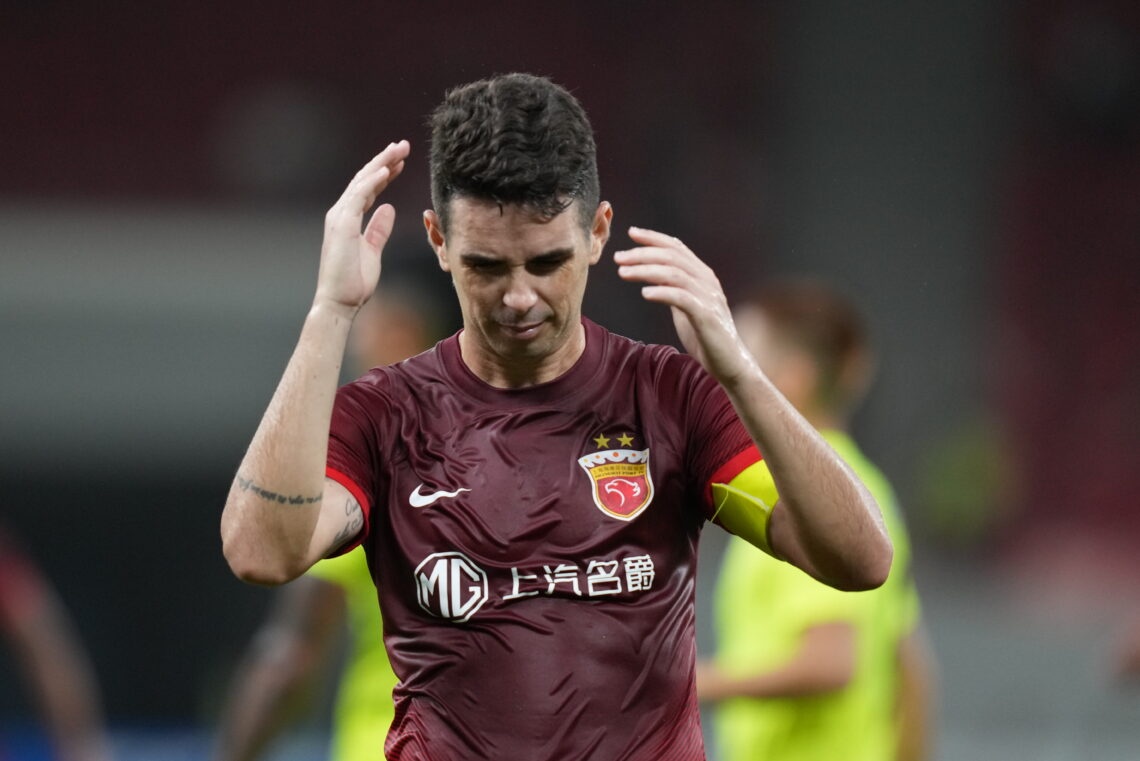 |
Chinese football no longer has expensive star players. |
The emergence of a group of Spanish players in the 2025/26 season suggests a new direction. Alberto Quiles, Oscar Melendo, Juan Antonio Ros, Lluís López, Cristian Salvador, and Edu Garcia are not blockbuster signings.
They arrive professionally, bringing with them tactical discipline and European training standards. This is the type of foreign player the Chinese Super League needs: inexpensive but capable of raising the quality of the football environment.
The story of coach Quique Setien clearly reflects this picture. He managed Beijing Guoan until last October before leaving for personal reasons. Gone are the long-term projects with huge budgets; Chinese clubs can now only experiment step by step, with a cautious approach.
The biggest challenge isn't on the pitch, but in belief. Fans are used to seeing European stars every weekend.
Now, they have to get used to young domestic players and matches lacking the glamour. Rebuilding the football culture is a long road, and there's no guarantee of success.
The bubble has burst, and it can't be patched up with money. The Chinese Super League faces a life-or-death choice: either patiently rebuild from scratch, or accept oblivion. The decade-long dream of gold has ended. What remains is a test of character and honesty with oneself.
Source: https://znews.vn/bong-bong-bong-da-trung-quoc-da-vo-post1615745.html
![[Photo] Memorable moments at the 10th Vietnam-China Border Defense Friendship Exchange](https://vphoto.vietnam.vn/thumb/1200x675/vietnam/resource/IMAGE/2026/03/20/1773986226876_giao-luu-bien-gioi-vntq-lan-10-ben-tq-9737-4225-jpg.webp)




















































Comment (0)