

Palmeiras has just qualified for the knockout round of the FIFA Club World Cup 2025. |

When the European giants are tired, lacking motivation, and approaching the game with a "friendly" attitude, the Brazilian teams are anything but polite.
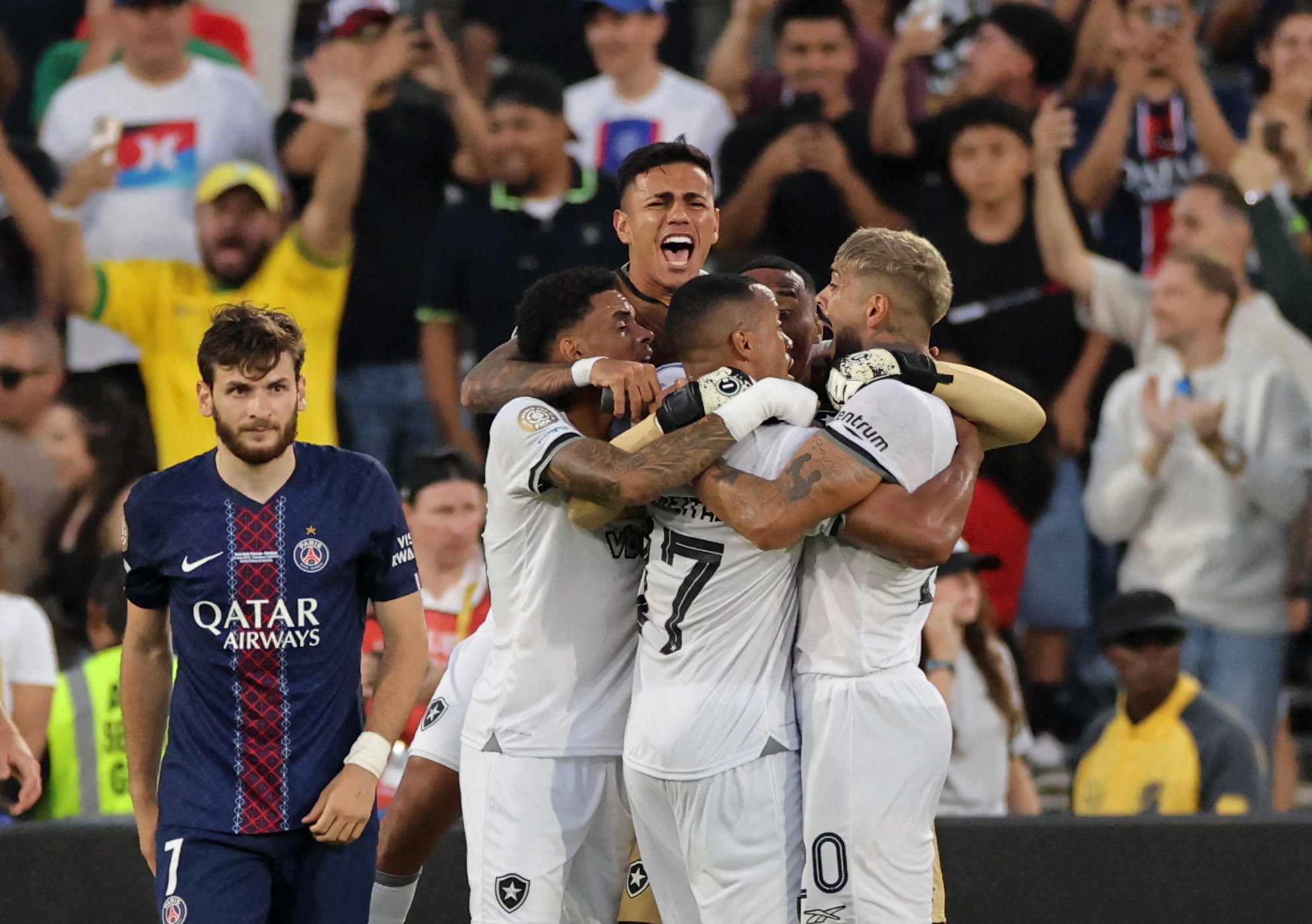
Palmeiras drew with Porto and then Inter Miami on the morning of June 24th, Fluminense gave Dortmund a tough time, Botafogo defeated PSG, and Flamengo convincingly beat Chelsea 3-1. Only one Brazilian team has lost after the group stage so far. They scored 16 goals, conceded only 7, and more importantly, played as if the honor of the entire football nation depended on every single battle.
Brazil is back, and this time not just with the pride of the past, but with a realistic, fierce, and deeply human style of football.
A warning from the "graveyard" of football.
“The graveyard of football is full of overrated players,” Botafogo coach Renato Paiva declared after his team defeated wealthy PSG. A chilling statement in the sweltering heat of Pasadena – and a timely warning to the rest of the world .
That victory wasn't a random shock. It was the result of a well-organized game, an uncompromising spirit, and a fair playing style. Igor Jesus – who is being targeted by Nottingham Forest – scored the only goal in a match where PSG were almost completely ineffective.
Flamengo took their achievement to the next level. They not only won, but won convincingly against Chelsea. The 3-1 scoreline not only eased the pain of their 2019 defeat to Liverpool, but also clearly demonstrated that Brazilian football can still beat Europe's most expensive teams – when properly organized.
There was a time when Brazilian football dominated the world. The glorious achievements of Santos under Pelé, Flamengo under Zico, São Paulo under Cafu… are symbols of a period when South American clubs were not afraid of any European "giant". The 1990s and early 2000s, victories in the Intercontinental Cup and Club World Championship, were vivid proof of that dominance.
Botafogo once defeated PSG. |
But then times changed. Talented players were exported from their teens, Brazilian clubs were mired in debt, while Europe rose with billion-dollar television deals and "state-owned" clubs like Man City and PSG. This disparity in resources seemed to have dug a grave for South American club football.
However, at this year's Club World Cup, football was decided on the pitch, not in the financial boardroom. Flamengo, Fluminense, Palmeiras, and Botafogo proved that heart, discipline, and thorough preparation can still bridge huge financial gaps.
Old, worn-out excuses - and a sharp counter-argument.
Immediately after defeats, the familiar excuses are brought up again: "European teams are tired because they just finished the season," "the weather is too hot," "this tournament isn't important"... But has anyone ever excused Brazilian clubs when they have to play more than 70 matches a year, a schedule even more demanding than in Europe?
Fluminense coach Renato Gaucho stated bluntly: “When Brazil loses, people say we are weak. When we win, they say the opponent is tired. So, ultimately, is winning wrong?”
Palmeiras coach Abel Ferreira called the reason of "fatigue" a "lie," pointing out that Porto had played more matches than Palmeiras before the two sides met. Flamengo player Luiz Araújo also emphasized: "Nobody goes out to lose. Chelsea also fought to the end."
To date, three Brazilian clubs have reached the knockout stage of the FIFA Club World Cup 2025. |

Veteran commentator Mauro Cezar was right: the only thing Europe has over Brazil right now is money. Chelsea spent €1.5 billion building their squad – a figure equivalent to the combined debt of many Brazilian clubs. But as Flamengo proved, with good organization, sensible personnel choices, and a young coach with a modern mindset, they can still beat the giants from Europe.
Filipe Luis, a former Chelsea and Atletico Madrid player, admits that the top 8-10 clubs in Europe are still at a higher level. But what about the rest? Brazil are ready to compete fairly. They understand the game, adapt well to the weather and pitch conditions, and play as if they have nothing to lose.
Despite lingering doubts about its sporting significance, this year's Club World Cup is creating a major social impact in Brazil. After years of feeling "left behind," Brazilians now have reason to be proud of what their domestic clubs are achieving. They are seeing one thing: Brazilian football is not dead. It's just waiting for a bright enough stage to prove that not everything in Europe is better.
In a world where money often wins, the 2025 Club World Cup reminds us that football remains the strangest sport. Because there, surprises – and sometimes a little fairness – still exist.
Source: https://znews.vn/bong-da-brazil-khong-chet-post1563276.html

![[Photo] Prime Minister Pham Minh Chinh receives the Chinese Ambassador to Vietnam](https://vphoto.vietnam.vn/thumb/1200x675/vietnam/resource/IMAGE/2026/04/05/1775397481797_ndo_br_dsc-5512-jpg.webp)
































































Comment (0)