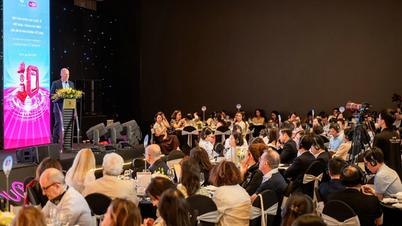
"This method is considered particularly useful in cases of restenosis within stents, small vessel lesions, or patients who need to avoid further intravascular implantation," shared Dr. Nguyen Quoc Thai, Deputy Director of the Vietnam National Heart Institute, Bach Mai Hospital, at the scientific conference on Coronary Intervention with Drug-eluting Balloon Angioplasty, with the participation of domestic and international interventional cardiology experts, today - March 13th at the Vietnam National Heart Institute.

Dr. Nguyen Quoc Thai, Deputy Director of the Vietnam National Heart Institute, Bach Mai Hospital, delivered a speech.
The workshop aimed to update participants on advances in the treatment of coronary artery disease, particularly stentless coronary intervention strategies (stentless PCI), and to share clinical experiences and new research evidence on the application of drug-eluting balloon (DCB) technology.
Coronary artery disease (CAD) is a condition in which blood flow to the coronary arteries is reduced due to the formation of atherosclerotic plaques within the vessels. Clinical manifestations include silent myocardial ischemia, angina pectoris, acute coronary syndrome (unstable angina, myocardial infarction), and sudden cardiac death.
Treatment for the disease includes medication and interventional procedures. These methods help restore flow and increase blood volume in narrowed or blocked coronary artery branches, leading to restoration or improvement of coronary blood flow.
According to Nguyen Thi Thu Hoai, Director of the Vietnam National Heart Institute, stent placement has been a common treatment method for coronary artery disease for many years. However, there are groups of patients at very high risk of restenosis after coronary artery stenting.
Currently, the trend towards minimizing permanent intravascular implants is becoming increasingly evident. Advanced treatment technologies such as drug-eluting balloons open up more effective, safe, and sustainable approaches for patients in the future.
Drug-eluting balloons are a new device that enables percutaneous coronary intervention. This method allows for the rapid delivery of anti-restenosis medication into the atherosclerotic artery wall, delivering high local concentrations without the need for metal frames or stents as in stent placement.
"This is a treatment option that is being researched and applied in some appropriate cases for certain groups of patients," said Director Thu Hoai.

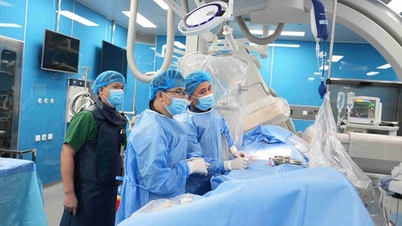
Professor Tuomas Rissanen and Dr. Nguyen Quoc Thai, Deputy Director of the Vietnam National Heart Institute, Bach Mai Hospital, along with their team, performed a coronary artery occlusion procedure using drug-eluting technology.
This method is considered particularly useful in cases of restenosis within the stent, small vessel lesions, or patients who need to avoid further intravascular implantation.
Information presented at the conference indicated that cardiologists at Bach Mai Hospital have currently performed 10 coronary intervention procedures using drug-eluting balloon occlusion technology, with positive evaluation results.
Most recently, a 68-year-old male patient in Hanoi presented with symptoms of left-sided chest pain, each episode lasting 30-60 minutes, occurring during mild exertion and radiating to the left shoulder and inner left arm. Today, the frequency of the pain increased, leading to his hospitalization for coronary intervention. Specialists used drug-eluting balloon catheterization to treat him. Currently, after the intervention, the patient is stable, taking medication and attending follow-up appointments as scheduled.
Professor Tuomas Rissanen (University of Eastern Finland), a leading expert in coronary intervention and DCB technology research, said that the stent-free coronary intervention strategy is being studied and applied at many cardiovascular centers around the world .
However, according to him, not all drug-coated balloons are the same. Differences in design, drug type, and delivery system significantly affect treatment efficacy. Understanding the characteristics of each technology is key to selecting the optimal intervention strategy.

Professor Tuomas Rissanen (University of Eastern Finland), a leading expert in coronary intervention and DCB technology research, presented at the conference.
A highlight of the workshop was a live demonstration of interventional procedures in the catheterization lab, giving participating physicians the opportunity to observe the entire process – from lesion assessment and vascular preparation to equipment selection and optimal intervention strategy.
According to Dr. Nguyen Quoc Thai, lesion preparation is a crucial factor in the success of drug-eluting balloon occlusion. Combining intravascular imaging methods such as IVUS or OCT helps to accurately assess and optimize intervention outcomes.
The case discussion sessions also provided valuable practical experience, particularly with complex lesions or hybrid PCI strategies combining multiple techniques.
Experts affirm that international scientific conferences like this one play a crucial role in connecting the interventional cardiology community, sharing research data, and promoting academic collaboration.
With cardiovascular disease remaining the leading cause of death globally, advanced treatment technologies such as drug-eluting balloons promise to open up more effective, safe, and sustainable approaches for patients in the future.
Source: https://suckhoedoisong.vn/bong-phu-thuoc-lua-chon-moi-cho-dieu-tri-benh-mach-vanh-169260313204427006.htm




























































































Comment (0)