|
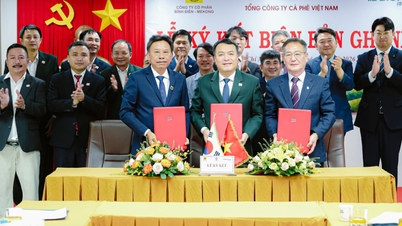
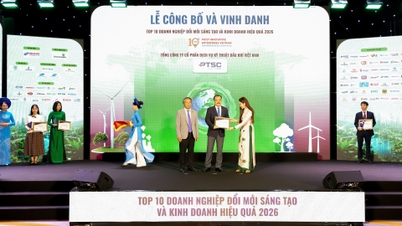
| Businesses receive support for capacity building training. |
Pressure to reduce revenue
In 2026, the city's People's Council set a revenue target of 16,000 billion VND. Despite a favorable start in the first quarter with revenue exceeding 4,000 billion VND, reaching over 25% of the target and increasing by 14% compared to the same period last year, the pace of revenue collection began to slow down in the following months. By the end of May, the city had collected over 6,500 billion VND, achieving approximately 40% of the annual plan, but the growth rate had declined to less than 4% compared to the same period last year.
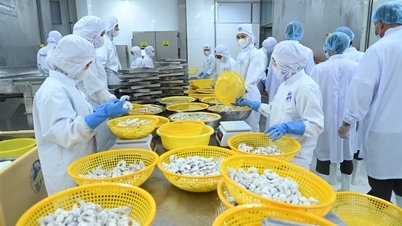
According to the Department of Finance, this slowdown is partly due to the negative impact of the global situation and political conflicts affecting supply chains and export activities of businesses. Rising fuel and energy prices directly impact the production costs of key export businesses such as textiles, yarn, and seafood, reducing their ability to contribute to the budget. Many newly implemented policies supporting businesses and households have also significantly impacted revenue.
According to the City Tax Department's assessment, the regulation reducing environmental protection tax, value-added tax, and special consumption tax on gasoline and aviation fuel to 0%, effective from April 16, 2026 to June 30, 2026, is expected to reduce revenue by approximately 50 billion VND during the policy implementation period. The policy of exempting and reducing land use fees will reduce revenue by approximately 500 billion VND, a significant reduction that will directly impact the land use fee revenue forecast for 2026.



The implementation of Government Decree No. 141/2026/ND-CP dated April 29, 2026, "Amending and supplementing a number of articles of Decree No. 68/2026/ND-CP regulating tax policies for business households and individual businesses, and Decree No. 320/2025/ND-CP detailing a number of articles and measures to organize and guide the implementation of the Corporate Income Tax Law," will also reduce revenue by approximately VND 30 billion in 2026. This policy significantly reduces the number of business households subject to tax in the area, thus, projected revenue is expected to continue to decrease. The amended Personal Income Tax Law of 2025, effective from July 1, 2026, will also affect personal income tax revenue from the third quarter of 2026.
The real estate market is facing difficulties related to liquidity, access to credit, and legal obstacles, causing revenue from land use fees to fall short of expectations. Currently, cumulative revenue from land use fees in the area up to May has only reached nearly 1,000 billion VND, equivalent to 24% of the projected amount. This is a challenge, as revenue from land use fees still accounts for a significant proportion of total revenue.
Nurturing revenue streams
In the structure of budget revenue sources, domestic revenue plays a pivotal role, accounting for over 90% of the total projected budget, equivalent to approximately VND 14,500 billion out of a total of VND 16,000 billion. By the end of the first quarter, domestic revenue reached nearly VND 3,550 billion, equivalent to 24.5% of the projected budget and an increase of nearly 10% compared to the same period last year. However, by the end of May, the overall growth momentum began to slow down, estimated at approximately VND 6,000 billion, over 40% of the projected budget and only an increase of over 4% compared to the same period last year.
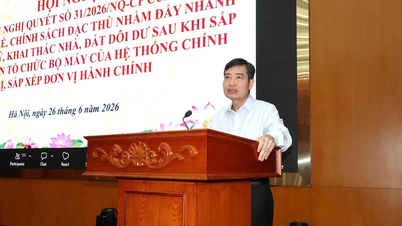
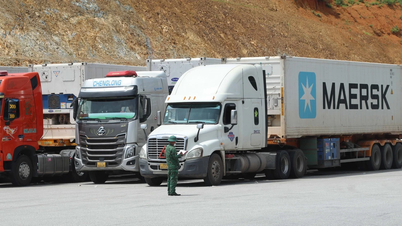
Revenue from import and export activities contributed significantly to the overall revenue collection progress, with cumulative revenue reaching over 630 billion VND by the end of May, equivalent to 44% of the projected target, an increase of over 15% compared to the same period last year. Revenue from aid and mobilized contributions amounted to approximately 10 billion VND, equivalent to 36% of the projected target. At a meeting discussing solutions for effectively implementing state budget revenue and expenditure tasks in 2026, Vice Chairman of the Hanoi People's Committee, Ha Van Tuan, requested that each department, sector, and locality be held accountable for revenue collection.
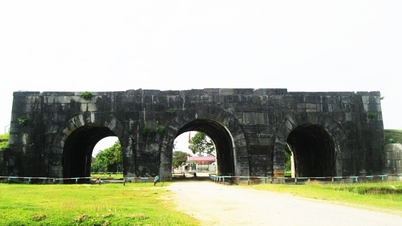
Departments, agencies, and localities must strengthen coordination with tax authorities in managing their areas and revenue sources; promptly detect and handle tax evasion and fraud, and combat revenue losses for the state budget; promote revenue management for e-commerce, digital platform businesses, and other areas with potential tax risks; reform administrative procedures, support and resolve difficulties for businesses and household businesses, contributing to nurturing and developing revenue sources. The finance and tax sectors should strengthen the management of sustainable revenue sources such as: revenue from the FDI sector, non-state enterprises, entrance fees to historical sites, personal income tax, import and export taxes, logistics, tourism , e-commerce, digital platform businesses, and household businesses.



Mr. Doan Vi Tuyen, Head of the City Tax Department, affirmed: The City Tax Department has been actively implementing internal tasks, closely monitoring the progress of tax collection in each area and tax category; strengthening analysis, forecasting, and risk identification; building flexible operational scenarios; exploiting potential revenue sources; and minimizing revenue shortfalls. The tax sector is strongly implementing support activities with a taxpayer-centric approach; effectively organizing intensive propaganda campaigns, especially for households and individual businesses; implementing the "Accompanying Business Households" program; and closely monitoring the transition process after the abolition of lump-sum tax. At the same time, it is decisively implementing debt recovery and enforcement measures; strictly controlling the 발생 of new debts… determined to successfully fulfill the 2026 tax collection target.
Source: https://huengaynay.vn/kinh-te/bu-khoang-trong-thu-ngan-sach-166431.html





![[Photo] "Hanoi Lotus Festival" honors the lotus flower that has been associated with Vietnam for thousands of years.](https://vphoto.vietnam.vn/thumb/1200x675/vietnam/resource/IMAGE/2026/06/27/1782516943048_sen-ha-noi-2026-minh-duy-1-jpg.webp)