

- Building a "runway" to propel southwestern urban areas to take off - Part 2: The transformation of rural urbanization.
- Proud to be a civilized urban ward.
- Transforming awareness and developing solutions for building new rural areas, civilized urban areas, and sustainable poverty reduction.
Currently, the former Ca Mau province has 22 urban areas, with an urbanization rate increasing from 30.47% in 2022 to 33.04% in 2024. This result is higher than the average urbanization rate in the Mekong Delta region (approximately 32%), but lower than the national urbanization rate (over 44%).
Transformation of social infrastructure
Mr. Du Minh Hung, Director of the Department of Construction, said that most general and detailed planning projects are oriented towards green, smart, and sustainable urban development in line with general trends; functional areas and areas with strategic locations and high environmental value are prioritized in planning to attract investment. Many detailed planning projects are of high quality, serving as a basis for investment in public and civil architectural works, infrastructure systems, cultural, sports , and tourism facilities...
The most visible aspect of urban development is the significant investment in social infrastructure across various sectors. Public service facilities and housing are increasingly meeting the needs of the people, improving their quality of life and living conditions; healthcare , education, culture, and sports facilities are receiving increased investment to meet the people's needs for health care, education, recreation, and entertainment.
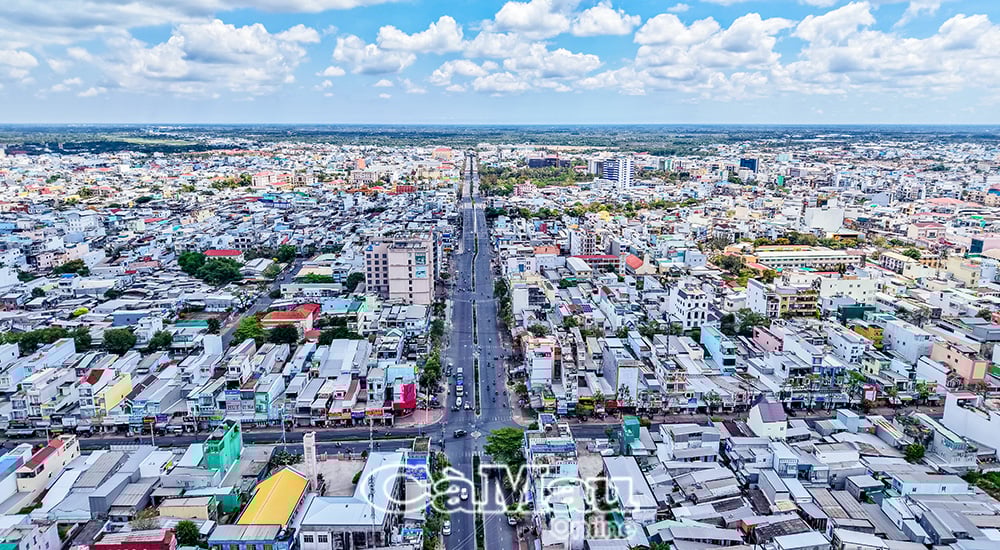
Based on natural conditions, the central urban system of the province (currently comprising the wards of An Xuyen, Tan Thanh, Ly Van Lam, etc.) is oriented towards diverse development, suitable to the characteristic ecological zone, and adaptable to climate change; it plays the role of a sub-regional coastal center in the Ca Mau peninsula area, a national energy and oil and gas service center, an eco-tourism service center, and a seafood processing center for the region.
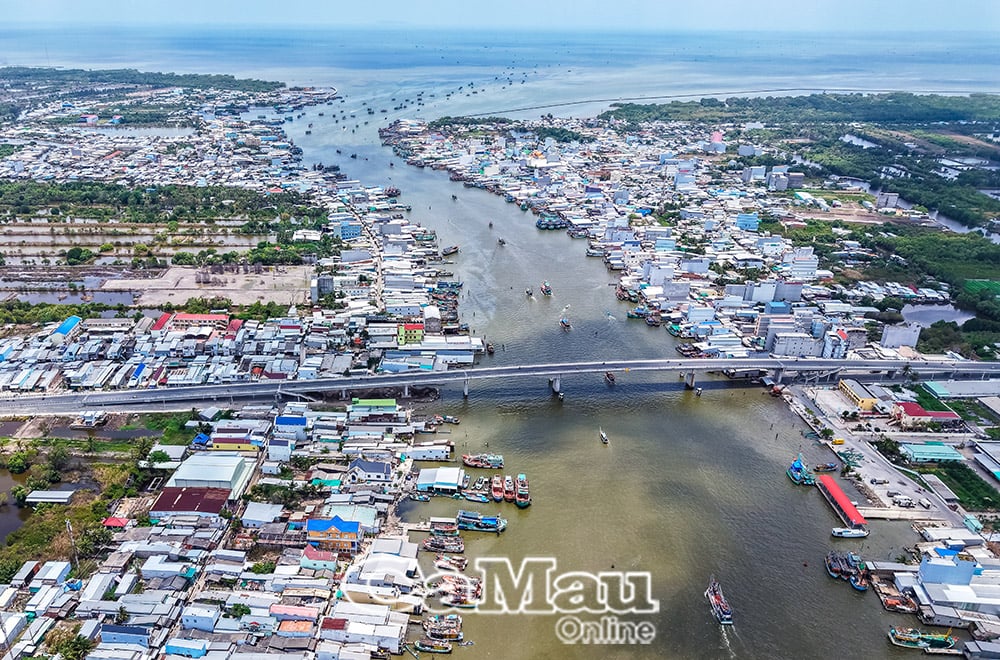
On the western bank, Song Doc town is the socio-economic center of the coastal region, a characteristic riverine town and a center for marine tourism services. Nam Can town is a center for mangrove forest eco-tourism services, a commercial and service center in the South, possessing a unique riverine character and modernity; especially with the formation of large projects in the province, strongly oriented towards the East Sea, Nam Can town will be a development axis connecting with Song Doc, Ganh Hao, and Hon Khoai.
Identify obstacles
The rapid changes in urban development are evident; however, in general, the quality of urban life remains low. The transportation and drainage networks in urban areas are developing unevenly, lacking connectivity between existing and newly constructed structures; the overall urban technical and social infrastructure systems are still limited and developing more slowly than the pace of socio-economic development. While initial attention has been paid to the management of urban architectural space and landscape, some shortcomings and inconsistencies remain, such as: insufficient green space; inadequate investment in public service facilities; and the spontaneous development of urban architecture and landscape.
Investment resources remain too limited and do not meet development requirements. Specifically, the total capital investment needed for urban development is approximately over 106,773 billion VND, of which about 33,801 billion VND is needed for the 2023-2025 period and over 72,972 billion VND for the 2026-2030 period. However, in reality, the total investment capital allocated for urban development in the 2022-2024 period was quite modest, only over 7,740 billion VND, mobilized from various sources.
Transforming the growth model
Based on practical lessons learned and identified obstacles, the Provincial Party Standing Committee requested that, in the coming period, focus should be placed on consolidating and improving the quality of urban development in areas that play a driving role in spreading growth, promoting the transformation of the growth model from extensive to intensive in dynamic cities with synchronized infrastructure, leading the process of digital economic transformation and developing high value-added and competitive services; and transforming the growth model to be green, smart, and adaptable to climate change, in accordance with the characteristics and competitive advantages of each city.
Leveraging the advantages after the merger, the Provincial Party Standing Committee believes it is necessary to effectively utilize coastal space, adapt to climate change, and ensure national defense and security in urban planning and expansion. Integrating climate change response solutions with resolutions of Party committees at all levels, urban development programs, and urban development investment projects is considered a sustainable development goal for the coastal urban system. It is expected that the urban landscape of Ca Mau, with its expansive space, will develop strongly, befitting its position as the southernmost point of the country.
Tran Nguyen
Source: https://baocamau.vn/ca-mau-บน-hanh-trinh-do-thi-hoa-a120770.html






































































Comment (0)