

According to industry insiders, the phrase "billion-dollar fees" may seem simple, but in reality, it's the result of an almost "unimaginable" career path for these stars.
The article "Vietnamese Stars Earn Up to 2 Billion VND/Show" has attracted diverse opinions from readers. Many believe that singers today earn money too easily, with one night's performance equivalent to the wealth an average person accumulates over several years. Others question whether singers are exaggerating or fabricating these figures.
According to industry insiders, the phrase "billion-dollar fees" may sound simple, but in reality, it's the result of an almost unbelievable career path for these stars.
The story behind the multi-million dollar fee.
It's important to clarify that not every singer commands a fee in the billions of Vietnamese dong. The number of S-list stars in Vietnam can be counted on one hand.
Performing arts has never been simply about going to a venue, singing, and taking the money home. Putting on a show requires the participation of dozens of people and many stages, all of which translate into money.
For each performance, the star's entourage consists of at least 5-6 people, including: manager, assistant, makeup artist, stylist, media representative, and/or social media representative.
Currently, S-list celebrities are either managed by or under contract with a management company. A female singer's team, under a management company, incurs monthly expenses of around 100 million VND, or approximately 1 billion VND per year.
The more talented the team, the higher the cost. In exceptional cases, a top-tier male singer might have to "support" an entire production group.
"Even with a fee of 1 billion VND, if you only perform 2 shows a month, there won't be much left," a media manager, who wished to remain anonymous, told VietNamNet.

High fees often come with many conditions. A male singer with an average fee of 1.2 billion VND will typically have a clause in their contract stipulating "social media virality."
"It's not for nothing that he always pulls this stunt every time he appears. He has to give back to the brands," according to the expert.
This person also stated that the singing profession can only move forward and cannot afford to stagnate. Many singers sell assets such as houses and land to fund new projects, earning praise for their professionalism, but the truth is they have no other choice.
Experts say: "Vietnamese artists rely on endorsements rather than their own products because audiences don't spend money, and copyright issues are complicated. However, to get shows, they are forced to continue creating new products."
On average, the cost of making a music video ranges from 500 million to 1 billion VND, while an album can cost 1 billion VND or more. For a B-list artist, the cost of organizing a press conference and media is around 300 million VND; social media costs vary depending on the budget.
Conversely, the A and S tiers are the domain of social media battles. It's no longer unusual for a music video to cost 1.5 billion VND to produce but then have its social media costs skyrocket to 2.5 billion VND or even more.
The average cost of purchasing a new song is $10,000 (approximately 254 million VND), not including arrangement, mixing, and associated copyright fees. This doesn't even account for expenses like costumes, travel, and food.
The reality of singers investing all their assets only to have their products fail is very common in an increasingly competitive market.
A singer spends hundreds of millions of VND on designer outfits, but the music video garners less than 1 million views. Singer L. created a series of live-session music videos, with the live band alone costing over 1 billion VND, only for it to be a complete waste of money.
For the past two years, except for A+ and S-tier singers, it has been almost impossible for them to secure sponsorships. In some cases, sponsorships failed because the brands demanded too much, and the singers – with their high egos and stringent requirements for artistic quality – had no choice but to refuse.

You get what you pay for.
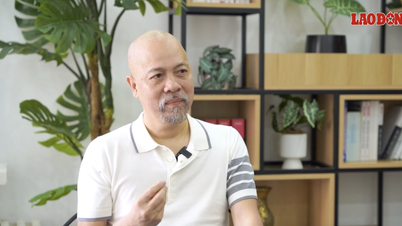
From the perspective of a fellow musician, Nguyen Van Chung sees the phenomenon of S-list stars earning billions of dong in fees as "nothing to debate".
The "you get what you pay for" and "supply creates demand" principles always hold true. The "huge" figures reflect the value the artist brings, while the brand receives equivalent, or even greater, benefits than the amount spent.
"Brands are very shrewd in their investment and business activities. Whether spending billions of dong to invite artists to perform is worthwhile is something only they know best; no one can force or influence them," he said.
Nguyen Van Chung observed that high income always comes with high responsibility. Artists must fulfill their obligations to clients and their tax obligations (in relation to the State and society), thereby contributing to the development of the country.
"We can only condemn high earners for breaking the law, but how can we condemn those who strive to build a positive personal image and achieve the highest rankings in their profession to justify the money their clients spend?", the musician stated.
He also disagreed with the term "price gouging" because: "Setting a high or low price for oneself is everyone's right. Everyone has the right to state their desired price, and whether or not it is accepted is up to the customer – which is perfectly natural in society."
Bich Hop

Source: https://vietnamnet.vn/ca-si-chi-can-hat-3-bai-da-cam-cat-se-1-ty-2334897.html






























































































Comment (0)