

- Sunday, August 25, 2024 12:00 PM (GMT+7)
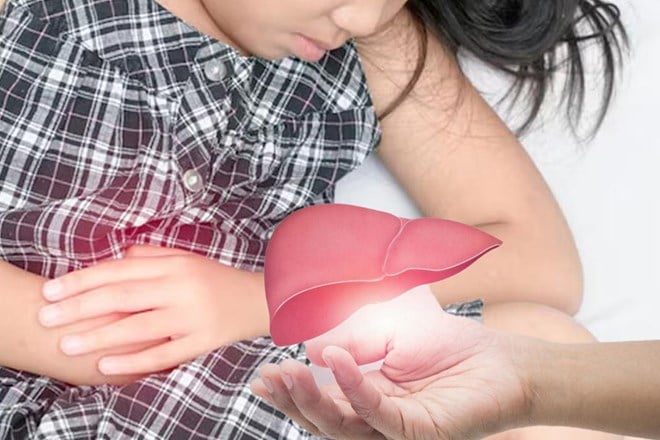
What is liver disease in children?
According to Dr. Sufla Saxena, Head of Pediatric Gastroenterology and Hepatology at Manipal Hospital, Dwarka, India, pediatric liver disease is a range of disorders affecting the liver in infants, children, and adolescents.
Although the prevalence of these conditions varies, childhood liver diseases require prompt diagnosis and treatment to prevent serious complications such as liver failure.
Common liver diseases in children
Biliary atresia : This is a rare disease in which the bile ducts are blocked or absent, leading to liver damage and cirrhosis. The disease usually appears within the first few weeks of life.
Hepatitis : Inflammation of the liver caused by viral infections (such as hepatitis A, B, and C), autoimmune diseases, or drug toxicity.
Non-alcoholic fatty liver disease (NAFLD) : This liver condition is increasingly common in children due to rising obesity rates because it involves the accumulation of fat in liver cells, potentially leading to inflammation and scarring.
Wilson's disease : This is a genetic disorder that causes excessive copper buildup, leading to damage to the liver and other organs.
Alagille syndrome : This is a genetic condition affecting the bile ducts, heart, eyes, and bones, causing chronic liver disease.
Symptoms of liver disease in children
- Jaundice
- Stomach-ache
- Swollen legs
- Dark urine and light-colored stools
- Tired
- Loss of appetite and weight loss
- Itchy skin
- Nausea and vomiting
What factors put children at risk for liver disease?
According to the American Liver Foundation (ALF), some childhood liver diseases can be caused by autoimmune problems, where the immune system malfunctions and attacks the body's own cells. In addition, genetic diseases, often inherited from one or both parents but which can be new mutations, such as progressive familial cholestasis of the liver (PFIC), can also be a cause.
Other risk factors include a family history of liver disease, obesity, a sedentary lifestyle, hepatitis virus infection, and exposure to toxins.
How can we minimize the risks?
According to Dr. Saxena, here are some measures you should take to protect your child:
Regular check-ups are essential for early detection of potential problems.
- Early detection of metabolic or genetic disorders.
- Limit exposure to harmful chemicals and medications.
- Increase regular physical activity to maintain a healthy weight.
- Encourage a balanced diet rich in fruits, vegetables, and whole grains.
- Ensure you receive all necessary vaccinations against hepatitis A and B.
Source: https://laodong.vn/suc-khoe/cac-benh-ly-gan-thuong-gap-o-tre-em-1384197.ldo






























































![[Infographic] Vietnam's Economic Situation Report, Q1 2026: Strong Growth Momentum](https://vphoto.vietnam.vn/thumb/402x226/vietnam/resource/IMAGE/2026/04/04/1775298512042_tang-truong-kinh-te-viet-nam.jpeg)

![[Image] Close-up view of the 10-lane road connecting to Long Thanh Airport](https://vphoto.vietnam.vn/thumb/402x226/vietnam/resource/IMAGE/2026/04/04/1775291871988_ndo_br_1-resize-5690-jpg.webp)































Comment (0)