 |
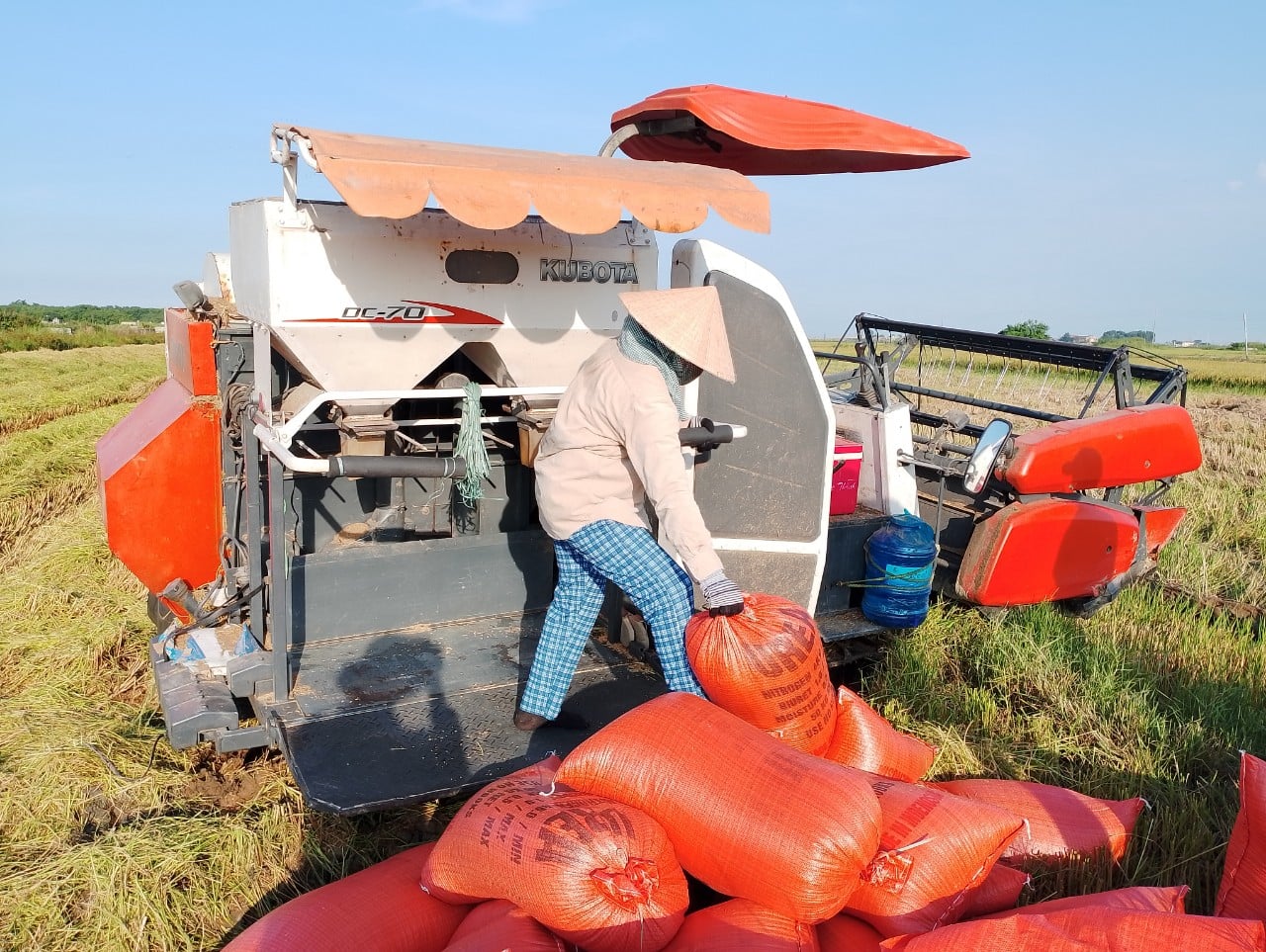
| The agricultural sector has instructed localities to carry out harvesting according to the principle of "harvesting as soon as the fruit ripens." |
For the 2025-2026 winter-spring crop season, the entire city will plant approximately 28,000 hectares of rice. Localities will use certified rice varieties covering about 95% of the planted area, with short-day varieties accounting for over 95% of the total planted area, specifically including varieties such as DT100 (KH1), HG12, J02, TBR97, Khang Dan, DT39, HN6, HG244, TH5, etc.
To ensure rice productivity and yield, localities have also rationally allocated long-, medium-, and short-day varieties based on specific consideration of production conditions in each region. Priority is given to using high-yielding, high-quality rice varieties. Rice varieties that have been cultivated for many years and are frequently infected with pests and diseases are discouraged. Many localities have boldly introduced some officially recognized rice varieties, participating in product consumption linkages such as Ha Phat 3, TBR225, VNR20, DB6… into cultivation to gradually diversify the city's rice varieties.



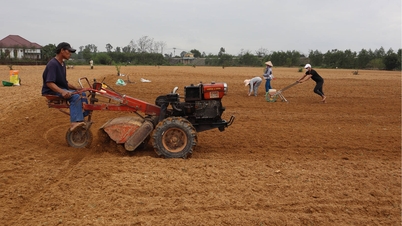
Assessments of this year's winter-spring crop in the highland communes of A Lưới show that most rice fields are growing stably, adapting well to cold and hot weather conditions, and showing little lodging. Especially with new rice varieties, the economic efficiency reached approximately 23.5 million VND/ha. Currently, cooperatives are harvesting according to the principle of "harvesting as soon as it ripens," while mobilizing machinery and manpower to ensure progress and minimize post-harvest losses.
For the 2026 summer-autumn crop season, the city's agricultural sector will continue to monitor and evaluate the adaptability of new rice varieties under different cultivation conditions, while also developing a plan to replicate the model in localities with similar conditions. Among them, two rice varieties, HG479 and HG383, have been tested in production models in various localities and soil types, demonstrating many outstanding advantages, including good resistance to lodging and pests, tolerance to heat, yields of 75-80 quintals/hectare, and improved rice quality.
According to the leaders of the Department of Agriculture and Environment, along with shortening the crop rotation time, training and technology transfer will be strengthened to help farmers proactively apply effective production processes, aiming for sustainable and economical agricultural development, and increasing income for farmers.



Source: https://huengaynay.vn/kinh-te/nong-nghiep-nong-thon/cac-giong-lua-moi-dat-hieu-qua-kinh-te-cao-165215.html

![[Photo] "Hanoi Lotus Festival" honors the lotus flower that has been associated with Vietnam for thousands of years.](https://vphoto.vietnam.vn/thumb/1200x675/vietnam/resource/IMAGE/2026/06/27/1782516943048_sen-ha-noi-2026-minh-duy-1-jpg.webp)