

In this policy, naming the newly reorganized and merged wards and communes is also a matter of history, culture, identity, and social consensus.
Around the world , many countries that have undergone large-scale administrative reforms have adopted their own approaches to addressing the issue of naming administrative units after reorganization and mergers.
France
Since 2010, France has officially implemented the "commune nouvelle" (new commune) model, allowing adjacent communes to voluntarily merge into a single administrative unit to streamline the bureaucracy. The name of a new commune must not only be legal and unique to other administrative units, but also reflect cultural and historical characteristics and ensure fairness among its constituent communes.
In fact, France has developed three common approaches to naming communes after mergers. Some choose to retain the name of the largest commune or the commune that serves as the new administrative center, often the one with a more advantageous geographical location, a larger population, or greater historical value. This naming method is simple and easily accepted, but sometimes creates a sense of loss for smaller communes during the merger process.
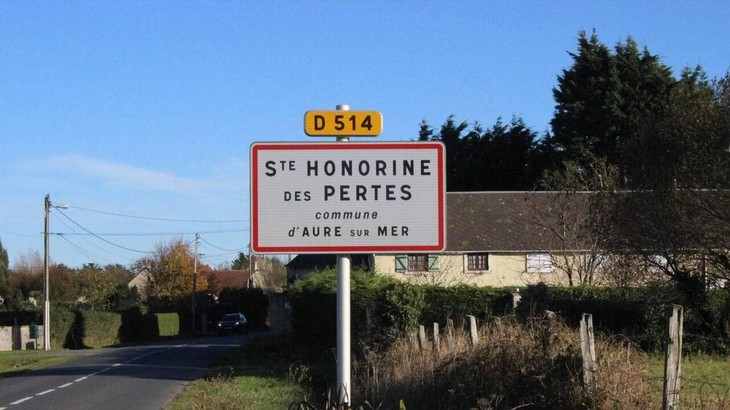 |
| France has developed three common approaches to naming communes after mergers. Photo: Ouest-France. |
Some localities have opted to combine the names of two or more constituent communes to ensure balance and demonstrate solidarity. However, this combination sometimes results in the new commune name becoming too long, difficult to remember, or lacking aesthetic appeal in communication and administration.
To overcome this, many communes have opted for a third solution: creating a completely new name, one that is neutral or based on the geographical and historical characteristics of the region. For example, the name "Beaupréau-en-Mauges" is a combination of a traditional place name and the name of a broader cultural region, creating a distinct identity without favoring any particular commune within the merged group.
The process of naming administrative units in France is always conducted within a clear legal framework and involves democratic consultation. The new name of an administrative unit is decided by the newly established commune council, but this is usually preceded by consultation with local residents, fostering consensus and minimizing conflict. At the same time, in some cases, the names of older communes are still used at the "sub-commune" level as a way of preserving community memory and identity.
From the French experience, it can be seen that naming new administrative units after mergers cannot be separated from historical, emotional, and symbolic elements, because a name is not just an identifier, but also carries the memories, identity, and expectations of an entire community.
Japan
From the late 1990s to the mid-2000s, Japan undertook a wave of large-scale administrative reforms, known as the "Heisei Great Unification," aimed at reducing the number of cities, towns, and villages to a more rational level.
In Japan, mergers are not merely a combination of geographical boundaries and administrative structures, but also a fusion and integration of local identities. Therefore, naming the new administrative unit must meet several criteria: it must be easily recognizable, avoid confusion, represent the entire new community, and, equally importantly, gain public consensus. A common trend is to choose neutral names that do not overly favor any particular town or village within the merged group. This aims to avoid the feeling of loss or deprivation of the strong local identity prevalent in many small Japanese communities.
 |
| Local governments in Japan often seek broad public opinion before deciding on a new name. Photo: Mj-bird. |
Furthermore, many localities have chosen to create new names by incorporating distinctive geographical elements, cultural heritage, or words with positive meanings that easily evoke a bright future. A prime example is the city of Minamisanriku in Miyagi Prefecture – a name formed by combining "Minami" (south) and "Sanriku" (the name of the local coastal region), reflecting both its geographical location and regional identity. Others have chosen to use the names of rivers, mountains, or prominent landmarks in the area as symbolic connecting points for the new administrative unit, creating a sense of harmonious coexistence and development.
Local governments in Japan often hold public consultations before deciding on new names. These discussions are sometimes lively, even lengthy debates, playing a crucial role in creating consensus and fostering community cohesion after mergers. Some places even organize naming contests involving students, the elderly, and other social groups, transforming the naming process into a broad, community-wide cultural event.
Japan also allows former administrative units to continue existing as sub-administrative areas, with their traditional names retained at the local level. This helps to alleviate feelings of nostalgia and preserve local historical and cultural values. This flexible approach, which respects community sentiment, is a highlight of Japanese administrative governance and a valuable lesson for other countries implementing similar administrative reforms.
Korea
In South Korea, basic administrative units such as "si" (cities), "gun" (counties), and "gu" (districts) are often merged or their boundaries adjusted to improve governance efficiency, especially in rural or suburban areas experiencing population decline. When a new administrative unit is established, naming it is considered the first step in building identity and consensus for the new community. This process is usually initiated by the local government, but also involves public participation through surveys, public workshops, or name-giving contests. The goal is to ensure the name is both symbolic and comprehensively representative of the merged territories.
 |
| A notable aspect of the naming convention for new administrative units in South Korea is the blend of traditional and modern elements. Photo: The Korea Herald. |
A notable aspect of naming new administrative units in South Korea is the blend of traditional and modern elements. Many localities choose names based on natural features such as rivers, mountains, seas, or significant historical sites to maintain a connection with their old identity. However, many others proactively choose names that are forward-looking, reflecting aspirations for development, prosperity, and modernization. For example, when the two counties of Yeongi and Gongju merged in 2012 to form the new special administrative unit "Sejong," the government chose to name it after King Sejong the Great – a symbol of knowledge and reform in South Korea – to convey the message of national development based on knowledge and science .
Similar to Japan and France, South Korea allows the old names of smaller administrative units to persist as "eup," "myeon," or "dong"—that is, towns, villages, or neighborhoods within the new administrative unit. This not only facilitates administrative management but also preserves some of the heritage and community memory of the local people. In many cases, the old administrative units continue to play an important role in socio-cultural life and maintain the residents' attachment to the locality where they live.
South Korea's experience shows that naming administrative units is an opportunity to showcase the local development strategy while affirming respect for the past and community spirit. Naming cannot be based solely on technical factors or administrative convenience, but must take into account the sentiments of the people, preserve traditional values, and convey positive expectations for the future.
Source: https://khoahocdoisong.vn/cac-nuoc-dat-ten-don-vi-hanh-chinh-moi-sau-sap-nhap-the-nao-post269720.html

![[Photo] Closing Ceremony of the 15th Conference of the Central Committee of the 13th Party Congress](/_next/image?url=https%3A%2F%2Fvphoto.vietnam.vn%2Fthumb%2F1200x675%2Fvietnam%2Fresource%2FIMAGE%2F2025%2F12%2F23%2F1766462841764_a1-bnd-3731-1647-jpg.webp&w=3840&q=75)




















































Comment (0)