

Recently, online scams via social media have continued to increase, with Zalo remaining the platform most frequently exploited by fraudsters. In Ho Chi Minh City, a case that nearly resulted in significant financial losses demonstrates the sophistication and danger of impersonating acquaintances to lure people into investing.
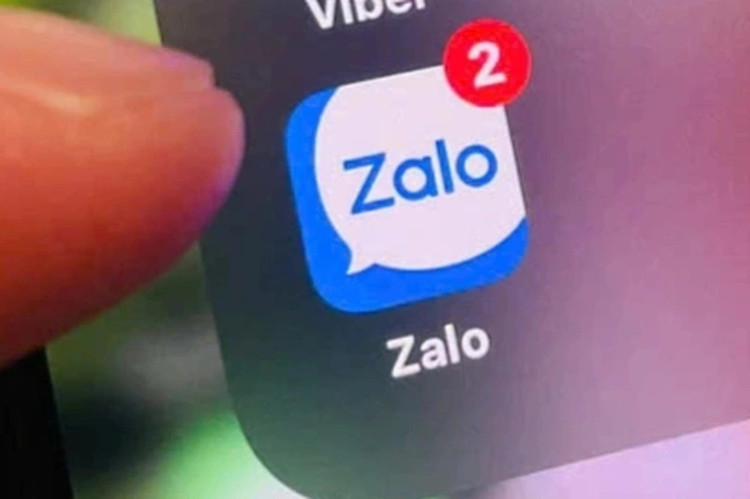
(Illustrative image)
The victim, Mr. H. (from Ho Chi Minh City), unexpectedly received a message from a Zalo account with a name and profile picture matching that of an old acquaintance he had contacted previously. Because the information displayed was identical to the real account, the victim had almost no suspicions and felt comfortable chatting with the person.
After the initial trust-building phase, the conversation gradually shifts to the realm of financial investment. The perpetrator skillfully shares personal stories while introducing "insider investment opportunities" related to cryptocurrencies and stocks, promising quick returns and low risk. To enhance persuasiveness, elaborately fabricated transaction images and profit statements are also included.
Trusting acquaintances and lured by the prospect of attractive profits, the victims began transferring small amounts of money to "try investing." After repeatedly receiving notifications of profits on the fake system, the amount transferred increased steadily, reaching nearly 100 million VND in a short period of time.
However, when asked to withdraw money, the scammers repeatedly gave reasons such as fees, account upgrades, or additional deposits to complete the procedure. The constant pressure caused the victims to regret the money they had already spent, almost leading them to transfer more money to "recover their losses."
The situation was only prevented when Mr. H.'s relatives noticed unusual signs and requested identity verification via video call. The perpetrator's attempts to evade the call and their numerous excuses for not being able to make a direct call exposed their fraudulent nature, allowing the family to recover their remaining assets.
Following this incident, authorities advise people to be extremely cautious about any offers of high-return investments on social media, even if the sender uses the name and image of an acquaintance. Any proposals involving money should be verified through multiple channels such as direct phone calls, face-to-face meetings, or confirmation from relatives.
In particular, cryptocurrency investments and exchanges with unclear legal status pose significant risks. Upon detecting any unusual activity or suspecting fraud, individuals should immediately stop trading, preserve evidence, and report the incident to the police for prompt assistance, thus avoiding unfortunate losses.
Currently, Vietnamese law does not recognize virtual currency as a means of payment, therefore all online virtual currency transactions are illegal and carry a very high risk of fraud. To minimize fraud and property theft through multi-level marketing schemes involving virtual currency, people need to be vigilant and absolutely not believe attractive online offers about virtual currency investment. Do not participate in seminars or discussions about virtual currency investment that are advertised aggressively on social media. Do not invest in or trade on virtual currency exchanges, digital currency platforms, or websites, especially those that advertise and promise high profits. If you discover any fraudulent activity, you should immediately report it to the police so that they can quickly intervene and handle it according to regulations.
According to security expert Vu Ngoc Son, Head of Technology Department, National Cybersecurity Association, online scams are becoming increasingly sophisticated. To counter these "invisible traps that cause tangible damage," agencies, businesses, and organizations need to implement three solutions simultaneously, like a "three-layered shield."
The first layer of protection is the legal framework stipulated in the draft Cybersecurity Law 2025. In this law, "data security" is identified as a key focus, with regulations absolutely prohibiting the theft, sale, or illegal exchange of personal data, aiming to prevent information leaks at their root. The law also strictly prohibits the use of technology to falsify information, images, voices, or to counterfeit products and brands. The second layer of protection is technology, with banks and financial institutions implementing multi-layered authentication measures such as passwords, OTPs, biometrics, and behavioral analysis to detect unusual transactions. The third layer of protection is skills – playing the most crucial role; every citizen needs to equip themselves with knowledge as a kind of "digital vaccine."
People need to develop safe reflexes through the "3 Don'ts - 3 Quick Actions" principle. The "3 Don'ts" include: Don't trust absolutely (even when receiving calls with the caller's face visible); don't install applications from unfamiliar links; and don't transfer money without verification. The "3 Quick Actions" include: Quickly check for suspicious information; quickly disconnect when threatened or manipulated; and quickly report to authorities when an incident occurs.
This view is also shared by expert Ngo Minh Hieu, Director of the Anti-Fraud Company Limited - a social enterprise in the field of cybersecurity. Expert Ngo Minh Hieu emphasized that to protect themselves from criminals' "AI weapons," people should always be vigilant if they receive calls, videos, or messages with unusual signs, such as requests to transfer money, provide sensitive information, or take private photos or videos. Do not share personal photos, videos, voice recordings, identifying information, OTP codes, or bank account details, especially if the contact person is a stranger or their identity is unknown. When in doubt, verify the information through another channel (call directly, meet in person, ask relatives, etc.) before complying with the request. "People need to remember that technology can be exploited, but humans are still the weakest link, and don't let psychological pressure deceive you," expert Ngo Minh Hieu said.
Source: https://khoahocdoisong.vn/tin-nhan-zalo-quen-mat-nhung-la-long-bay-lua-van-rinh-rap-post2149076547.html



![[Photo] General Secretary and President To Lam presides over the meeting to approve the draft report on the results of the second inspection by the Politburo of the Standing Committee of the Hanoi City Party Committee.](https://vphoto.vietnam.vn/thumb/1200x675/vietnam/resource/IMAGE/2026/05/26/1779789811432_a2-bnd-4430-9620-jpg.webp)





![[GALLERY] USB-C AA batteries are causing a sensation because they're so convenient for tech enthusiasts.](https://vphoto.vietnam.vn/thumb/402x226/vietnam/resource/IMAGE/2026/05/26/1779798818575_p-png.webp)









![[GALLERY] Ubisoft suffers record losses, cancels 7 games, shocking the gaming industry.](https://vphoto.vietnam.vn/thumb/402x226/vietnam/resource/IMAGE/2026/05/26/1779805711288_uni-2-png.webp)













































































Comment (0)