


There are many effective treatments for brain tumors, ranging from traditional methods to high-tech applications such as chemotherapy, radiation therapy, and robotic surgery with artificial intelligence.
There are over 130 different types of brain tumors that can develop in the brain, including benign and malignant brain tumors. Brain tumors can be treated with a variety of methods based on the tumor's characteristics and location, the extent of metastasis, its response to treatment, and the patient's overall health.
According to Dr. Chu Tan Si (Head of Neurosurgery Department, Tam Anh General Hospital, Ho Chi Minh City), the earlier brain tumors are detected and the more appropriate the treatment, the higher the success rate. Below are the main methods used to treat brain tumors.
Radiosurgery
Radiosurgery is a surgical technique that uses a beam of radiation to directly target and destroy the tumor cells in the brain. With radiosurgery, the tumor is not removed. However, it alters the DNA of the tumor cells, preventing the tumor from growing.
Dr. Tan Si added that radiosurgical methods can include various forms such as gamma knife surgery or stereotactic radiosurgery (SRS).
Radiation therapy
Malignant brain tumors are often treated with radiation therapy. In addition, in some cases, after surgery to remove the brain tumor, patients may continue with radiation therapy if the tumor has not been completely removed. Radiation therapy may also be considered if the tumor is located deep within the brain, making surgery impossible, or if the patient's health is not suitable for surgery.
Patients can receive external beam radiation therapy, which involves directing beams of radiation at benign brain tumors without surgery, or internal radiation therapy, which involves directly introducing radioactive material into the body to eliminate the brain tumor. Additionally, there is in-hospital radiation therapy, which involves directing radiation to the tumor during surgery. A brain tumor patient may undergo one to five radiation therapy sessions, lasting from several weeks to several months.
Valence
With chemotherapy, patients receive strong chemicals (drugs) through injections or intravenous infusions to kill rapidly growing cells in the body, including brain tumor cells and some other cells. Therefore, chemotherapy can affect some normal cells in the body.
Chemotherapy may be administered before radiation therapy and surgery (adjuvant chemotherapy) or after radiation therapy or surgery (post-adjuvant chemotherapy) to reduce the risk of brain tumor recurrence. A course of chemotherapy can last several months and has some side effects such as nausea, loss of appetite, constipation, fatigue, hair loss, etc.
Targeted drugs
Targeted therapy is a method that uses drugs to block the activity of certain enzymes, proteins, or other molecules that support or stimulate the proliferation and spread of brain tumor cells.
Surgery
Surgery is considered the most common method for treating brain tumors. If treatment is successful, especially in cases of benign brain tumors, patients may not need chemotherapy or radiation therapy. Currently, there are four surgical methods for removing brain tumors: neurosurgery, craniotomy, high-energy guided resection, and tubular retractor surgery.
Traditional brain surgery methods, while capable of removing tumors, cannot clearly visualize nerve fibers or healthy brain tissue during the procedure. Therefore, there is a risk of damaging them, leading to complications such as weakness, speech difficulties, blurred vision, and even disability after surgery.
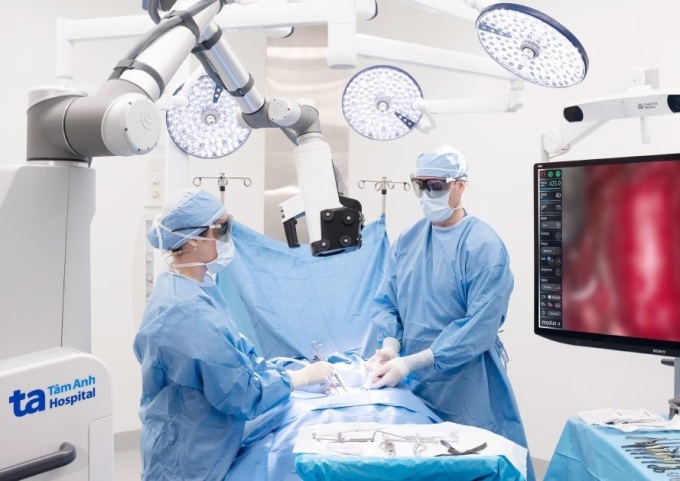
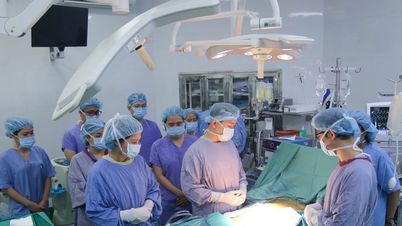
Brain surgeons use robots in their procedures. Photo: Tam Anh General Hospital
According to Dr. Tan Si, the introduction of the Modus V Synaptive brain surgery robot is considered a breakthrough in neurosurgery and cranial surgery, helping to overcome the limitations of traditional brain surgery methods, improving treatment effectiveness, and allowing patients to recover faster. Currently, only 10 countries worldwide are using this robot. In Vietnam, Tam Anh General Hospital in Ho Chi Minh City has introduced the robot into brain surgery.
Brain tumors are treatable and often involve a combination of treatments for optimal results. Patients experiencing symptoms of brain tumors such as severe and sudden headaches, seizures, dizziness, cognitive impairment, etc., should seek examination at reputable medical facilities.
Dung Nguyen
| To provide the latest information on brain tumor and hemorrhagic stroke surgery using the Modus V Synaptive robotic system, the only one of its kind in Vietnam, Tam Anh General Hospital System is organizing a week-long online consultation on VnExpress . The program runs from June 8th to 14th; readers can follow the program and submit questions here to receive answers from the doctors. |
Source link





![[Photo] Head of the Central Propaganda and Mass Mobilization Department visits and congratulates the Ministry of Health and the Military Traditional Medicine Institute.](https://vphoto.vietnam.vn/thumb/1200x675/vietnam/resource/IMAGE/2026/02/24/1771938483290_img-2682-3562-jpg.webp)

























![[Photo] White pear blossoms bloom across the border of Pho Bang](https://vphoto.vietnam.vn/thumb/1200x675/vietnam/resource/IMAGE/2026/02/24/1771927665653_a8-8280-jpg.webp)
![[Image] A dreamy "livable city" under pink clouds](https://vphoto.vietnam.vn/thumb/1200x675/vietnam/resource/IMAGE/2026/02/24/1771930060937_tp4-jpg.webp)




































































Comment (0)