Causes of dry skin
Dry skin can be caused by medical conditions or environmental factors, including:
Weather: When temperatures and humidity drop sharply, skin often becomes dry. However, this condition also occurs in people living in desert regions, where temperatures are high but humidity remains low.
Temperature: Heating, burning wood, electric heaters, and all other heating devices can reduce humidity, leading to dry skin.
Hot water: Taking hot showers can dry out your skin if you shower for too long. In addition, frequent swimming, especially in pools with high chlorine content, can also dry out your skin. Regularly washing your face with hot water can also make your skin prone to dryness.
Soaps and detergents: These products contain several moisture-absorbing ingredients that dry out the skin. Deodorants and antibacterial soaps are often the most damaging. Additionally, many shampoos can also dry out the scalp.
Sunlight: Sunlight can dry out the skin, and ultraviolet radiation can penetrate the top layer of skin and cause damage in deeper layers, leading to wrinkles, sagging, and drooping.
Skin conditions: Atopic dermatitis or a condition where many dead skin cells accumulate and form scales. Thick scales tend to cause dry skin.
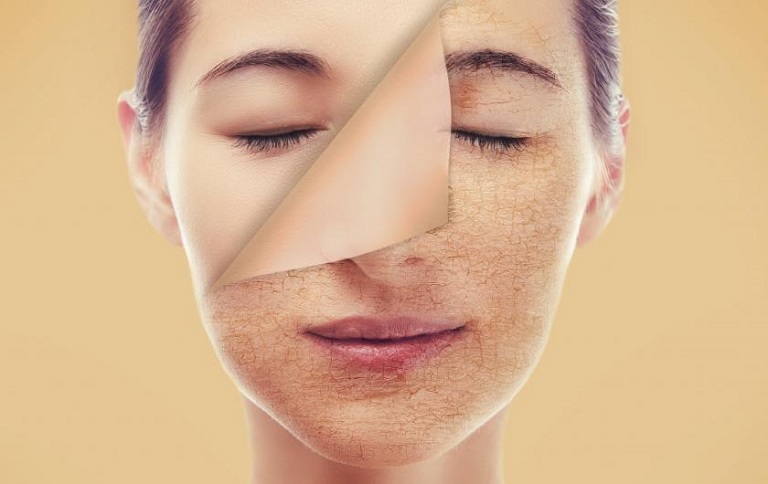
Winter weather is often quite dry and cold, which can easily lead to dry, cracked skin.
Vitamin deficiency: A lack of nutrients, unsaturated fatty acids, and vitamins contributes to dry skin. Deficiencies in vitamins C and E will make your skin increasingly dry and rough.
Proper winter skincare can prevent dryness and cracking.
No matter how you care for your skin externally, don't neglect improving it from the inside by drinking at least 2 liters of water every day. You can also drink milk, fruit juices, etc., to moisturize your skin and prevent dryness and cracking.
One of the most common methods for improving dry skin is using moisturizing cosmetics. You should choose high-quality moisturizing products from reputable sources for better results. In particular, prioritize products containing natural oils.
Furthermore, while winter usually has less sunshine, that doesn't mean you should neglect sun protection. Although the level of UV rays is lower, their impact is still sufficient to cause premature aging. Therefore, you should use a suitable sunscreen to protect your skin from harmful agents.
Changing your diet is an effective way to treat dry skin from the inside, complementing external treatments. Therefore, in addition to drinking enough water and eating plenty of fruits and vegetables, remember to supplement your diet with foods containing:
- Healthy fats: retain moisture, creating a barrier to keep water out of the skin.
- Vitamin A deficiency can cause rough, dry, cracked, and peeling skin.
- Vitamin B: helps keep skin firm and smooth and fights against signs of aging (dry skin is also a sign of aging).
- Vitamin C: stimulates collagen production – a key factor in forming the water-retaining network, maintaining moisture and elasticity in the skin.
- Vitamin E: protects the skin from harmful free radicals (which cause dryness and damage) while regenerating the skin's surface to combat flaking.
Rough, flaky, and dehydrated skin can stem from various causes, so to find the best way to treat dry skin, you must consider your specific condition and its severity. Additionally, combining different treatment methods will also yield better results.
- Do not use water that is too hot.
Using hot water in winter is unavoidable, but the habit of showering or washing your face with excessively hot water is not beneficial for your skin because it causes moisture to evaporate more quickly. Especially if you are exposed to a dry environment while your skin is still wet and unmoisturized, this process can worsen the problem significantly. Therefore, the top priority when caring for your skin in winter is to minimize the use of excessively hot water while always moisturizing promptly.
Source: https://suckhoedoisong.vn/cach-chamsocdamuadongphongnutne-169251117081606747.htm



![[Photo] The General Secretary, President and his wife begin their state visit to the Philippines.](https://vphoto.vietnam.vn/thumb/1200x675/vietnam/resource/IMAGE/2026/05/31/1780230559452_anh-man-hinh-2026-05-31-luc-19-28-11.png)
![[Photo] Admire the coral "masterpiece" amidst the million-year-old heritage of Dak Lak province.](https://vphoto.vietnam.vn/thumb/1200x675/vietnam/resource/IMAGE/2026/05/31/1780221235105_anh-man-hinh-2026-05-31-luc-16-53-27.png)
![[Photo] Solemn bathing ceremony and Buddha procession in Hue](https://vphoto.vietnam.vn/thumb/1200x675/vietnam/resource/IMAGE/2026/05/31/1780228263543_1-jpg.webp)





















![[Video] Sunset at Lap An Lagoon – Where the sun sets over the fishing nets](https://vphoto.vietnam.vn/thumb/340x192/vietnam/resource/IMAGE/2026/05/31/1780192137701_beach-landscape-sea-water-nature-grass-745871-pxhere-com.jpeg)






































![[Photo] Admire the coral "masterpiece" amidst the million-year-old heritage of Dak Lak province.](https://vphoto.vietnam.vn/thumb/402x226/vietnam/resource/IMAGE/2026/05/31/1780221235105_anh-man-hinh-2026-05-31-luc-16-53-27.png)


































Comment (0)