

TPO - This was the assessment of Ms. Ton Nu Thi Ninh - diplomat and President of the Ho Chi Minh City Peace and Development Fund - at the seminar "Limitations and Advantages of Vietnam and Vietnamese People in Building and Shaping Human Resources to Meet the Requirements of the New Era" organized by Hoa Sen University on March 1st, attracting hundreds of students and intellectuals.
TPO - This was the assessment of Ms. Ton Nu Thi Ninh - a diplomat and President of the Ho Chi Minh City Peace and Development Fund - at the seminar "Limitations and Advantages of Vietnam and Vietnamese People in Building and Shaping Human Resources to Meet the Requirements of the New Era" organized by Hoa Sen University on March 1st, attracting hundreds of students and intellectuals.
At the seminar, many students and alumni shared the hardships and difficulties they faced after leaving university to start working in businesses.
Pham Huynh Huong, a former student of Hoa Sen University and valedictorian of the Human Resources Management major in 2023, currently manages the operations of the F&B startup project Your Vibes Coffee & Space. She shared: “As a young graduate, despite receiving thorough professional training, I initially faced barriers in communicating with colleagues and superiors in the startup environment. Sometimes, even small questions about ordinary topics felt awkward to share with my colleagues.”
Meanwhile, Dang Ky Anh, a third-year English Language student at Hoa Sen University, cited her observations on the attitudes and work methods of young people in part-time jobs. Ky Anh noted that a lack of confidence, proactive communication with superiors, a lack of holistic perspective, illogical reasoning and presentation, and reluctance to propose initiatives are barriers for young people today.
According to Ms. Ton Nu Thi Ninh, higher education in Vietnam generally has many limitations, such as a lack of facilities and centers of sufficient scale and effectiveness to adequately and promptly meet the demand for technical and technological human resources (especially related to semiconductors and AI). Teaching and learning methods do not adequately and effectively meet the requirements of the new era, failing to develop analytical and synthetic abilities, comparative and evaluative skills , critical thinking, and knowledge not being updated to current trends. There are limitations in the application of AI, the foreign language proficiency of the majority of the workforce does not meet market demands, and knowledge of the world remains limited.
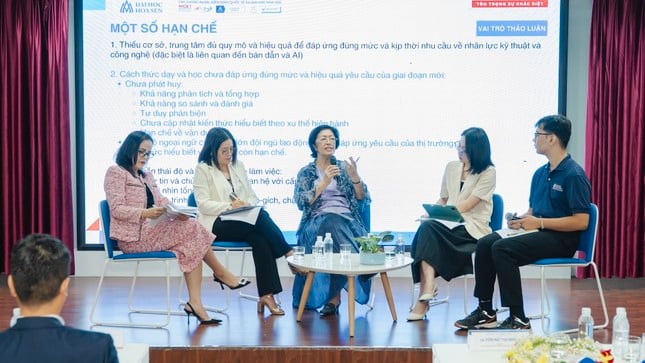 |
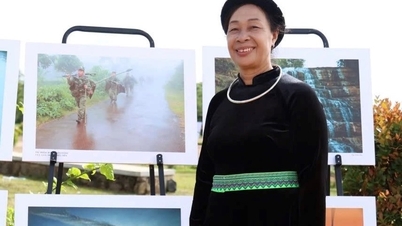
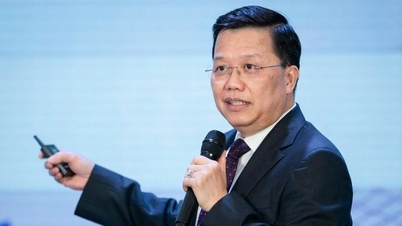
Ms. Ton Nu Thi Ninh shared her views on young Vietnamese workers. |
Furthermore, the general attitude and work methods of Vietnamese people still lack confidence and proactiveness in their relationships with superiors; they lack a holistic and systematic perspective; their arguments and presentations lack logic and coherence; and they rarely propose initiatives or policies.
Despite its limitations, Ms. Ninh believes that Vietnam still has many advantages over other countries, such as a flexible foreign policy; the Vietnamese government's policy of attracting FDI and promoting exports (the openness of the economy); the production and import-export landscape related to Asia in general, and China and Southeast Asia in particular; Vietnam's participation in many bilateral and multilateral trade agreements; the size of the labor market, the level of training and labor costs; and the diligence, ambition, openness, discipline, and quick learning capacity of Vietnamese workers.
Meanwhile, Dr. Phan Thi Viet Nam, Vice Rector of Hoa Sen University, stated that to realize Vietnam's goals, specifically to escape the lower-middle income category by 2025, achieve upper-middle income by 2030, and high income by 2045, with an average per capita income growth rate of approximately 7% per year by 2030, a breakthrough in human resources, especially high-quality human resources, is one of the key factors.
"However, many experts believe that our country's labor market has not yet kept pace with the speed and demands of socio-economic development, and its adaptability, proactiveness, and flexibility are still low, especially in the face of fluctuations such as the COVID-19 pandemic," Ms. Nam said, citing a 2022 report by the General Statistics Office, which showed that less than 30% of Vietnamese workers have professional skills and only 10% of Vietnamese workers meet the requirements in the context of the digital economy.
Although Vietnam's human capital index has improved in recent years, the skills of Vietnamese workers are still considered limited, ranking 47th out of 60 global labor markets. Vietnam's workforce is perceived as having both a surplus and a shortage – a surplus of cheap labor but a shortage of highly skilled professionals. The low level of foreign language proficiency among Vietnamese workers also poses significant challenges in the process of international integration.
Source: https://tienphong.vn/ba-ton-nu-thi-ninh-cach-day-va-hoc-chua-dap-ung-yeu-cau-cua-giai-doan-moi-post1721479.tpo






































































Comment (0)