

When the weather turns cold, the body is more susceptible to colds, digestive disorders, joint pain, and respiratory illnesses. In the treasure trove of traditional medicine, ginger is considered one of the simplest yet most effective remedies, easy to find, easy to use, and suitable for many people if used correctly.
1. Ginger – a familiar herb in traditional medicine.
- 1. Ginger – a familiar herb in traditional medicine.
- 2. Chemical composition and biological effects of ginger
- 3. Classification and uses of different forms of ginger in traditional medicine
- 4. Applications of ginger in preventing and treating illnesses during the cold season.
- 5. Some folk remedies using ginger
- 6. Notes on using ginger
Ginger, scientifically known as Zingiber officinale Roscoe , belongs to the ginger family (Zingiberaceae). In traditional medicine, ginger is also known by various other names such as sinh khương, can khương, bào khương, etc. The part used for medicinal purposes is the rhizome, commonly called ginger root.
According to traditional medicine, ginger has a pungent taste, a warm nature, and acts on the Lung, Spleen, and Stomach meridians. Ginger has the effects of dispelling cold and relieving external symptoms, warming the body and dispelling cold, stopping vomiting, clearing phlegm, reducing cough, and detoxifying. It is precisely these pungent, aromatic, and warming properties that make ginger both a popular spice and a widely used medicine in preventing and treating diseases.
2. Chemical composition and biological effects of ginger
According to Dr. Huynh Tan Vu, a specialist at the University Medical Center of Ho Chi Minh City, the components that give ginger its spicy taste and pharmacological effects are mainly compounds such as gingerol, shogaol, and zingerone, with gingerol being the most abundant. In addition, ginger also contains volatile compounds such as α-camphene, β-phellandrene, eucalyptol, and cineol.
Cineol in ginger has a stimulating effect when applied topically and a bactericidal effect on many bacteria. Gingerol is the main bioactive compound, possessing anti-inflammatory properties, aiding digestion, reducing nausea, and helping the body fight off the common cold and flu.
When ginger is dried or heated, gingerol transforms into shogaol – a compound with a stronger spiciness. This explains why dried ginger is more pungent than fresh ginger. Meanwhile, when processed at moderate temperatures, gingerol transforms into zingerone, which has a milder aroma and a sweeter, spicier taste.
Studies show that gingerol and shogaol increase intestinal motility, helping food move more easily through the digestive tract, while zingerone helps reduce intestinal spasms and inhibit excessive peristalsis in the colon.
Ginger is considered an effective anti-emetic and anti-nausea remedy, particularly for nausea caused by motion sickness or pregnancy, and it also reduces intestinal spasms. Ginger is also used as an anti-inflammatory and pain reliever.
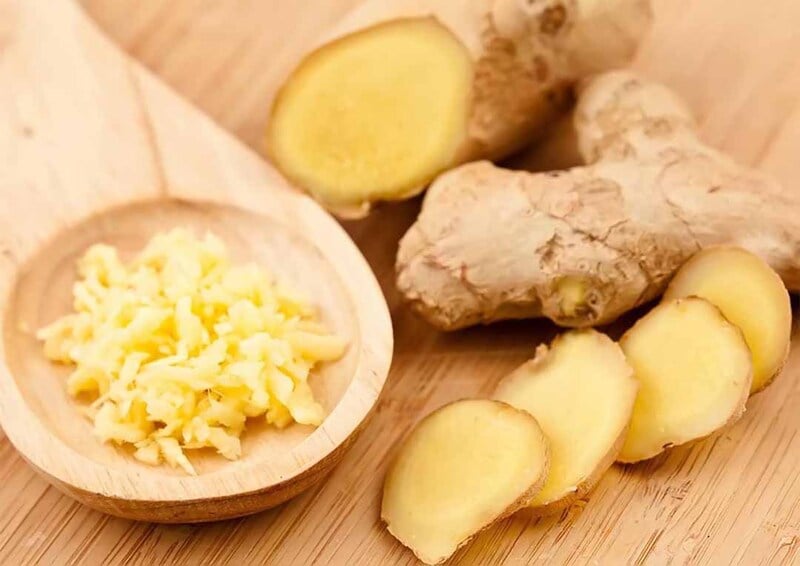
Ginger is a familiar spice in everyday meals, and it is also an important medicinal herb in traditional medicine.
3. Classification and uses of different forms of ginger in traditional medicine
- Fresh ginger: It has the effect of dispelling wind-cold, relieving external symptoms, and preventing vomiting. It is often used for colds, coughs, nausea, and bloating.
- Dried ginger (Can khương): Its warming properties are stronger than fresh ginger (sinh khương), and it can warm the spleen and stomach. It is often used for abdominal pain caused by cold, diarrhea, and cold hands and feet.
- Ginger peel: Has diuretic effects.
- Roasted ginger and charred ginger: These are processed forms of ginger intended to enhance or adjust their effects, often used in combination with other medicinal ingredients.
In pharmaceutical preparation, ginger is also used to regulate the properties of other medicinal herbs, which can help physicians achieve several important goals. For example, rehmannia root cooked with ginger will reduce its cooling properties. Pinellia tuber prepared with ginger helps detoxify. Some other herbs such as ginseng and Centella asiatica are also often infused with ginger and stir-fried to increase their warming properties and direct them to the lungs and stomach.
4. Applications of ginger in preventing and treating illnesses during the cold season.
- Supporting the treatment of colds, coughs, and respiratory illnesses : Dr. Huynh Tan Vu, MD, said that fresh ginger is commonly used in folk medicine to treat colds, headaches, nasal congestion, and coughs with phlegm. Thanks to its effect of dilating capillaries and promoting sweating, ginger helps warm the body from the inside, supports blood circulation, and helps the body fight against respiratory pathogens.
- Reduces digestive disorders caused by cold : During cold weather, symptoms such as stomach chills, bloating, indigestion, and nausea are common. Fresh ginger or ginger tea helps stimulate digestion, increase gastric juice secretion, improve appetite, and support nutrient absorption. The recommended daily dose is 4-8g, taken as a decoction.
- Relieving pain caused by cold (stomach pain, back pain, neck and shoulder pain, joint pain): Roasted or dried ginger is used to treat cold-induced stomach pain and diarrhea. Ginger wine or roasted ginger with salt can be used for massage or hot compresses to relieve back pain, neck and shoulder pain, and joint pain in cold weather. Additionally, soaking feet or hands in ginger water or taking a ginger bath can help keep the body warm and relaxed.
5. Some folk remedies using ginger
- To treat chronic cough and belching: Crush fresh ginger to extract the juice (1 teaspoon), mix with honey (1 teaspoon), heat gently, and drink in small amounts gradually.
- To treat stomach pain, cold stomach, and diarrhea: Eat roasted ginger while it's hot, or boil it in water and drink the decoction.
- To treat bloating, indigestion, diarrhea, cold extremities, weak pulse, phlegm, cough, asthma, and rheumatism : Use 4-20g daily in decoction or powder form (usually in combination with other herbs).
6. Notes on using ginger
Although ginger is a mild medicinal herb, it needs to be used in the correct dosage and for the right people. Dr. Huynh Tan Vu advises against consuming more than 5g of ginger per day. People preparing for surgery, those who have recently undergone surgery, those with bleeding disorders (nosebleeds, bleeding gums, postpartum hemorrhage, coughing up blood), and those taking anticoagulants or antiplatelet drugs should not use ginger. Theoretically, ginger is contraindicated in patients with visceral bleeding or those taking antiplatelet drugs or warfarin.
Ginger should not be used by people who sweat excessively or suffer from heatstroke. When applying ginger topically, test it on a small area of skin first to avoid irritation and do not leave it on for too long as it can cause burning, especially on sensitive skin. When eating ginger, wash the peel instead of peeling it completely, as the peel also has many uses.
With its warming and spicy properties and numerous beneficial bioactive compounds, ginger is a valuable medicinal herb that helps prevent and treat many common illnesses during the cold season. Using ginger correctly and in the right dosage not only contributes to improved health but also enhances the value of this familiar traditional medicine in daily life.
Readers are invited to read more:
Source: https://suckhoedoisong.vn/cach-dung-gung-phong-va-chua-benh-thuong-gap-trong-mua-lanh-169251220204448977.htm




















































































![[Photo Gallery] Dong Nai bursts with Christmas colors](https://vphoto.vietnam.vn/thumb/402x226/vietnam/resource/IMAGE/2025/12/23/1766504555135_2509973652807063001_2_20251223201437_20251223212305.jpeg)










Comment (0)