

High blood pressure increases the risk of heart disease, stroke, and kidney disease. The good news is that you don't need to rely entirely on medication; several natural foods have been scientifically proven to help lower blood pressure.
Research has shown that certain foods, such as fruits, vegetables, nuts, and fatty fish, can help lower blood pressure. Incorporating these foods into your diet can provide long-term health benefits.
Should you drink tea to lower blood pressure?
Drinking heart-healthy teas, such as hibiscus tea or chamomile tea, can be part of an approach to managing blood pressure.
The components in tea can dilate blood vessels, improve arterial function, reduce inflammation, and help regulate certain processes in the body that affect blood pressure.
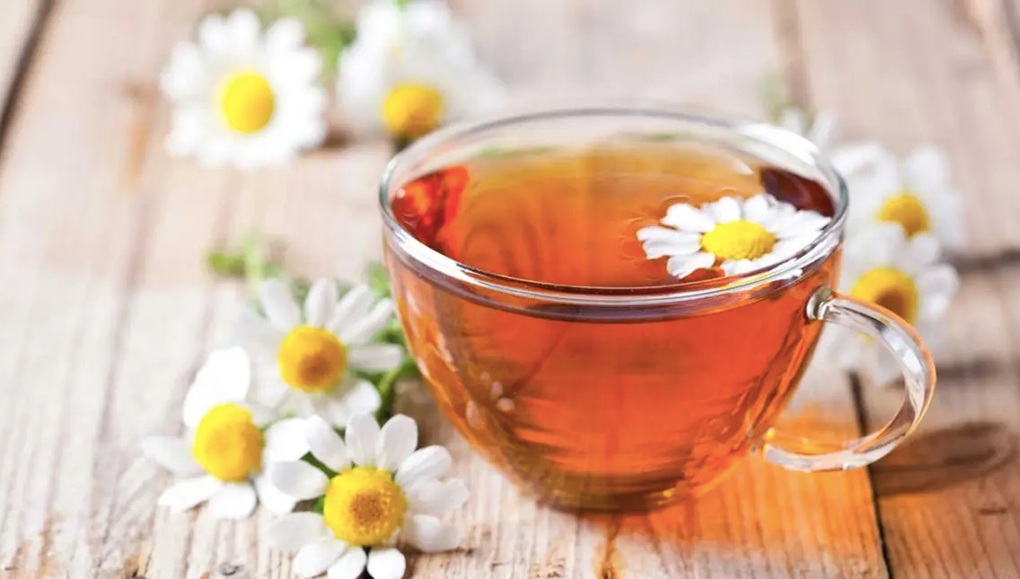
The components in tea may help lower blood pressure (Image: Healthline).
What are the best types of tea for people with high blood pressure?
Hibiscus flower tea
According to Nguyen Tri Phuong Hospital (Ho Chi Minh City), hibiscus tea is made from dried hibiscus petals. It has a red color and a pleasant, slightly sour taste. This tea contains compounds, including anthocyanins and polyphenols, that help relax blood vessels, leading to a reduction in systolic and diastolic blood pressure.
Drinking hibiscus tea regularly can also lower blood pressure, making it popular as a natural remedy for hypertension.
Green tea
Green tea is a popular beverage made from the leaves of the Camellia sinensis plant. It contains bioactive compounds called catechins, particularly epigallocatechin gallate (EGCG), which are associated with a variety of health benefits, including lowering blood pressure.
Studies have found that consuming green tea may slightly lower blood pressure. In one meta-analysis, healthy adults who added green tea to their diet experienced an average reduction of 2.99 mmHg in systolic blood pressure and 0.95 mmHg in diastolic blood pressure.
Olive leaf tea
This tea is made from olive tree leaves and has a mild herbal flavor. It contains compounds such as oleuropein and hydroxytyrosol, which are believed to help regulate blood pressure by promoting the relaxation of blood vessels.
Hawthorn tea
Hawthorn tea is made from the fruit of the hawthorn tree and has a slightly sweet and sour taste. Hawthorn tea can help dilate blood vessels, improve blood circulation, and contribute to lowering blood pressure.
Chamomile tea
Chamomile tea is made from dried chamomile flowers. It is known for its soothing, calming properties and is often used to promote relaxation and reduce stress, which may indirectly benefit blood pressure. It contains various beneficial compounds, such as flavonoids, terpenoids, and coumarins, which contribute to its medicinal properties.
This type of tea has anti-inflammatory and antioxidant properties, protects the liver, has potential anti-cancer effects, and regulates blood pressure.

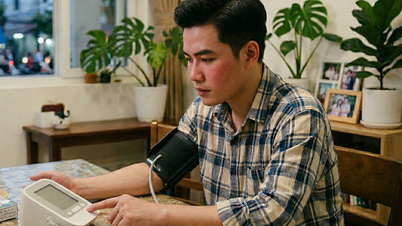
High blood pressure increases the risk of heart disease, stroke, and kidney disease (Illustrative image: NP).
What should I keep in mind when drinking tea?
Besides the benefits mentioned above, cardiovascular patients should drink tea in moderation and avoid excessive consumption, especially of black tea or teas high in caffeine, as this can increase blood pressure, cause insomnia, and increase the risk of various cardiovascular diseases.
Patients with cardiovascular disease should also consult their doctor before starting to drink tea or making any changes to their diet.
According to the National Institute of Nutrition, drinking large amounts of tea, especially strong tea, is not beneficial to health. The reason is that the central nervous system, cardiovascular system, digestive system, and kidneys are constantly stimulated in a state of excitement. In particular, people with heart disease and high blood pressure should avoid coffee and strong tea.
Dr. Phung Tuan Giang, Chairman of the Vietnam Institute for Research and Development of Traditional Medicine, advises that patients with kidney failure, liver disease, heart disease, or other serious cardiovascular problems should not use green tea extract without medical supervision.
Drinking more than eight cups of green tea a day may not be safe. These side effects can range from mild to severe and include headaches and irregular heartbeat. Green tea extract also contains a chemical that can cause liver damage when consumed in high doses.
Source: https://dantri.com.vn/suc-khoe/cach-giam-huyet-ap-nho-uong-tra-20250627095307918.htm
![[Photo] National Assembly Chairman Tran Thanh Man attends the policy seminar to promote Vietnam-Türkiye cooperation.](https://vphoto.vietnam.vn/thumb/1200x675/vietnam/resource/IMAGE/2026/04/16/1776351415367_vna-potal-chu-tich-quoc-hoi-tran-thanh-man-du-toa-dam-chinh-sach-thuc-day-hop-tac-viet-nam-tho-nhi-ky-8705791-jpg.webp)






























![[Image] Bridges and roads connecting the eastern part of Ho Chi Minh City](https://vphoto.vietnam.vn/thumb/1200x675/vietnam/resource/IMAGE/2026/04/16/1776328595108_ndo_br_bh-vt5-jpg.webp)



































![[Infographic] Details of the Hanoi-Quang Ninh High-Speed Railway Project](https://vphoto.vietnam.vn/thumb/402x226/vietnam/resource/IMAGE/2026/04/16/1776338188424_anh-man-hinh-2026-04-16-luc-18-16-10.png)

![[Photo] National Assembly Chairman Tran Thanh Man meets with the Speaker of the Georgian Parliament](https://vphoto.vietnam.vn/thumb/402x226/vietnam/resource/IMAGE/2026/04/16/1776338494029_anh-man-hinh-2026-04-16-luc-18-21-21.png)





























Comment (0)