Boiled pork is a familiar dish in many Vietnamese family meals. However, many people encounter problems with the meat being smelly, dry, tough, or losing its natural sweetness, even when choosing fresh, high-quality meat. The cause often lies in mistakes during the preparation and boiling process.
Soak the meat to remove the blood before boiling it.
According to Sina, soaking meat is a seemingly simple but very important step. Before boiling, the meat should be soaked in clean water for about 20-30 minutes. If you have time, change the water 2-3 times. This helps remove some of the blood trapped in the meat fibers – one of the main causes of fishy or unpleasant odors during cooking. After soaking, rinse the meat under clean running water before boiling.
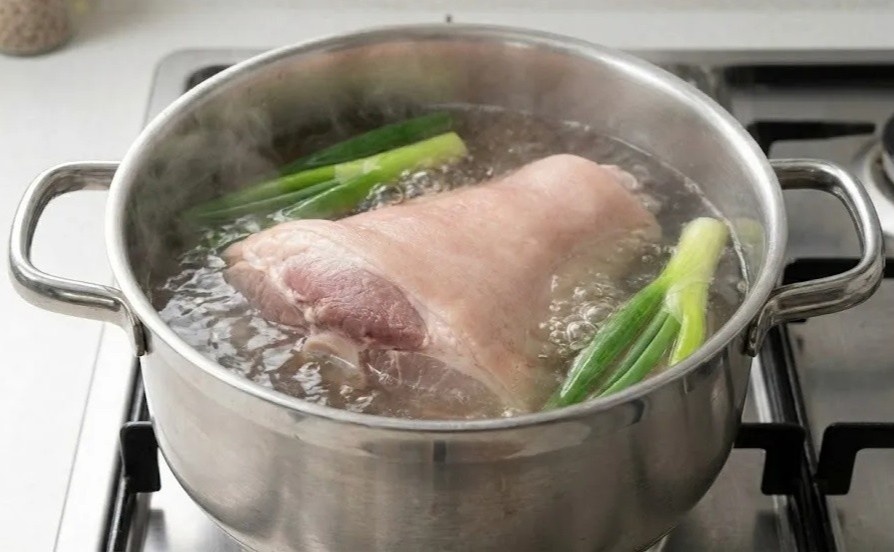 |
Meat should be blanched to remove the fishy smell. Photo: Cookpick. |
Blanch the meat to remove the fishy smell.
This step helps remove blood, impurities, and fat from the meat, while keeping the broth clear, free from cloudiness and unpleasant odors. Many people have a habit of boiling water before adding the meat to the pot, thinking it makes the meat cleaner. However, this is incorrect.
When exposed to high temperatures suddenly, the surface of the meat will shrink rapidly, making it difficult for excess blood and odor-causing substances inside to escape. As a result, the meat may still have a slight odor and may become dry and tough after boiling.
Instead, you should put the meat in a pot of cold water right from the start before turning on the stove. As the temperature gradually increases, impurities and excess blood will slowly be pushed out, resulting in cleaner and tastier meat.



How to do it:
- Add the pork to cold water and bring to a boil, skimming off the foam that rises to the surface frequently.
- Blanch the meat for about 3-5 minutes over low heat.
- After blanching, rinse the meat with warm water to remove any remaining impurities from the surface.
Boil the meat with ginger and scallions.
In many traditional recipes, ginger and scallions are two almost indispensable ingredients when boiling meat.
How to do it:
- When boiling, put the meat in a pot, add enough cold water to cover it, add a little salt, a few slices of crushed ginger, and a piece of green onion; this will significantly reduce the characteristic odor of the meat.
- Next, bring to a boil over high heat, then reduce the heat and simmer for 5 minutes.
- Additionally, you can add a few peppercorns to enhance the aroma and make the dish more flavorful.
A trick many chefs use is not to remove the meat immediately after turning off the heat. After boiling, cover the pot and let the meat soak in the water for about 10 more minutes. The remaining heat will help the meat cook evenly from the inside out, while retaining its moisture and natural sweetness. Thanks to this method, the sliced meat will be significantly softer, juicier, and more flavorful.
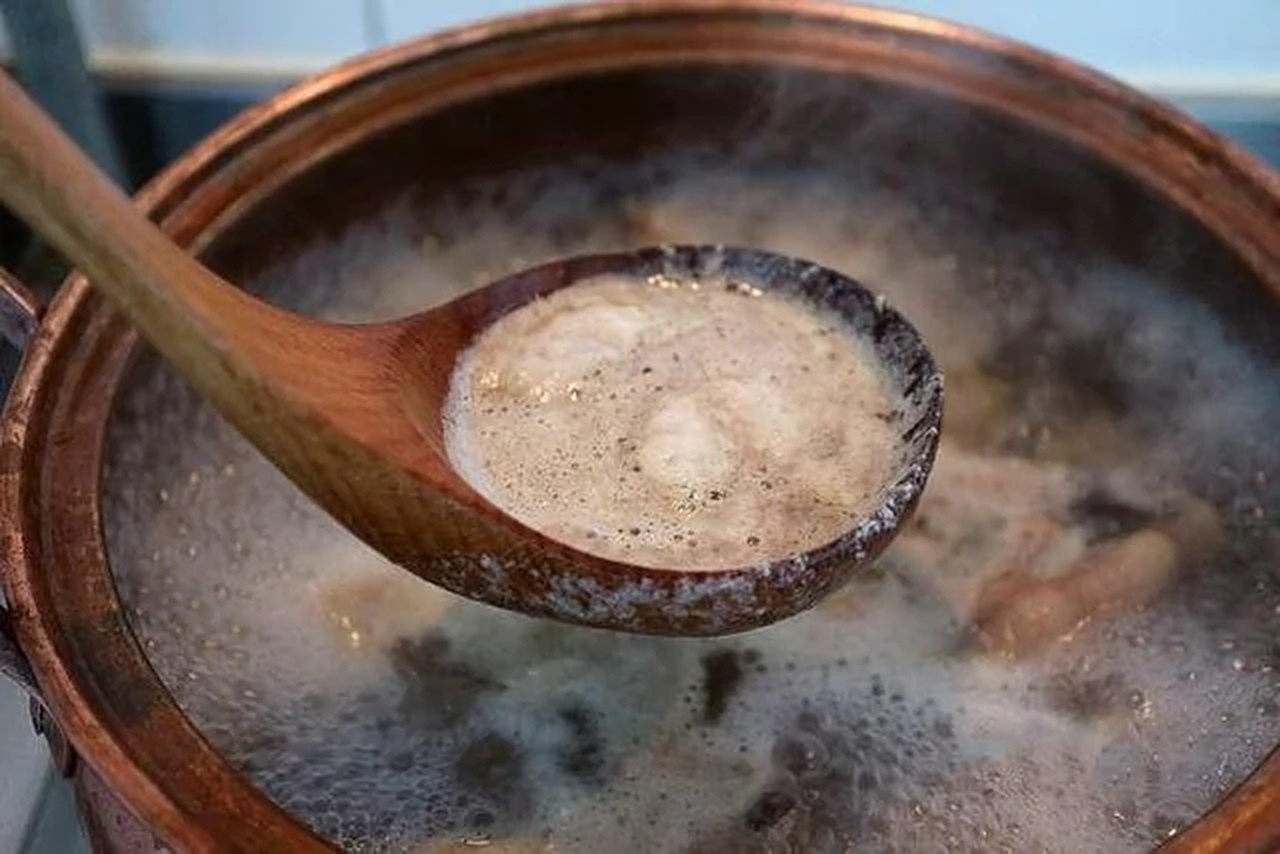 |
The gray, brown, or milky white foam that rises to the surface when boiling pork needs to be skimmed off. Photo: Baidu. |
Should the foam that rises to the surface when boiling pork be skimmed off?
Many people wonder what the gray or milky white foam that appears on the surface of water when boiling pork actually is. According to Aboluowang, this foam is mainly composed of dissolved proteins, excess blood, cellular fluid, and other impurities remaining in the meat. When exposed to high temperatures, these substances coagulate and float to the surface of the water.
The foam that appears when boiling pork can be divided into two types:



The first type is the foam that appears when fresh meat is first boiled. This foam is usually off-white or grayish-brown, containing excess blood, fat, and other impurities remaining in the meat. These are the "scum" that many people often refer to. It's best to use a ladle or small spoon to completely skim off this foam to make the broth clearer and reduce the fishy smell of the meat.
After skimming off the grayish-brown foam, a finer, whiter layer of foam may appear during continued cooking. This foam is mainly coagulated protein from the meat due to high temperatures. Unlike the initial foam, this protein can contribute to the rich flavor of the broth. Therefore, it's not necessary to completely remove the white foam that appears later.
Source: https://znews.vn/cach-luoc-thit-heo-thom-ngot-khong-bi-kho-post1658761.html