

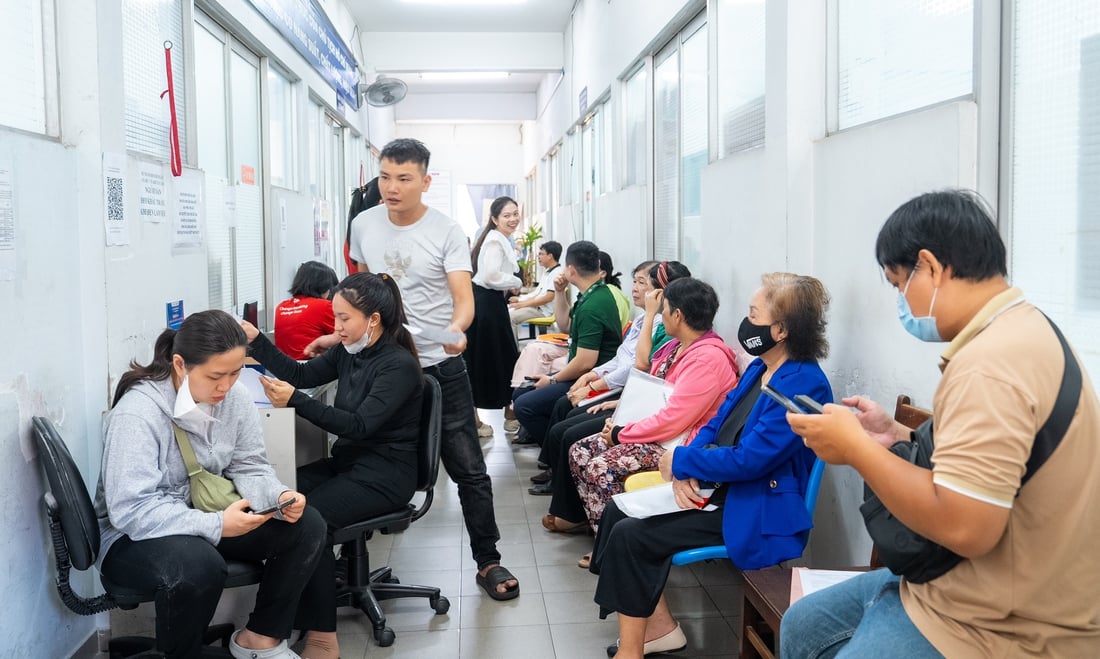
Business owners come to file their documents at Tax Office 14, Ho Chi Minh City on the morning of May 18 - Photo: HUU HANH
Mr. Dau Anh Tuan, Deputy Secretary General and Head of the Legal Department of the Vietnam Chamber of Commerce and Industry (VCCI), said that the results of a survey conducted in 2026 with more than 1,000 business households nationwide from February to April 2026 show a not-so-optimistic picture.
Defensive mentality
As many as 73.7% of business households reported only "low profits" in 2025, over 81% experienced a decrease in revenue, 75% saw a decline in customer numbers, and only 1.9% achieved the expected profit level.
The majority of businesses are operating at very thin profit margins—enough to survive but not enough to accumulate capital or withstand any further shocks. Business health is weak and has transformed into a defensive mindset.
"Even more noteworthy is that legal difficulties are considered the biggest source of pressure. 73.3% of business households reported this as a major or serious issue, higher than difficulties related to inputs, markets, or resources."
"The time spent complying with regulations is the most significant factor, with 73% of households rating the impact as large or very large. The burden of compliance is not just a financial expense, but also an opportunity cost in terms of time, effort spent learning the regulations, the cost of reorganizing business processes, and prolonged psychological pressure on household heads," Mr. Tuan emphasized.
Mr. Tuan also stated that a very important finding in the 2026 survey of household businesses is that the burden of compliance does not decrease as the household business grows larger; the level of difficulty tends to increase with the scale of revenue.
This means that as household businesses grow, instead of feeling more comfortable with formalization, many find that compliance costs and institutional complexity increase faster than their capacity to absorb them.
Many household businesses feel that expanding their scale leads to more complex accounting, cumbersome tax procedures, and increased personnel and technology costs, significantly stifleing the incentive to invest further. The institutional environment may inadvertently keep household businesses in a small-scale, defensive state, avoiding growth.
This is a very important bottleneck to consider from a policy perspective.

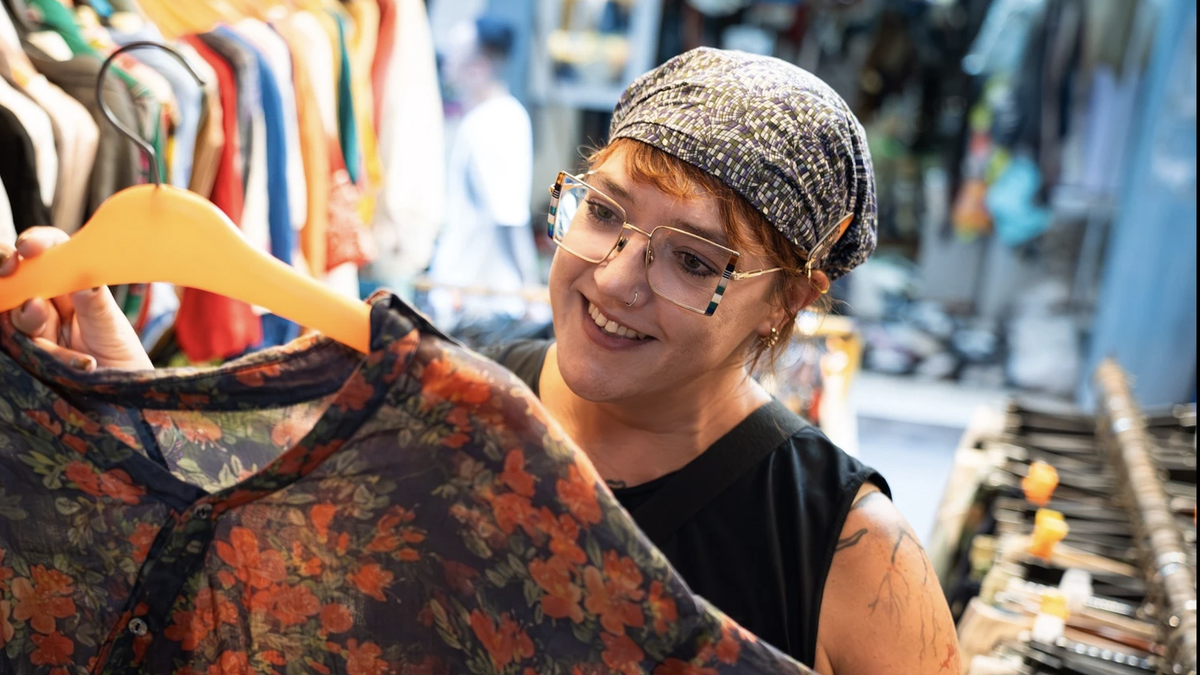
Customers choose artificial flowers at a flower shop in Tan Dinh ward, Ho Chi Minh City - Photo: HUU HANH
Appropriate support is needed.
Economist Pham Chi Lan believes that the decline in the "health" of household businesses in 2025 is largely due to market factors. Over 80% of surveyed households faced difficulties with market conditions, finding customers, and sourcing raw materials. Furthermore, households also struggled to access capital; and policy changes were too frequent, making it difficult for them to keep up.
Ms. Lan expressed the view that it is necessary to classify household businesses in order to provide appropriate support solutions, helping them to do business better. Initially, the focus should be on supporting the 13% of household businesses that can register as enterprises. For the remaining household businesses, there should be no pressure or coercion to register as enterprises.
If the remaining household businesses see that becoming enterprises is a good and stable option, then many more household businesses will follow suit the following year. Right now, household businesses haven't realized this, so they haven't converted into enterprises yet.
For the 13% of household businesses ready to become enterprises, they also need support and detailed guidance on what they need to do to improve their management and financial capabilities, and what requires invoicing.
In addition, the government can provide support through industry associations to open training courses for household businesses to transform into enterprises.
"If we can do this, I believe many household businesses will be willing to convert into enterprises to operate more transparently," Ms. Lan added. In the long term, Ms. Lan agrees that it is very important to guide household businesses to grow and register as enterprises.
By establishing a business, they will have more advantages in long-term operations, become more organized, meet the demands of society and consumers, better control product quality, and avoid potential risks, especially in the field of food safety.

Graphics: TUAN ANH
5 solutions
Dr. To Hoai Nam - Permanent Vice President and General Secretary of the Association of Small and Medium Enterprises - stated: "To improve the performance of household businesses, we must first change our management mindset. We shouldn't just view household businesses as 'tax management subjects,' but rather as an important socio-economic force of the country."
To promote the development of the private economy and improve the "health" of household businesses in accordance with the spirit of the Party's major resolutions, especially Resolution 68, Mr. Nam recommended focusing on five key groups of solutions.
Firstly, we must "ease the burden on the people," reducing the cost and procedural pressures for small businesses. Many households are already struggling, and having to bear additional costs for electronic invoices, software, accounting, declarations, etc., along with overly complex regulations, will discourage many from expanding their businesses.
Secondly, tax policies need to be aligned with the actual profit margins of each industry. For example, grocery stores, restaurants, and small businesses have high revenues but very low profits. If taxes are levied or management is rigid, focusing solely on revenue can easily put pressure on people's livelihoods. The government should prioritize nurturing long-term revenue sources rather than focusing solely on short-term gains.
Thirdly, support for household businesses to undergo digital transformation must be provided in a way that is simple, easy to use, and low-cost. Many elderly household owners are unfamiliar with technology, so they often struggle when adopting electronic invoices or digital management. If policies are only mandated without direct training and guidance, they will be very difficult to implement in practice.
Fourth, it is necessary to expand access to capital and stable business premises. Currently, household businesses find it difficult to borrow capital due to a lack of collateral and unstandardized accounting records. Meanwhile, this is a highly flexible sector that creates direct jobs for society. If given access to appropriate credit, they can develop very quickly.
Fifth, we must build confidence so that household businesses "want to grow," rather than "fear growing." The reason isn't that they don't want to grow, but rather that they worry about sharply increased compliance costs, more inspections, and more complex procedures. Therefore, a flexible transition roadmap is needed, with genuine support in tax, accounting, legal matters, and management training.
Mr. Nam affirmed that if we consider household businesses as the "seeds of enterprise" of the economy, supporting their natural and sustainable growth, then this will be a very important resource for achieving the goal of developing 2 million businesses and building a strong private economy in the coming period.
An environment that matches one's abilities.
According to VCCI, a favorable business environment for household businesses is not only one with few market barriers, but also one where compliance costs are simple, understandable, predictable, and commensurate with the capacity of the implementing group.
"If we approach the household business sector with an educational , supportive, empathetic, and constructive spirit, we can absolutely achieve the goals of transparency and digital transformation while maintaining the dynamism and flexibility that are the most valuable assets of the household business sector," Mr. Dau Anh Tuan commented.
What do the numbers of businesses withdrawing tell us?
It is noteworthy that in recent years, the number of newly registered businesses has increased sharply, but the number of businesses withdrawing from the market has also been very large.
This shows that our investment and business environment is not yet good enough for micro, small, and medium-sized enterprises to operate. In some years, the number of businesses withdrawing from the market is equal to 50-60% of the number of newly established businesses, and at times it has reached about 90% as in 2025.
"Increasing the number of businesses is good, but creating a favorable environment for businesses to maintain long-term operations in the economy will bring even more benefits," said Ms. Pham Chi Lan.
We need to help small business owners and traders gain more confidence.

Tax officials at the local tax office in Ho Chi Minh City (Office 14) advise and assist business households in completing tax declaration procedures - Photo: HUU HANH
Some business owners say that the current tax calculation for each case is quite complicated, and many buyers and sellers could be negatively affected if they are not familiar with the regulations.
According to Mr. Son, a rice trader in Go Vap ward (Ho Chi Minh City), under current tax regulations, rice sold to customers for commercial use (buying and reselling) is taxed at 1.5%, but rice sold to customers for production (cooking and selling) is taxed at 4.5%.
However, in many cases, sellers cannot know the purpose for which the buyer intends to purchase the rice, making it difficult to proactively manage this issue. Furthermore, some buyers may use the rice for both commercial and industrial purposes, raising concerns about tax calculation. Therefore, if tax authorities discover that the rice was used for purposes other than intended, the seller may also be held liable.
According to Mr. Son, applying the tax declaration system helps to increase transparency in business operations, makes things fairer for household businesses, and promotes progress. However, the simultaneous introduction of many new regulations, completely changing the system, and the lack of clarity in some regulations inevitably leads to some household businesses feeling overwhelmed, potentially causing them to consolidate production to avoid risks.
As a household business owner in the aluminum and glass industry in Binh Thanh ward, Mr. Nguyen Quoc Dinh said that although he always complies with tax policies and has been spending money on external services to support tax declaration and payment, he still sometimes feels uneasy, especially regarding overlapping input and output invoices, which are difficult to report.
"Hopefully, the tax sector will reduce unnecessary procedures and introduce more simplified technological solutions to lessen the workload for business households, minimize errors, and allow them to confidently produce and expand," Mr. Dinh said.
Meanwhile, Ms. Tran Minh Nguyet, a household business owner at Thu Duc wholesale market, said she is still confused about the input documents for agricultural and forestry products purchased from farmers. Current regulations allow household businesses to create a list of input agricultural and forestry products without invoices for easier tax declaration.
However, when issuing invoices to customers, businesses often receive "risk warnings" from tax authorities who believe there is a discrepancy between output and input costs. This makes customers hesitant to order goods or make payments, and some even demand an explanation from the tax authorities regarding the term "risk warning."
"We comply with tax regulations and accept paying taxes as required, but business operations in the industry are still chaotic due to not keeping up with tax regulations. This significantly affects normal operations, not to mention the goal of expanding the business. I even fear making mistakes, fear being penalized by the tax authorities, so I'm operating at a reduced capacity," Ms. Nguyet shared.
According to a financial expert in Ho Chi Minh City, business households themselves need to adapt to avoid being left behind in an era where the business environment, policies, and consumer preferences are constantly changing.
"From the government's perspective, we can provide more training for small businesses to make it easier for them to access effective online sales channels, especially for small traders. In addition, there should be policies to exempt or reduce taxes and fees during necessary periods, and especially provide additional capital support with low interest rates so that businesses can confidently maintain and expand production," this person suggested.
I would appreciate guidance and training.
Mr. Tai Sang, the owner of a fabric business in Duong Noi ward (Hanoi), is still unsure how he will have to declare taxes and issue electronic invoices, even though his revenue reaches several billion VND per year.
"Every time I ship goods, I write a receipt on paper and keep it. Recently, I've heard on TV about stricter tax regulations for household businesses; those with revenue exceeding 1 billion VND will have to declare value-added tax and personal income tax, but I honestly don't know how to declare them correctly according to the regulations."
With the current new regulations, we would greatly appreciate specific guidance and training from the local tax authorities on how to issue electronic invoices and file taxes in accordance with the law."
Source: https://tuoitre.vn/cach-nao-cai-thien-suc-khoe-ho-kinh-doanh-2026051908344358.htm


































































































Comment (0)