The core principle when choosing subjects.
According to the 2018 General Education Program, upon entering 10th grade, students must complete eight compulsory subjects: Literature, Mathematics, Foreign Language 1, Physical Education, National Defense and Security Education, Career Guidance and Experiential Activities, Local Education, and History. In addition to this core curriculum, students are allowed to choose four more subjects from nine elective subjects: Geography, Economics and Law Education, Physics, Chemistry, Biology, Technology, Informatics, Music, and Fine Arts, and must also choose various specialized study topics.
Choosing a subject combination at the beginning of secondary school is especially important because it forms the foundation for students to maximize their abilities and strengths, creating a solid basis for shaping their university admissions choices and future careers. Choosing the wrong path, one that doesn't match their abilities or interests, can lead to countless difficulties in their studies and may even force them to change their career path later on.
As one of the first localities nationwide to announce the 10th grade entrance exam results, the story in Ninh Binh clearly reflects the preparation of families. Ms. Nguyen Thi Thu Hien (Vu Duong commune) shared her joy when her son was admitted to Tong Van Tran High School. Immediately afterwards, she received information from the school about the plan to arrange classes according to pre-determined subject combinations.
The school arranged four classes for elective subjects: Physics, Biology, Chemistry, and Informatics, aiming towards the A00 university entrance exam combination (Mathematics, Physics, Chemistry). Another class, also in Physics, Biology, Informatics, and Chemistry, focused on the B00 combination (Mathematics, Chemistry, Biology). For the technology and language fields, the school allocated five classes for elective subjects: Physics, Informatics, Chemistry, and Industrial Technology, aiming towards the A01 combination (Mathematics, Physics, English), and three classes for elective subjects: Industrial Technology, Biology, Geography, Economics, and Law, aiming towards the D01 combination (Mathematics, Literature, English). After carefully considering her child's abilities and consulting with middle school teachers, Ms. Hien decided to register her child's first choice for the D01 combination-oriented class and her second choice for the A01 combination-oriented class.

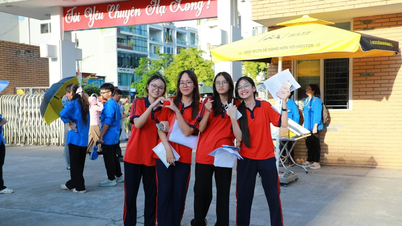
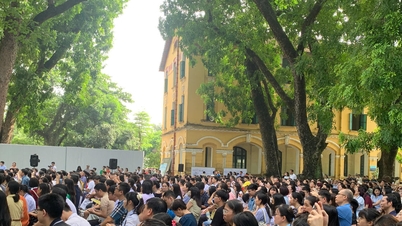
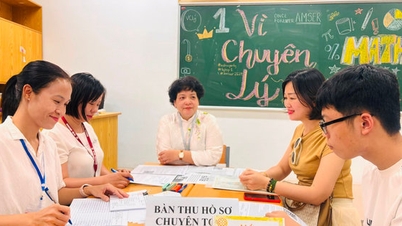
However, the reality is that not all parents fully understand the nature of choosing elective courses and early university admission orientation. Mr. Le Hong Chung, Principal of Cau Giay High School in Hanoi, said that the school will hold a meeting with all parents whose children have been admitted on June 20th to provide detailed information about the program and training combinations for the new academic year. According to Mr. Chung, the core principle when registering for a combination of subjects is to base it on two key factors: the student's actual academic ability and their future career aspirations.

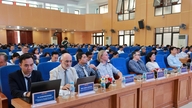
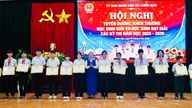
Looking back at the early years of implementing the 2018 General Education Program, this principal shared that many students requested to change subjects or subject combinations after a period of study because they felt overwhelmed. Notably, the wave of switching largely occurred among students who initially chose natural science subjects but later had to request to switch to social science subjects. The main reason was that the knowledge in natural science subjects at the high school level was much heavier and more in-depth than at the junior high school level - the general Natural Science subject had been separated into three independent subjects: Physics, Chemistry, and Biology, causing many students to feel overwhelmed when trying to keep up with the initial curriculum. Recently, thanks to early guidance, the number of subject changes has decreased significantly.
The school changed its strategy.
Sharing the same perspective on the consequences of choosing the wrong path, Ms. Nguyen Tuyet Thanh, a high school geography teacher in Ninh Binh, sadly shared a real-life story about students who, even in 12th grade, still requested to change classes because they "misidentified their university entrance exam subject combinations."
Many students, starting in 10th grade, chose social science subjects with the goal of pursuing the C00 combination, which includes Literature, History, and Geography. However, due to changes in university admission methods in recent years, where the C00 combination has lost its prestige and is even no longer offered in many majors, students have been forced to shift their focus to other combinations to seek opportunities. This situation has occurred repeatedly over the past two years, raising an alarm about the strategic importance of choosing subjects from the beginning of secondary school.
The latest statistics from the Ministry of Education and Training clearly demonstrate this shift in trend. This year, nearly 714,000 candidates nationwide chose the natural science trio of Physics, Chemistry, and Biology, while nearly 940,000 chose the social science trio of History, Geography, and Economics and Law. The gap in the number of candidates between the two fields has narrowed significantly. This clearly reflects the trend of students increasingly proactively choosing exam subjects related to their career orientation, actual university admission needs, STEM education, and the growing demands of international integration.
Teacher Le Hong Chung outlined two principles for selecting subjects in 10th grade: based on the student's abilities and their future university admission goals.
Commenting on the overall picture, teacher Le Hong Chung affirmed that this is an inevitable trend in modern education. Therefore, in current high schools, the model of classes purely focused on the C00 subject combination has almost disappeared. Instead, the list of elective subjects in most classes now includes natural sciences, especially Physics. Choosing the A01 subject combination offers students a double advantage: they can apply to engineering schools while also opening doors to economics schools.



Given that English is always a strong point for students in the capital city, choosing the D01 combination focuses on economic fields, while the A00 combination leans heavily towards technical schools. The A01 combination is the perfect solution to balance both fields, giving candidates a wider and safer range of career choices before entering university.
Source: https://tienphong.vn/can-nhac-lua-chon-mon-lop-10-de-tranh-lech-pha-post1852471.tpo
![[Image] Schools organize meetings and introduce teaching models to students admitted to grade 10.](https://vphoto.vietnam.vn/thumb/1200x675/vietnam/resource/IMAGE/2026/06/25/1782368077271_ndo_br_z7970052192242-1ec8daeb77a6eed1a4e9f58c564ddd3e-jpg.webp)

![[Image] Ho Chi Minh City: Ma Lang area, Chicken-Rice Market about to change its appearance](https://vphoto.vietnam.vn/thumb/1200x675/vietnam/resource/IMAGE/2026/06/25/1782377698627_ndo_br_m1-jpg.webp)


![[Photo] General Secretary and President To Lam receives Palestinian Ambassador Saadi Salama](https://vphoto.vietnam.vn/thumb/1200x675/vietnam/resource/IMAGE/2026/06/25/1782365384740_a1-bnd-9423-8322-jpg.webp)