

On the morning of December 14th, in Hanoi, the Ministry of Education and Training held a conference to summarize 10 years of implementing Resolution No. 29-NQ/TW (Resolution 29, dated November 4, 2013) of the Central Committee of the 11th Party Congress on fundamental and comprehensive reform of education and training to meet the requirements of industrialization and modernization in the context of a socialist-oriented market economy and international integration.
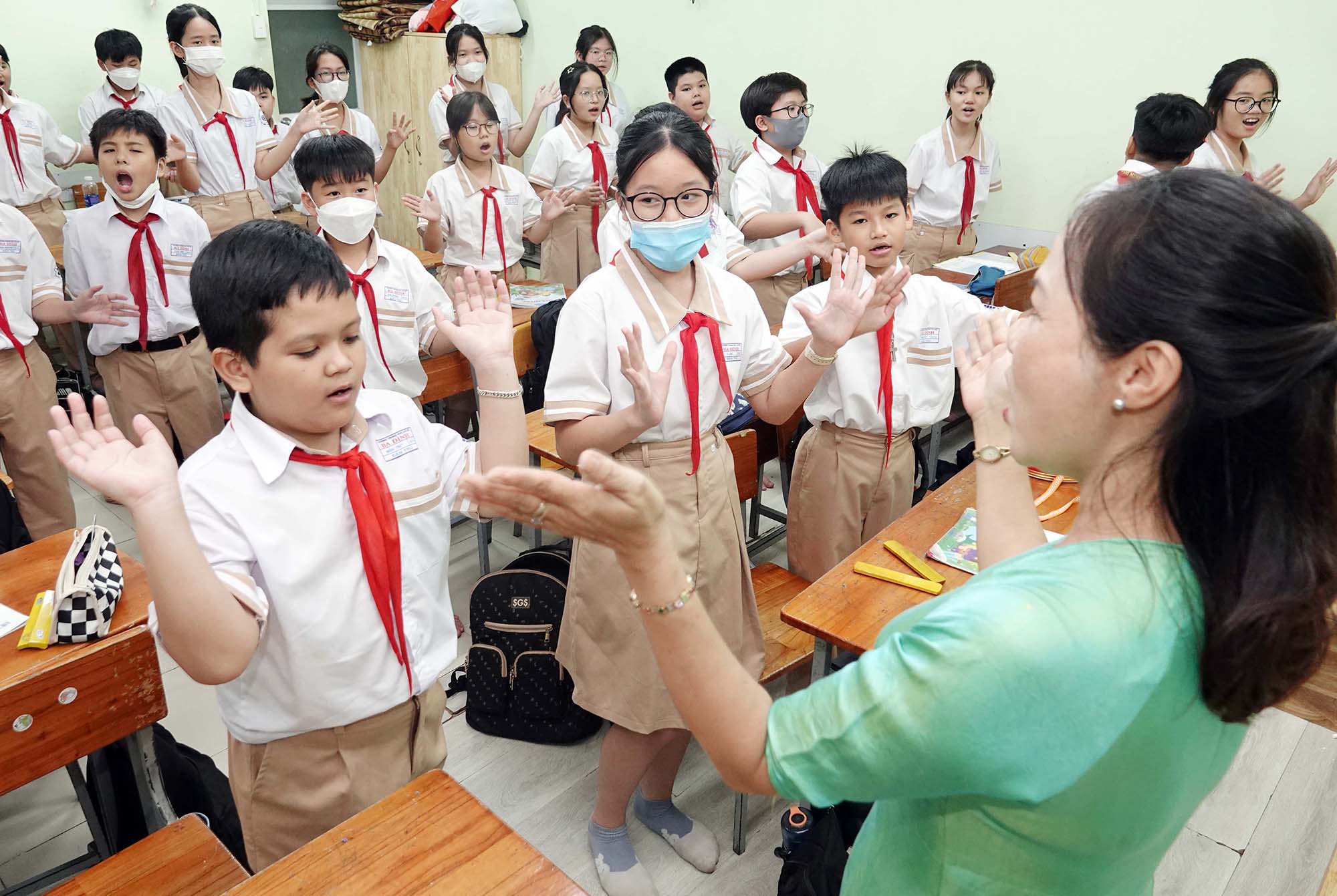
Teachers' salaries are still low compared to the general average of other professions (in the first 5 years, the average was only 5 million VND/month).
Low salaries lead to high rates of young teachers quitting their jobs.
According to the draft report summarizing 10 years of implementing Resolution 29 on the development of the teaching staff, the Ministry of Education and Training stated that, in addition to policies on training and professional development, and policies to attract talented students to the teaching profession, the Party and the State pay attention to caring for the teaching staff, with many policies to support teachers in addition to their salaries to increase their income, such as: seniority allowance for teachers; preferential allowance for teachers directly teaching at all levels, subjects, and target groups at levels from 25 - 70%; and regional allowance.
In addition, policies to honor and reward teachers have been implemented promptly, openly, and democratically by localities and educational institutions.
However, according to the Ministry of Education and Training, in reality, there are still many shortcomings regarding working conditions and inadequate remuneration policies for teachers; teachers' salaries are still low compared to the general level of other professions (in the first 5 years, the average teacher's salary only reached 5 million VND/month), failing to meet the goals set in Resolution 29; the salary and benefits have not created sufficient motivation in the context of increasing work pressure for teachers.
Report from the Ministry of Education and Training
Notably, the number of students nationwide has increased rapidly due to natural population growth, coupled with the implementation of the policy to streamline staffing, leading to a shortage of teachers in many localities. The recruitment and management of teacher staffing based on administrative boundaries makes it difficult to arrange and transfer teachers from areas with a surplus to areas with a shortage. The attractiveness of the profession is limited due to high work pressure and low income, especially for young teachers. The rate of teacher resignations has been increasing in recent years, with teachers under 35 years old accounting for 60% of those resigning. "The increasing rate of teacher resignations is mainly due to professional pressure and inadequate salary policies, leading teachers to choose other jobs with higher incomes. The teaching staff is affected by many different regulations, making policy adjustments for teachers difficult," the Ministry of Education and Training report stated.
PROPOSAL TO AVOID MECHANICAL STAFF REDUCTIONS
Speaking at the conference, Mr. Tran The Cuong, Director of the Hanoi Department of Education and Training, said that in implementing Resolution 29 on fundamental reform of education and training, Hanoi has implemented many solutions, focusing on developing the teaching staff. However, Mr. Cuong also pointed out that Hanoi currently lacks more than 10,000 teachers compared to the set requirements. Each year, the number of students in Hanoi increases significantly; on average, the city needs to build 35-40 new schools annually to accommodate all students. For example, this year the number of students has increased dramatically, with approximately 7,000 more in grade 1 and 58,000 more in grade 6, so Hanoi must be very determined to ensure sufficient school places for all students.
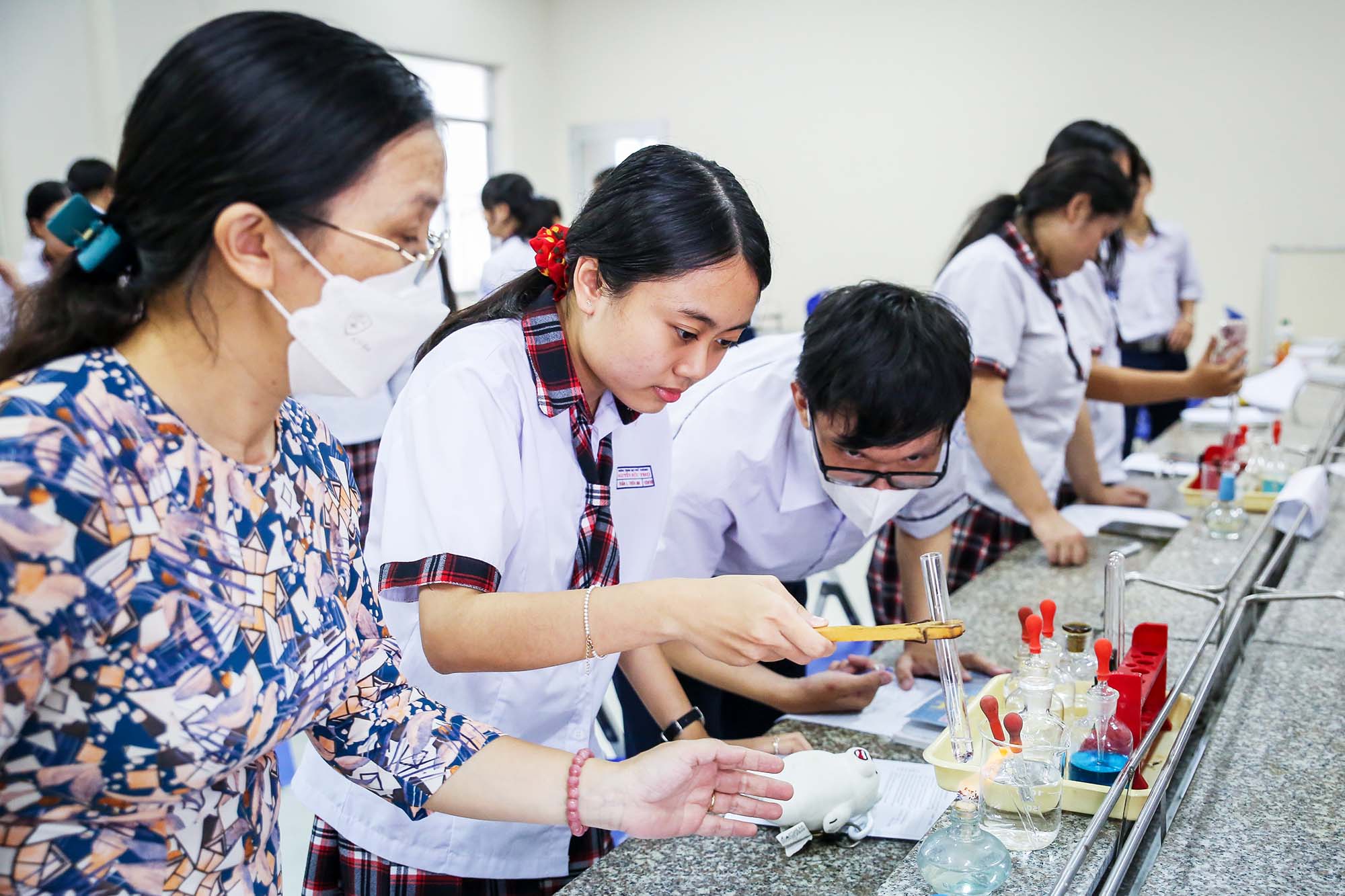
Teachers play a decisive role in the educational reform process.
Mr. Cuong proposed several recommendations, including adding to the draft the issue of the unimplemented salary policy for teachers as stipulated in Resolution 29. Specifically, he suggested that "teachers' salaries are ranked highest in the administrative and public service salary scale system," therefore, he proposed that the Ministry of Interior advise the Government to pay attention to and create conditions for implementing the salary policy for teachers as stipulated in Resolution 29. He also suggested that the Ministry of Interior advise the Government to increase the recruitment of teachers to address the current teacher shortage in Hanoi and other localities; and not mechanically apply the requirement to reduce the minimum staff by 10% for educational institutions. "I propose that the Ministry of Interior study and consider adjusting the number of deputy heads at large-scale schools such as multi-level schools, schools with many levels of education, and key schools. If the current regulation only allows two deputy heads, it will be very difficult for large-scale educational institutions," Mr. Cuong said.
The Director of the Hanoi Department of Education and Training also expressed a desire to add regulations on autonomy in public general education to the resolution, as the current draft only addresses autonomy mechanisms for higher education institutions. The Hanoi Department of Education and Training is actively advising on the issue of autonomy for public schools in the city. They will consider pricing services for education to help resolve the "bottleneck" of staffing shortages and promote autonomy in schools.
EDUCATION PLAYS A DECISIVE ROLE IN THE REFORM PROCESS
In his closing remarks at the conference, Mr. Nguyen Kim Son, Minister of Education and Training, stated that the Politburo's conclusions in the near future will certainly address several key points, revolving around three main issues: awareness, institutions, and resources.
Regarding awareness, Resolution 29 itself represents a shift in perspective on education; however, awareness at all levels and sectors within education remains a major issue. Further awareness is needed regarding investment in education, autonomy in education, the socialization of education, and professional issues within the sector. Alongside a comprehensive and thorough understanding, more importantly, corresponding action is required, and this action must be carried out effectively and effectively.
"If we only focus on increasing awareness, we'll continue to tell each other every day that 'education is the top national priority,' but that's all we can do. The issue of taking action to match this awareness remains a major challenge that needs to be addressed so that the issues outlined in Resolution 29 can be fully and thoroughly implemented in the coming period," Minister Son emphasized.
Regarding institutional issues, the Minister of Education and Training stated that it will be necessary to continue reviewing existing documents and laws, developing a new law, namely the Law on Teachers, and reviewing legal regulations to pave the way for socialization in education, autonomy in education, and other innovations.
The issue of resources includes educational finance, investment in education, and human resources. Two key words are money and people. We are increasingly recognizing the decisive role of teachers in this reform, and we will certainly have to do much more to develop the teaching staff to achieve the goals of educational reform in the coming time.
Mr. Son also stated that after this conference, the Ministry of Education and Training will continue to gather feedback and further refine the draft plan summarizing 10 years of implementing Resolution 29.
The budget for education and training has not yet met the minimum required percentage.
According to a report by the Ministry of Education and Training, investment in education has not met the requirements for innovation and development in education and training; the proportion of budget expenditure on education and training has not ensured the minimum 20% required by Resolution 29 and the 2019 Education Law. Budget allocation remains inadequate, with local budgets allocated to education mainly for salaries, and in some localities, the proportion of expenditure on education is not even guaranteed.
Budgetary investment in higher education remains very low. Many public higher education institutions lack sufficient financial resources to cover training costs (salaries, direct costs, administrative costs, depreciation of fixed assets) and reinvest to improve the quality of education. Tuition fees at public higher education institutions are slow to be adjusted to ensure sufficient coverage of costs according to the prescribed roadmap, thus affecting the financial autonomy of these institutions. Furthermore, significant non-state investment in education has not been attracted.
Source link


![[Photo] General Secretary To Lam receives President of the European Council Antonio Costa](/_next/image?url=https%3A%2F%2Fvphoto.vietnam.vn%2Fthumb%2F1200x675%2Fvietnam%2Fresource%2FIMAGE%2F2026%2F01%2F29%2F1769697816651_a1-bnd-5216-9741-jpg.webp&w=3840&q=75)


![OCOP during Tet season: [Part 3] Ultra-thin rice paper takes off.](/_next/image?url=https%3A%2F%2Fvphoto.vietnam.vn%2Fthumb%2F402x226%2Fvietnam%2Fresource%2FIMAGE%2F2026%2F01%2F28%2F1769562783429_004-194121_651-081010.jpeg&w=3840&q=75)


![OCOP during Tet season: [Part 2] Hoa Thanh incense village glows red.](/_next/image?url=https%3A%2F%2Fvphoto.vietnam.vn%2Fthumb%2F402x226%2Fvietnam%2Fresource%2FIMAGE%2F2026%2F01%2F27%2F1769480573807_505139049_683408031333867_2820052735775418136_n-180643_808-092229.jpeg&w=3840&q=75)
![OCOP during Tet season: [Part 1] Ba Den custard apples in their 'golden season'](/_next/image?url=https%3A%2F%2Fvphoto.vietnam.vn%2Fthumb%2F402x226%2Fvietnam%2Fresource%2FIMAGE%2F2026%2F01%2F26%2F1769417540049_03-174213_554-154843.jpeg&w=3840&q=75)





Comment (0)