At the meeting, the Steering Committee announced the Decision to reorganize the Steering Committee to consist of 19 members in accordance with Decision No. 166-BCĐ/TW, dated May 15, 2026, of the Politburo , and discussed and agreed on several issues.
Specifically, regarding the results of the work in the first six months of 2026, since the 29th Session, despite having to focus on implementing many major, important, and strategic tasks of the country, Party committees, Party organizations, functional agencies, and members of the Steering Committee have made many efforts, proactively and decisively implemented the work program and the directives of the General Secretary, President, and Head of the Steering Committee, achieving many positive results and making an important contribution to Party building and rectification and promoting socio- economic development.
Notably, the Central Committee, the Politburo, and the Secretariat have issued over 30 resolutions, directives, regulations, and conclusions on Party building, the political system, socio-economic development, and the prevention and fight against corruption, waste, and negative phenomena. The National Assembly and the Government have directed the review, amendment, supplementation, and promulgation of nearly 300 legal documents to promptly institutionalize the Party's new policies, address shortcomings and inadequacies, remove bottlenecks, and strengthen decentralization and delegation of power, while simultaneously controlling power and preventing corruption, waste, and negative phenomena .
The government, ministries, and localities have reviewed and updated an additional 1,501 projects, bringing the total number of outstanding, long-standing, and problematic projects to 4,492. Of these, 1,531 projects have been resolved. Party committees and inspection committees at all levels have disciplined 65 party organizations and 3,375 party members; including 2 officials under central management. Judicial agencies nationwide have initiated new investigations into 1,985 cases involving 4,671 defendants, prosecuted 1,886 cases involving 4,520 defendants, and conducted first-instance trials in 1,721 cases involving 4,415 defendants for corruption, economic, and official misconduct crimes.
Regarding asset recovery in non-performing loan cases, during the investigation phase, assets worth trillions of VND were temporarily seized, confiscated, frozen, and recovered; during the prosecution and trial phase, over 1,300 billion VND was recovered. During the civil enforcement phase, over 3,996 billion VND was recovered, including over 1,841 billion VND recovered in cases under the supervision and direction of the Steering Committee.

Regarding the key tasks for the last six months of 2026, the Steering Committee requests that Party committees and organizations at all levels, from now until the end of 2026, focus on directing the completion of tasks according to the 2026 work program and the conclusions of the General Secretary, the President, and the Head of the Steering Committee. The main tasks to focus on are: continuing to concretize and institutionalize the policies, tasks, and solutions according to Resolution No. 04-NQ/TW and Plan No. 03-KH/TW of the Politburo; creating breakthroughs in preventing and combating waste; and focusing on inspecting, investigating, and decisively handling serious and complex cases of waste and corruption occurring in key sectors of the economy.
Furthermore, relevant agencies need to coordinate closely, resolve difficulties and obstacles in implementation, and improve the efficiency of recovering and handling assets and evidence from the investigation, prosecution, and trial stages, as well as during the enforcement phase; considering asset recovery as an important measure of the effectiveness of handling corruption and waste. Strengthen early and proactive prevention, linked with power control at the grassroots level and data-driven monitoring. Continue to promote information, propaganda, and education on thrift, integrity, impartiality, and the prevention and control of corruption and waste; strengthen the dissemination of good and effective models and practices in practicing thrift, combating waste, and addressing long-standing, stalled projects and works with a high risk of loss and waste.
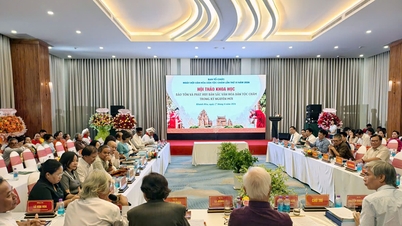
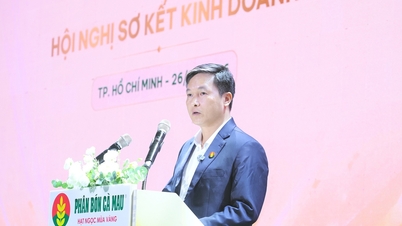
On the afternoon of June 18th, Dang Van Dung, Member of the Central Committee of the Communist Party of Vietnam and Deputy Head of the Central Internal Affairs Commission, chaired a meeting with media agencies to announce the results of the 30th session of the Central Steering Committee on Prevention and Control of Social Evils. Co-chairing the meeting were Trieu Tai Vinh, Deputy Head of the Central Propaganda and Mass Mobilization Commission; and Major General Nguyen Quoc Toan, Chief of the Office of the Ministry of Public Security.

At the meeting, the Chief of the Office of the Ministry of Public Security, Nguyen Quoc Toan, provided information on the fight against corruption, economic crimes, and abuse of power, highlighting several emerging methods and tactics of committing these crimes. Of particular note is the increase in corrupt and negative acts in the non-state sector. While previously corruption crimes mainly occurred in the public sector, there is now an increasing number of cases involving joint-stock companies, private enterprises, and non-state economic organizations.
Furthermore, criminals are increasingly exploiting the digital transformation process to conceal their criminal activities through encrypted communication platforms, virtual assets, electronic records, and online financial transactions to hide and legitimize corrupt funds; they also exploit new business models such as resort real estate, vacation ownership, and illegal project fundraising to misappropriate assets, causing significant losses to citizens and investors. A prime example is the Hanoi Police's recent prosecution of 21 cases involving 23 companies operating vacation ownership cards, indicting 187 defendants for fraud and misappropriation of assets.



To enhance the effectiveness of preventing and combating this type of crime, Major General Nguyen Quoc Toan proposed four key solutions. Firstly, proactively identify early risks and conditions that give rise to crime to prevent it proactively and early. Secondly, build a system of honest governance, linking power control with accountability and tightening public service discipline. Thirdly, promote the application of technology, improve and connect national databases to trace money flows and detect violations in the digital space. Fourthly, improve the effectiveness of recovering assets obtained through corruption by verifying, freezing, and seizing assets from the early stages of the case, promptly preventing the transfer of assets abroad.
Source: https://baophapluat.vn/can-tao-chuyen-bien-dot-pha-trong-phong-chong-lang-phi.html