

Kinhtedothi - Currently, booking tours and hotel rooms online has become popular due to its convenience and speed. Taking advantage of this, some individuals have impersonated tourism businesses and hotels, creating websites, Facebook pages, Zalo accounts, etc., to trick customers into transferring money and stealing their assets.
Sophisticated trick
Recently, there has been public concern over a female tourist being scammed out of over 1 billion VND when booking a resort room at Minawa Kênh Gà resort & spa in Ninh Bình through a fake Facebook fan page. This is not the first time tourists have been defrauded of hotel bookings and tours online.
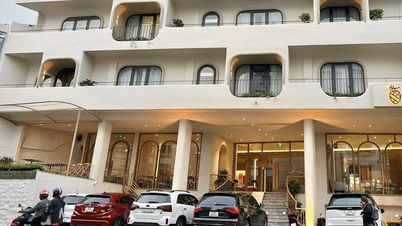
Recently, Hotel Premier Pear Vung Tau ( Ba Ria - Vung Tau province) filed a report with authorities regarding several social media pages impersonating the hotel to scam tourists into buying rooms, with one person transferring nearly 100 million VND.
According to information from the Criminal Police Department (Ministry of Public Security), the Investigation Police Agency of Quang Ninh province has issued a decision to prosecute Pham Trung Anh, residing in Vinh Bao district, Hai Phong city, for the crime of fraud and appropriation of property. From June 2022 to the present, Pham Trung Anh used multiple Facebook and Zalo accounts such as "Tuong Anh", "Bong Bong", "Pham Quyet", and "Tran Quang Anh" to defraud and appropriate 100 million VND from many victims.
In reality, with the rapid development of social media platforms, many consumers still search for cheap tours, airline tickets, or "hunt" for discounted hotel room vouchers. Taking advantage of this, many individuals and organizations have spread information about "super discounts" of 30-50% to scam customers out of their deposits, leaving tourists in a situation where they lose their money and suffer consequences.
According to Pham Dinh Ha, Director of Vietnam Unique Tours, one of the tricks used by scammers to defraud tourists is offering super-cheap packages with 5-star standard services. Another tactic is to trick customers into buying tickets at prices 1-1.5 million VND lower than the market rate, claiming they are still usable because the scammers register for installment plans. After using the tickets, customers are then charged by the installment travel apps. "To evade law enforcement after committing the fraud, the perpetrators often lock their social media accounts, block or cancel communication," Mr. Ha stated.
Recognize the tricks to avoid them.
Regarding information about scams targeting tourists booking accommodations, the Chairman of the Vietnam Tourism Association, Vu The Binh, shared that to deceive consumers, many groups choose to create fake fan pages and then use tricks to obtain verified badges from Facebook. These individuals will run advertisements on the fake fan pages to build credibility, and even buy positive comments praising homestays and hotels to gain the trust of tourists.
From the perspective of the management agency, Deputy Director of the Ninh Binh Provincial Department of Tourism Pham Duy Phong said that recently, Ninh Binh province has seen an increase in scams targeting tourists booking hotels and guesthouses via social media. Scammers often impersonate websites and fan pages of reputable hotels and resorts, or create social media accounts to post promotions and discounts, tricking customers into making advance payments via bank transfer to steal their money.
Analyzing the vulnerability of consumers to scams during hotel bookings and tour purchases, Nguyen Van Tai, Director of Vietsense Travel Company, stated that the main reason is that people are naive and gullible, lacking sufficient information about the website, Facebook account, and contact address of the travel company or hotel before making a transaction. When booking online, customers also don't thoroughly research information about the number and type of rooms, hotel address, etc. To deceive consumers, scammers often impersonate hotel owners, offering discounts of up to 50% and additional gifts for early bookings.
In response to the increasing number of scams and property thefts in the tourism sector, the National Tourism Administration has requested that local tourism departments strengthen inspection and monitoring efforts to promptly detect and handle violations. They are also instructed to coordinate with relevant agencies to regularly review and block fake websites and fan pages, and to strictly punish those involved in fraudulent activities.
To avoid financial losses and other problems, the Information Security Department (Ministry of Information and Communications) advises people to carefully check the website address before booking hotels or tours. Reliable websites usually have security certificates (a padlock icon in the upper left corner of the browser) and a clear address. Avoid websites with unfamiliar domain names or those without security certificates.
Consult with people who have previously stayed at the hotel you want to book through sites like TripAdvisor, Google Reviews, or reputable booking websites that often have detailed reviews from previous guests. Do not trust Facebook pages advertising bookings at prices that are too cheap compared to the market rate.
Before making a payment, customers should proactively contact the hotel or homestay directly through the contact information on the official website, such as the hotline number, or send an email to verify information about the room and services. In particular, do not follow requests to transfer money to individuals or entities due to incorrect messaging syntax, system errors, or pending payments. Absolutely do not download unfamiliar applications or click on unknown links from third parties. Customers should only book rooms through reputable platforms such as Booking.com and Agoda.
To prevent and combat customer fraud when booking tours and hotel rooms, the Chairman of the Hanoi Tourism Association, Nguyen Manh Than, advises tourists to protect themselves by carefully checking hotel information, researching on the system, and using registered Zalo phone numbers to verify before transferring deposits. They should also be wary of websites advertising unusually discounted hotel room rates during holidays, especially those offering tour packages at prices 30-50% lower than the market average.
Source: https://kinhtedothi.vn/ham-tour-gia-re-can-than-tien-mat-tat-mang.html
![[Image] Expediting land clearance at Alley 310 Nghi Tam to facilitate the construction of Tu Lien Bridge](https://vphoto.vietnam.vn/thumb/1200x675/vietnam/resource/IMAGE/2026/04/14/1776160406551_ndo_br_z7724148990408-9e5d4777e3c4504998b4286178b2e66e-jpg.webp)
![[Photo] General Secretary and President To Lam and his wife begin their state visit to China.](https://vphoto.vietnam.vn/thumb/1200x675/vietnam/resource/IMAGE/2026/04/14/1776133794926_z7723148772587-ffefa3c4b1e54e100de1554593a862c6-jpg.webp)

![[Photo] General Secretary and President To Lam visits and delivers a policy speech at Tsinghua University.](https://vphoto.vietnam.vn/thumb/1200x675/vietnam/resource/IMAGE/2026/04/14/1776164592318_vna-potal-tong-bi-thu-chu-tich-nuoc-tham-va-phat-bieu-chinh-sach-tai-dai-hoc-thanh-hoa-trung-quoc-8700658-5437-jpg.webp)















![[Photo] General Secretary and President To Lam receives Slovak Prime Minister Robert Fico](https://vphoto.vietnam.vn/thumb/1200x675/vietnam/resource/IMAGE/2026/04/13/1776080592076_a1-bnd-8227-6002-jpg.webp)













































Comment (0)