

 |
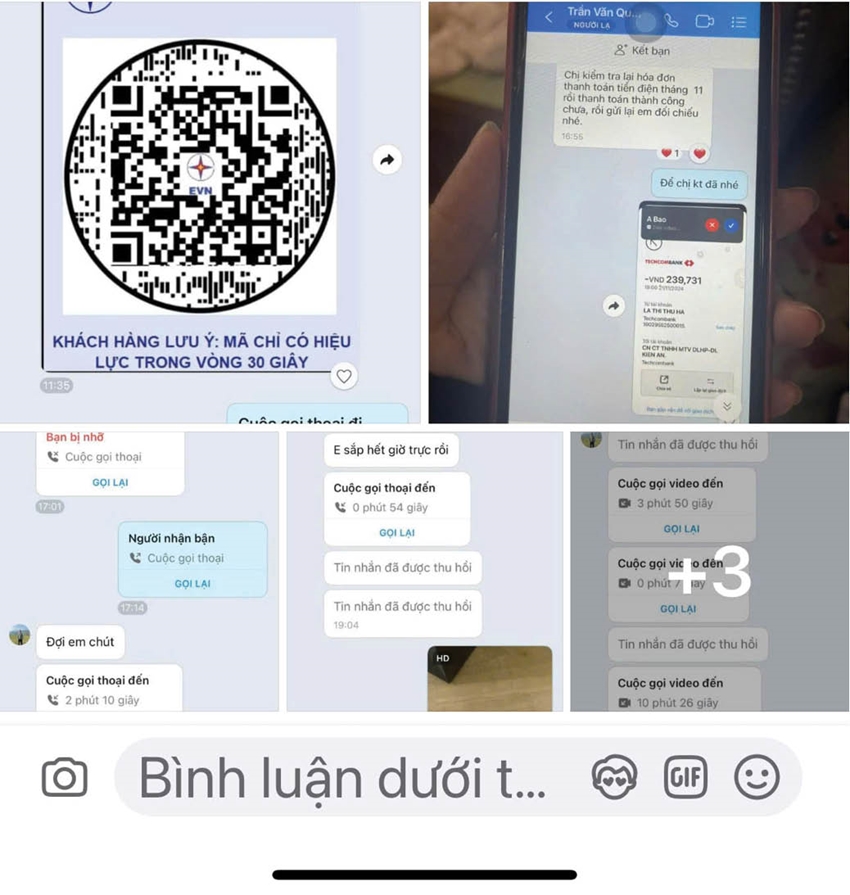
| Scammers use phone calls and text messages to manipulate victims into transferring money via QR codes they provide. |
Using the tactic of calling and saying that from next month, electricity bills will no longer be deducted through banks because the power company is no longer affiliated with and doesn't rely on banks for collection, customers must transfer money to a fixed account of the power company. If they continue to pay through banking apps, the money will be held up at the bank, not received by the power company, becoming a debt, and their electricity will be cut off within 24 hours after the employee (who is a scammer) calls to remind them of the debt and instruct them on the new payment method.
Exploiting the fear that those who haven't paid will have their electricity cut off within 24 hours, many people panic and readily follow the instructions. When they add the victim on Zalo to receive instructions on the new payment method, they provide a QR code for payment. To build trust, the QR code they provide includes the electricity company's logo along with a note that the code is only valid for 30 seconds, prompting customers to quickly transfer the money.
According to authorities, when the victim scans the QR code and presses the OTP, money will be deducted from their account. Not stopping there, when the victim discovers their account is empty, the scammers continue to manipulate their psychology and trick them again. The scammers will call back and tell the customer that they made a mistake, causing the money to be deducted, and that they need another account to get a refund for the excess amount deducted from their electricity bill. When the victim is worried about the money being deducted and wants a quick refund, they will borrow a relative's account to follow the scammers' instructions. Using the same trick of showing a QR code to scan to receive the money back, after scanning and pressing the OTP, the money will be lost again... When the victim realizes they have been manipulated and scammed, the scammers immediately block calls and messages.
Given the increasingly sophisticated tactics of scammers, everyone needs to be vigilant. When receiving calls or messages notifying about outstanding electricity bills, it is crucial to verify the information directly with the electricity company through official channels such as their website or hotline. Furthermore, young people should regularly warn older family members about these new and sophisticated scams to prevent them from falling victim.
Currently, the Central Power Corporation (EVNCPC) only has one official application, the EVNCPC Customer Service app, available on both Google Play and the App Store. Therefore, EVNCPC has warned customers to be vigilant and absolutely not to log in to fake links or applications via phone or social media platforms such as Zalo or Facebook.
In particular, users should absolutely not pay their electricity bills through personal or business bank accounts provided by scammers. Alternatively, users can pay their electricity bills through reputable banks or e-wallets linked with EVNCPC, such as Momo, Zalo Pay, Viettel Money, VNPT Money, etc.
Source: https://baothuathienhue.vn/chinh-polit-xa-hoi/phap-luat-cuoc-song/can-than-voi-cac-chieu-tro-lua-tra-tien-dien-149172.html

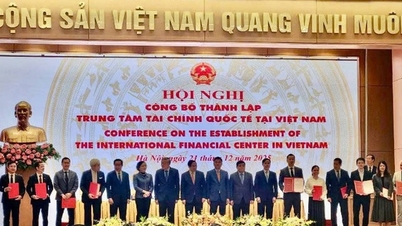
![[Photo] Prime Minister Pham Minh Chinh presides over the conference announcing the establishment of the International Finance Centre in Vietnam.](/_next/image?url=https%3A%2F%2Fvphoto.vietnam.vn%2Fthumb%2F1200x675%2Fvietnam%2Fresource%2FIMAGE%2F2025%2F12%2F21%2F1766309817714_ndo_br_dsc-3400-jpg.webp&w=3840&q=75)


![[Photo] Prime Minister Pham Minh Chinh presides over a meeting on private sector economic development.](/_next/image?url=https%3A%2F%2Fvphoto.vietnam.vn%2Fthumb%2F1200x675%2Fvietnam%2Fresource%2FIMAGE%2F2025%2F12%2F20%2F1766237501876_thiet-ke-chua-co-ten-40-png.webp&w=3840&q=75)






































































Comment (0)