


Review and inspect the collaborative activities.
School-based collaborative programs have been increasingly implemented in many localities. These range from collaborations in foreign languages, computer science, STEM, and life skills to partnerships with international educational organizations.
This partly stems from the real needs of society, as the demand for foreign languages, technology, and soft skills among young people is increasingly high. Although the general education curriculum has been reformed to focus on competency development, it still struggles to fully and comprehensively meet all these diverse needs within the current time constraints and resources.
Therefore, the collaboration between secondary schools and external organizations to organize supplementary programs, if implemented correctly and in accordance with regulations, can bring certain benefits to students. Many students have the opportunity to interact with foreign teachers, learn new learning methods, and participate in practical experiential activities, thereby broadening their horizons and enhancing their personal abilities.
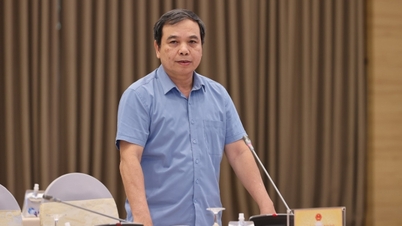
Representatives from the Ministry of Education and Training stated that they have requested localities to continue conducting a comprehensive review of the organization of collaborative teaching and learning in schools.
In Hanoi , the Hanoi Department of Education and Training recently sent a document to the People's Committees of communes and wards, and public schools under its jurisdiction, requesting reports on the implementation of educational support services in public schools. These services include: life skills, English, STEM, digital citizenship skills, AI, etc. The Department requested that units summarize and assess the situation of implementing educational support services in their respective units and propose recommendations for the future, clarifying whether or not it is necessary to organize the implementation of educational support services in schools. Previously, in November 2025, the Director of the Hanoi Department of Education and Training issued a decision to establish an inspection team to oversee the implementation of tasks at the preschool level, including the inspection of life skills education and extracurricular activities. The inspection period lasted from November 2025 to May 2026.
Ensuring equity in education
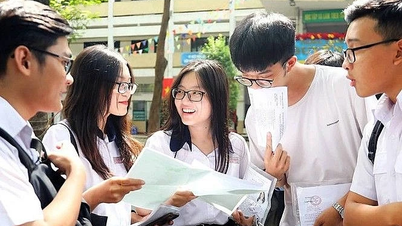
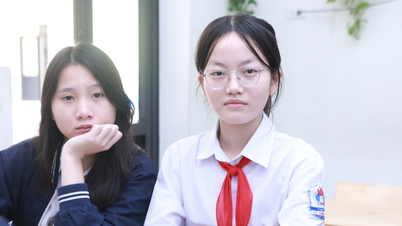
The education sector has consistently emphasized that the organization of joint programs must be approved by the school board and involve the voluntary participation of parents, without forcing students to participate. However, feedback from parents suggests that because these joint programs are interspersed with regular school subjects, students who don't register for them may feel left out during those lessons.
The fees for joint programs vary from school to school, even within the same ward or commune… In particular, the large number of joint programs and supplementary courses makes it difficult to choose. Parents are seeing an increasing financial burden on their children's education. This clearly contradicts the humane policies the government is pursuing.
This is a reality occurring in some schools, causing public outrage and requiring review and rectification to ensure the educational environment truly benefits students, rather than becoming a place that provides disguised fee-based services. Introducing joint programs into schools, if not strictly controlled, can easily blur the lines between education and business, placing significant financial pressure on parents, especially those with middle and low incomes.
For collaborative programs to be effective, careful attention must be paid to policy formulation, partner selection, program design, implementation, and monitoring and evaluation. Only when collaborative programs truly complement the general education curriculum, ensuring voluntariness, transparency, and fairness, can they deliver positive value. Conversely, if management is lax or short-term gains are pursued, the general education environment – the foundation for human development – will suffer long-term consequences.
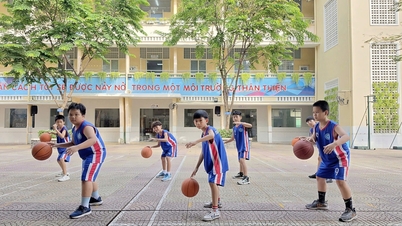
In particular, to ensure that "no student is left behind," schools also need to make the most of their facilities and teaching staff, and develop free-of-charge activities to ensure that students who do not participate in the joint program still have the right to comprehensive learning and development.
Source: https://daidoanket.vn/can-trong-voi-giao-duc-lien-ket.html





































































Comment (0)