At 4 a.m., while many residents of Yen Bai commune ( Hanoi ) were still asleep, the dairy farm of Ms. Phan Thi Hau's family had already been lit up. Along both sides of the barns, industrial fans were running continuously to reduce the heat for the herd of cows.
While her husband checked the water pump system on the roof, Ms. Hau took the opportunity to clean the livestock area and prepare feed. This work has been a part of her family's life for many years, but in recent summers, their familiar routine has had to change significantly. "If we work later, it gets too hot, and both we and the cows get tired. My family now has to wake up earlier to get the important tasks done before the temperature rises," she said.
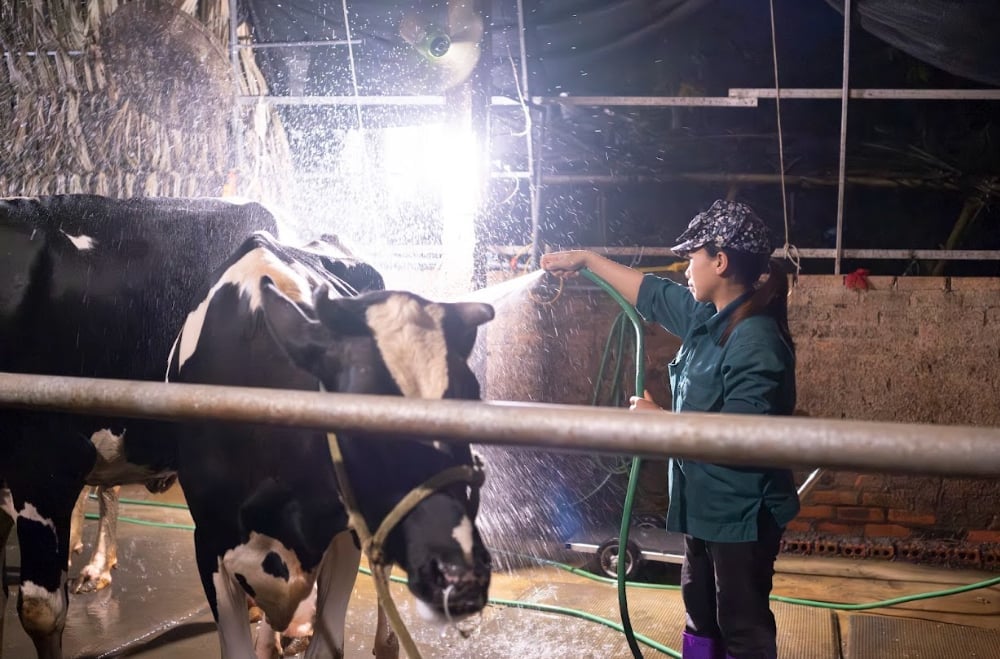
Ms. Phan Thi Hau is busy cleaning her dairy cows from early morning. Photo: Phi Yen.
Ba Vi has long been known as a major dairy farming area in Hanoi. Favorable natural conditions and a long tradition of dairy farming have helped to develop concentrated farming zones, providing livelihoods for thousands of households. However, with the increasing frequency of extreme weather events, dairy farming is facing new challenges.
The workday begins before dawn.
For dairy farmers, all daily activities operate on a nearly fixed schedule. Dairy cows must be milked on time, every 12 hours, twice a day; farmers cannot afford to be late. If milking is done at the wrong time, the cow's mammary glands will be immediately affected, increasing the risk of mastitis, disrupting the entire lactation cycle, and having long-term effects on the animal's health.
In cool weather, milking at dawn is quite easy. However, this year's hot weather has forced farmers to wake up earlier to try to complete their milking shift before the first rays of the sun hit the barn.
At Ms. Hau's family farm, most of the heavy work is done from early morning or late afternoon. The time from late morning to early afternoon is usually spent monitoring the health of the herd, checking the cooling system, and minimizing activities that could stress the animals due to high temperatures.
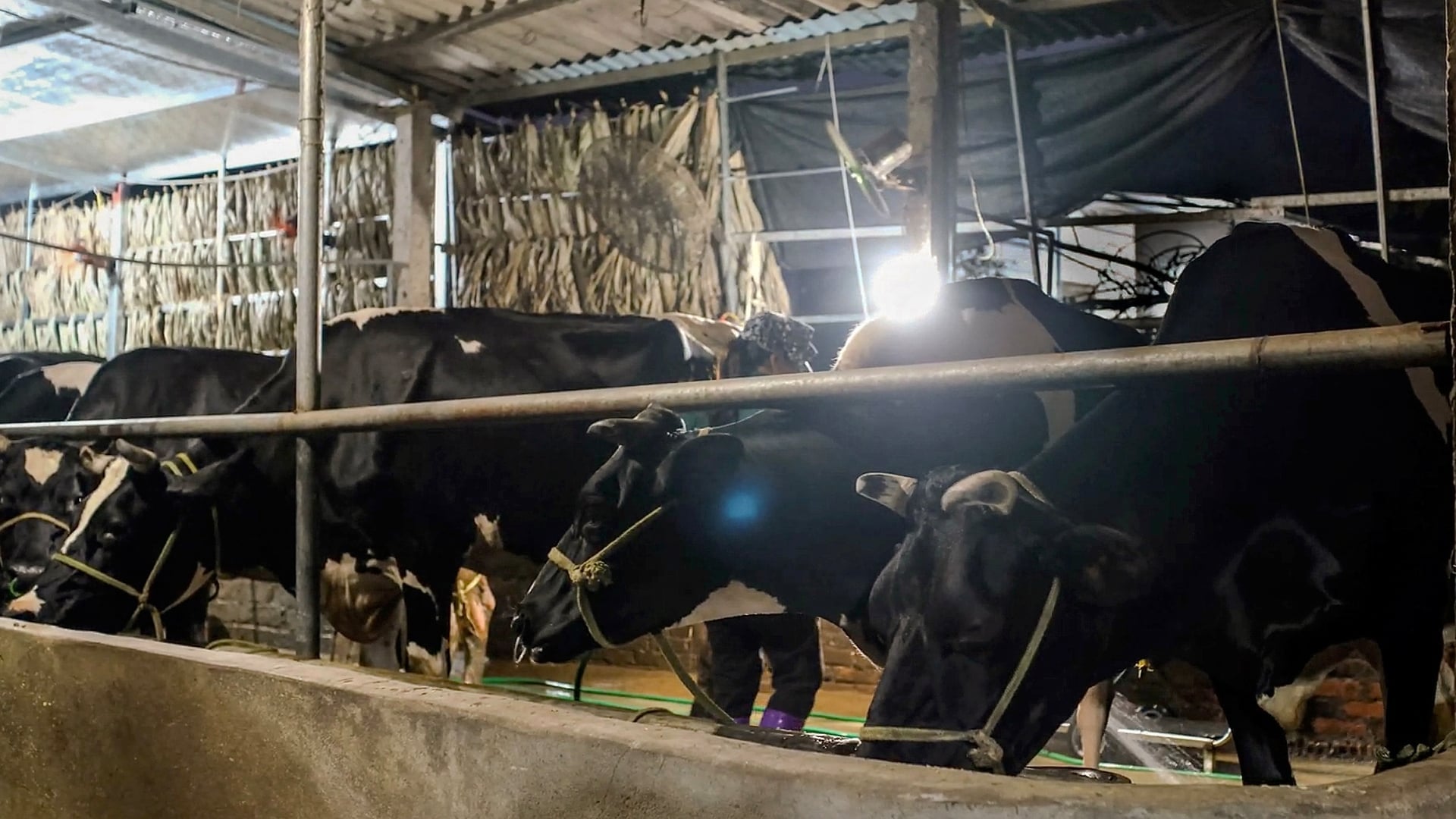
The prolonged heatwave has increased the cost of caring for dairy cows, while milk production has decreased. Photo: Phi Yen.


Dairy cows are very sensitive to changes in the environment; prolonged periods of hot and humid weather cause the herd to eat less, drink more water, and move more slowly, affecting their milk production.
During peak hot days, the cooling fan system has to run continuously. Water is pumped up from the corrugated iron roof multiple times, and the barn floor must be cleaned and cooled regularly. These measures help livestock farmers somewhat reduce the impact of the weather, but at the same time, they also incur many additional costs.
To protect their cattle from heatstroke, farmers in Ba Vi have to implement all possible cooling measures. Every household has to install 4-5 large-capacity industrial fans, running continuously 24/7. In open barns, people use tarpaulins to block direct sunlight and install drainage systems to continuously flush water onto the corrugated iron roofs... Electricity bills have doubled as a result, not to mention additional expenses such as purchasing supplements, vitamins, and electrolytes to add to the cows' drinking water...
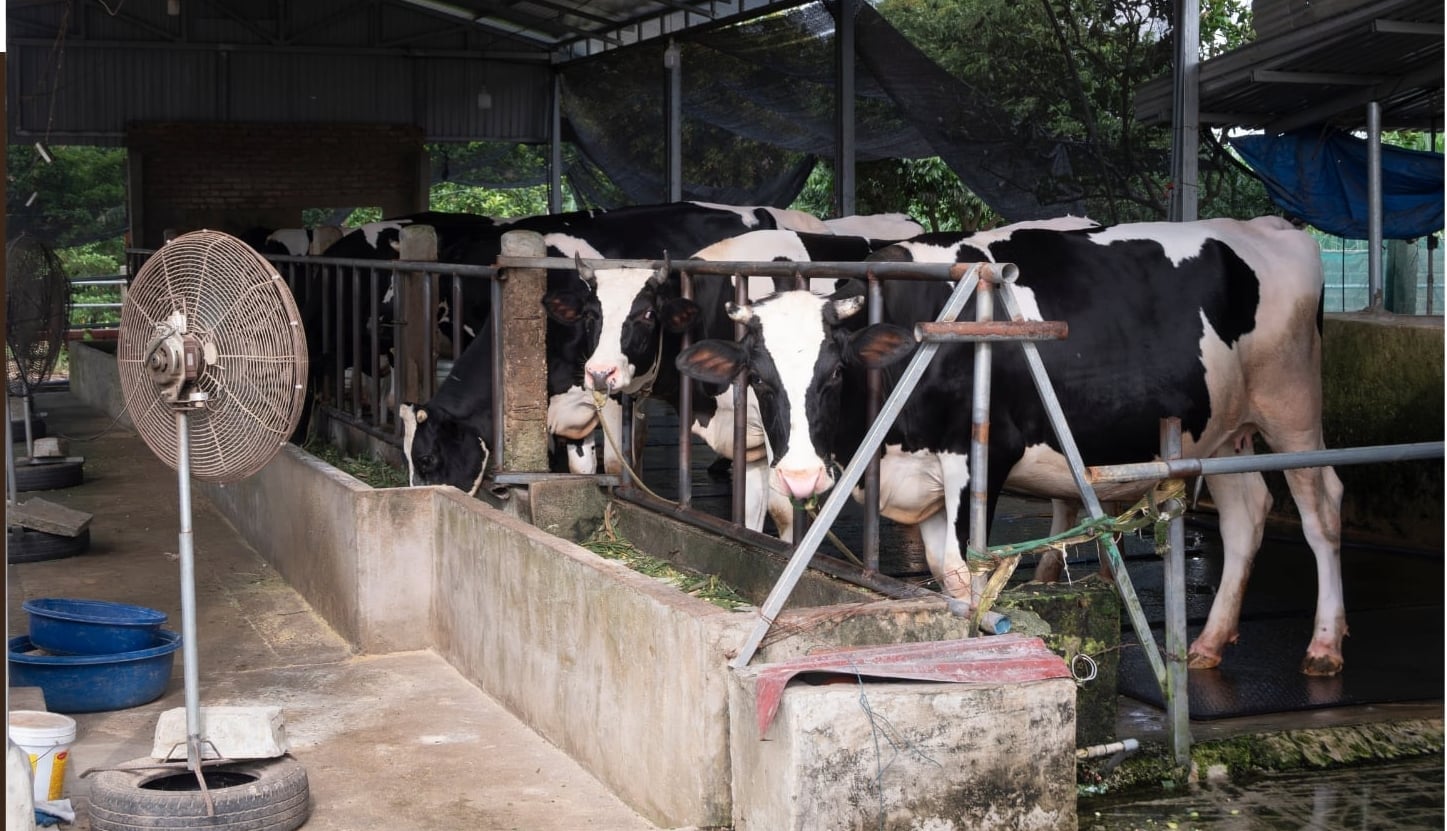
Fans were added to help cool the dairy cows. Photo: Phi Yen.
To compensate for the increased living costs during the hot months, many families have to tighten their belts and cut back on daily expenses.
In some farms with larger investment capital, misting systems are also installed along the rows of barns. However, in reality, the number of livestock farmers owning these modern misting systems is still not large. Most barns in Ba Vi are still traditional open barns, designed for natural ventilation, so when the outside temperature rises too high, the barns are completely unprepared.
Double damage
According to Mr. Nguyen Tien Thinh (a livestock expert at the Ba Vi Dairy and Pasture Research Center), high temperatures and humidity significantly affect the health of dairy cows. When environmental conditions exceed their tolerance threshold, livestock easily fall into a state of heat stress, leading to changes in eating behavior, growth, and milk production. In recent years, heatwaves have tended to occur more frequently and intensely, putting increasing pressure on livestock farmers.
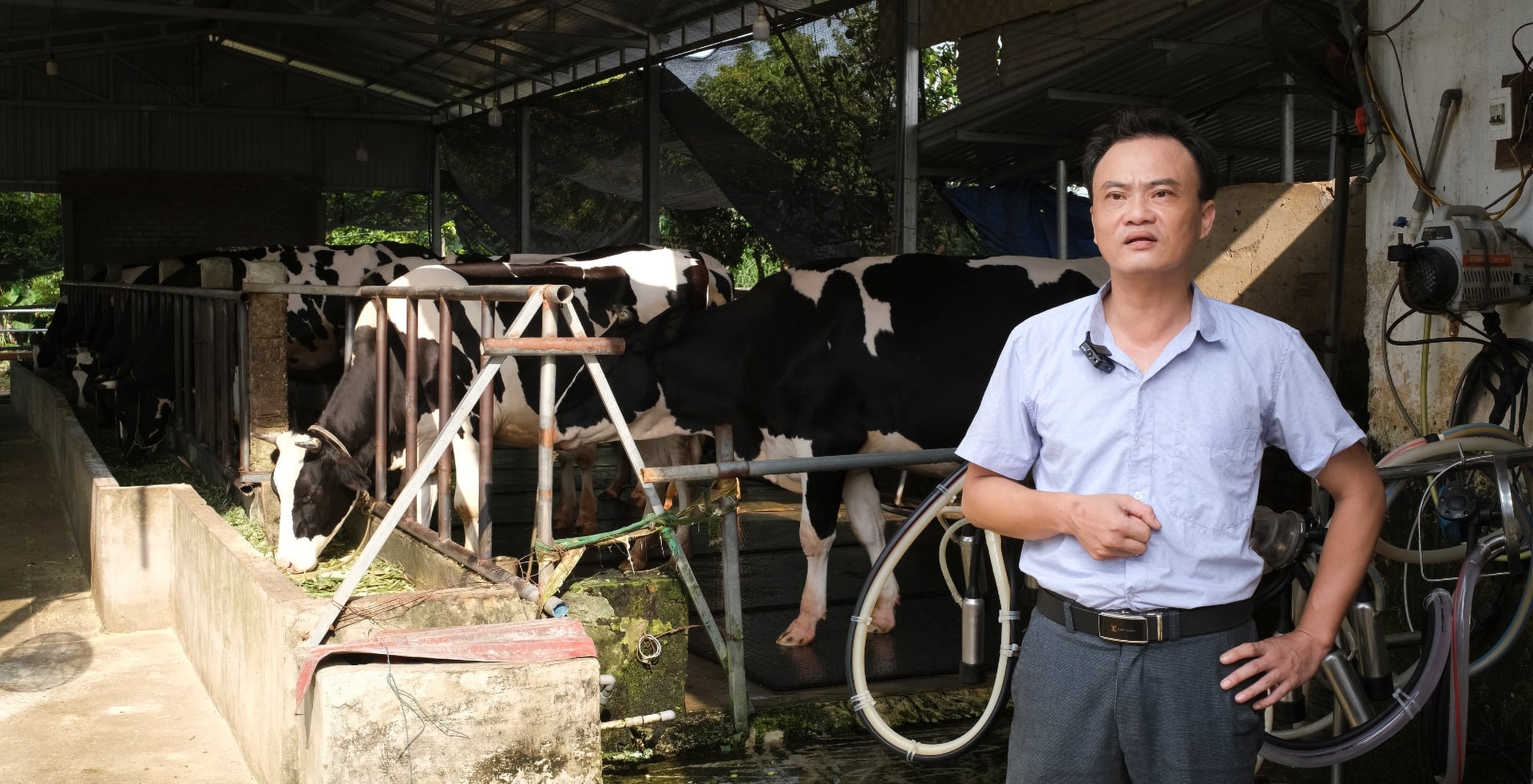
Mr. Nguyen Tien Thinh shared about the pressures faced by dairy farmers in the face of extreme weather conditions. Photo: Phi Yen.



"During the hot summer months, a dairy cow needs to drink more than 50 liters of water per day. Therefore, farmers need to provide their cows with sufficient clean water and should supplement their diet with electrolytes," Mr. Thinh advised.
Furthermore, this expert stated that during peak hot weather, dairy cows often refuse to eat hay, fresh grass, or feed supplements, focusing instead on drinking water to cool their bodies. Ingesting excessive amounts of water while lacking essential fiber and nutrients from food leads to changes in the milk's structure and composition, resulting in diluted milk.
Normally, Ba Vi cow's milk is famous for its rich, creamy flavor due to consistently high daily fat content (above 3.5%). However, during extreme hot weather, this level can decrease. This results in a "double loss" for farmers. Firstly, costs increase while milk production decreases because the cows become tired and eat less. Secondly, there is a loss in quality, as the milk becomes diluted and fails to meet the technical standards for Grade 1 milk.
Source: https://nongnghiepmoitruong.vn/cang-minh-chong-nong-cho-bo-sua-d816486.html

![[Image] National conference summarizing one year of operation of the overall organizational model of the political system, the three-tiered government model.](https://vphoto.vietnam.vn/thumb/1200x675/vietnam/resource/IMAGE/2026/07/01/1782882811691_ndo_br_1-jpg.webp)