

Exploiting people's fear and gullibility, scammers impersonate police officers, prosecutors, inspectors, and court officials, informing victims that they are being sued for debt or are involved in a case under investigation by the police, or that an arrest warrant has been issued by the People's Procuracy. They then pressure, threaten, and demand that victims provide personal information or transfer money to designated accounts to steal their assets. Common signs of this type of scam include: demanding victims declare their assets, current cash holdings, and bank account balances; threatening them not to tell anyone about the conversation, preventing them from verifying information or reporting to the police; and urging them to provide information to cause anxiety and impair their ability to recognize they are being scammed.
Typically, in recent days, the phenomenon of impersonating electricity company employees to commit fraud has resurfaced with many sophisticated tactics, causing financial losses and anxiety for electricity customers. These individuals impersonate electricity company employees and use various methods to deceive people, the most common being phone calls informing customers that they will have to pay their overdue electricity bills or requesting an inspection of their home's electrical system. Taking advantage of people's lack of vigilance, the fraudsters demand money transfers via bank accounts or ask electricity users to provide personal information to carry out "urgent" payment transactions, otherwise their electricity will be cut off. Ms. Nguyen Thi Tuyet Van (Long Xuyen City) said that a few days ago, someone claiming to be an electricity company employee repeatedly called her, informing her that her family had not paid their electricity bill and threatening to cut off their electricity. Ms. Van confirmed that she had paid her electricity bill through a banking app, but the person claiming to be an electricity company employee asked her to take a picture of her bank transaction information and send it via Zalo for verification. Because she was wary and realized it was a scam, Ms. Van refused.
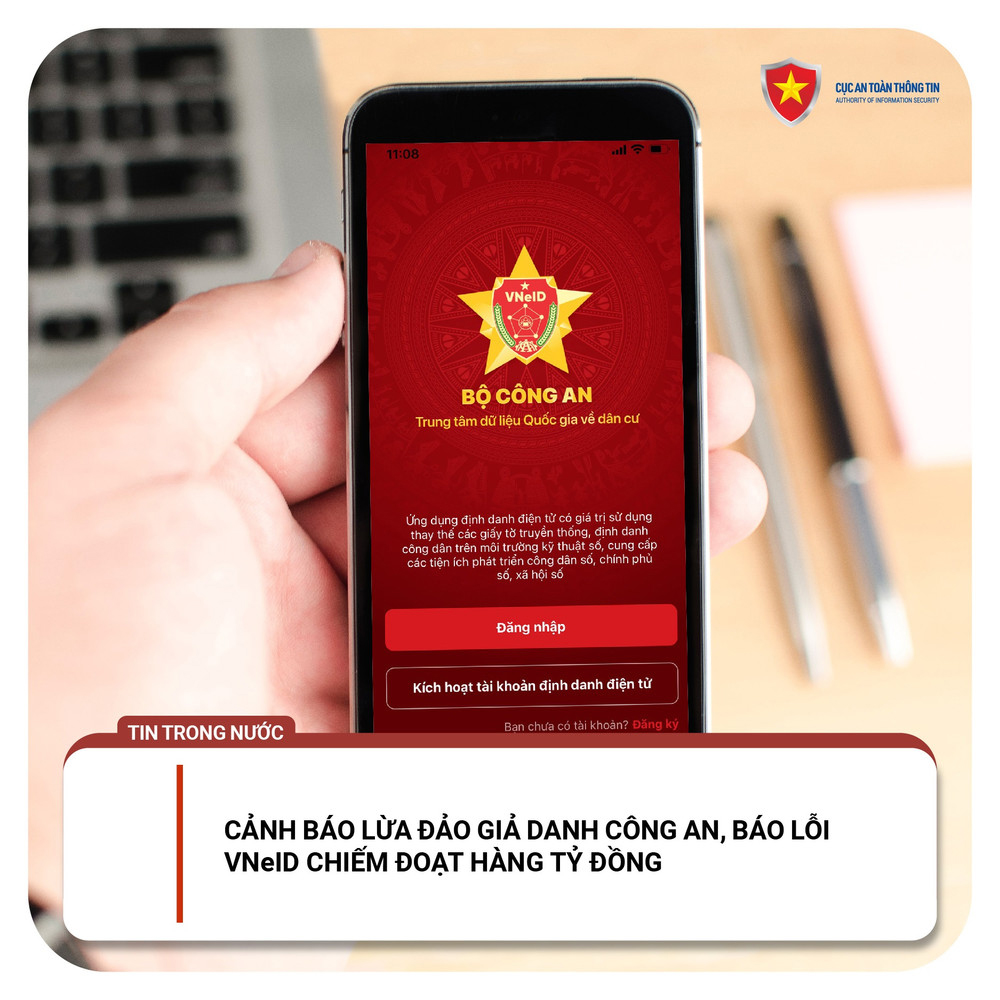
There are also scams involving impersonating police officers, guiding or reporting VNeID account errors, leading to the theft of assets. The perpetrators' tactic is to call victims, informing them that their VNeID application is malfunctioning. They then instruct them to download an online fix application. After the victim installs the application, all the money in their bank account is stolen. These fake applications collect personal information, control, monitor, and remotely manage the victim's phone. The purpose is to log into bank accounts and OTP codes via SMS to steal money. Mr. Tran Van Hai (Chau Phu district) reported receiving a call from an unknown number claiming to be a police officer . This person informed him that the information on his citizen ID card in the Ministry of Public Security's VNeID electronic portal was incorrect and could no longer be verified. This police officer urged him to cooperate immediately to update his data that day. Mr. Hai was busy and couldn't come to discuss the matter. The scammer instructed him to send a link via Zalo for him to log in and edit his information through the Ministry of Public Security's portal. If he couldn't complete the process, they would continue to "help" by making a video call to provide more specific instructions. "Because I had read about online scams in the newspapers, I didn't follow the instructions via Zalo from this 'self-proclaimed' police officer," Mr. Hai shared.
Recently, there have also been cases of people impersonating civil servants and health inspectors, making fake phone calls claiming to be from the Department of Health, forming inspection and monitoring teams for food production and business establishments, and contacting these establishments to announce inspection and monitoring times. They then request information, documents, licenses, photos, bank account numbers, and suggest transferring fees to avoid inspection…
In response to fraudulent impersonation schemes, authorities advise the public to be highly vigilant when receiving calls or messages from unknown individuals. Verify the identity of the caller through official websites. Do not listen to or follow instructions from strangers, and do not transfer money to accounts with unknown identities. Do not access links sent by strangers or download applications from unknown sources. Absolutely do not share bank account numbers, OTP codes, passwords, or any other sensitive information. If you suspect you have been scammed, immediately report it to the authorities or consumer protection organizations for assistance and timely intervention.
Source: https://baoangiang.com.vn/canh-giac-thu-doan-mao-danh-de-lua-dao-a418132.html


![OCOP during Tet season: [Part 3] Ultra-thin rice paper takes off.](/_next/image?url=https%3A%2F%2Fvphoto.vietnam.vn%2Fthumb%2F402x226%2Fvietnam%2Fresource%2FIMAGE%2F2026%2F01%2F28%2F1769562783429_004-194121_651-081010.jpeg&w=3840&q=75)


Comment (0)