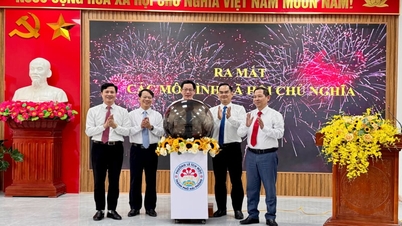
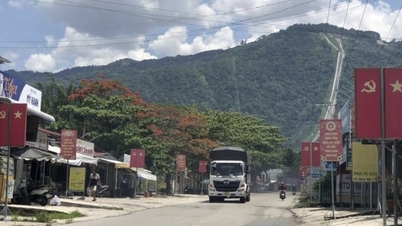
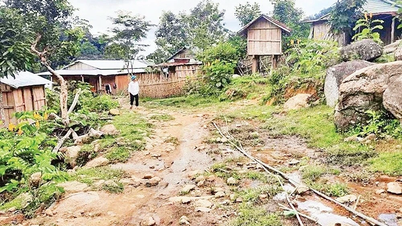
In particular, the model of cinnamon cultivation in the two communes of Canh Tan and Minh Khai, implemented jointly by the Cao Bang Provincial Cooperative Union, has initially achieved positive results, proving its effectiveness in practice.
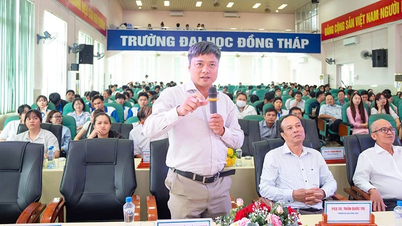
Mr. Tran Duc Thinh, a respected figure in Tan Cuong hamlet, Canh Tan commune, shared that the locality has a large area of forest land with significant potential for developing a forest-based economy. However, currently, the focus is mainly on planting timber trees, resulting in low economic efficiency. The people hope to receive support in developing the cultivation of medicinal plants and high-value forestry trees, enabling them to earn a living and gradually become wealthy through the development of the forest-based economy. Recognizing this reality and contributing to the implementation of the Resolution of the Cao Bang Provincial Party Congress, the Provincial Cooperative Alliance, in coordination with Thuan Phong Cooperative, has supported the people in implementing a model of linked cinnamon tree cultivation in the two aforementioned communes.
Comrade Tran Anh Dung, Chairman of the Provincial Cooperative Union, said: “People participating in the cinnamon tree cultivation linkage model will receive support in terms of seedlings, fertilizers, training, and technical guidance to ensure the trees grow and develop well. During the implementation of the linkage model, the Provincial Cooperative Union prioritizes supporting poor and near-poor households, helping families access this new production model. At the same time, it aims to gradually improve and increase the income of families, as cinnamon trees have a production cycle of over 10 years. However, from the sixth year onwards, people can harvest by-products, creating a source of income before the main harvest.”



After a period of participation in the cinnamon cultivation cooperative model, the hillsides of Na Po hamlet, Canh Tan commune, are now thriving with lush green cinnamon forests. Mr. Trieu Van Hong, from Na Po hamlet, who owns 8 hectares of cinnamon trees, shared: “My family owns a fairly large area of forest, but the income from forestry wasn't much. After hearing about and receiving support from the cooperative's officials for developing the cinnamon cultivation model, I boldly decided to switch with the hope of increasing my income and gradually becoming wealthy. To date, 28 families in Na Po hamlet have developed cinnamon cultivation. After the cinnamon forests are 6 years old, families will begin to earn their first income from the forest by pruning branches and harvesting leaves for distillation and sale of cinnamon essential oil.”
In Nam Dang hamlet, Minh Khai commune, the family of Mr. Trieu Van Khuon owns 5 hectares of production forest planted with star anise, cinnamon, and acacia trees. Mr. Khuon shared: “This year, my family received support in the form of an additional 1,800 cinnamon seedlings through a cooperative model. After more than a month of planting, the trees are growing well. Cinnamon trees are quite suitable for the local soil conditions, and my family hopes to increase our income by expanding the planting area.”
According to the Cao Bang Provincial Cooperative Union, the Union and its partner units have so far supported nearly 170,000 cinnamon saplings for 44 families in Canh Tan and Minh Khai communes, enabling them to cultivate 36 hectares of cinnamon trees. In addition to seedlings, the families received nearly 42 tons of bio-fertilizer for cultivation and training in planting techniques. After inspection and evaluation, the survival rate of the planted trees reached 95-99%, and the trees are growing and developing well. In Na Po hamlet, Canh Tan commune, residents have creatively implemented a model of intercropping black jelly plant and upland rice in the cinnamon forest during the initial growth and development stages to generate income in the early years before the cinnamon forest yields any returns and to control weed growth.
As a partner providing seedlings, fertilizers, and technical training in cinnamon cultivation, and guaranteeing the purchase of cinnamon products from farmers for 15 years, Mr. Nong Be Chinh, a member of Thuan Phong Cooperative in Thach An commune, shared that cinnamon trees yield essential oil, bark, and wood. Specifically, one hectare of cinnamon trees aged 8 to 15 years, pruned and harvested for essential oil distillation, can yield 100 to 300 liters per year. With the current selling price of around 800,000 VND per liter, expanding the area planted with cinnamon promises to generate significant income for farmers. Currently, Thuan Phong Cooperative is promoting the production of incense from cinnamon trees to diversify products and enhance the value of cinnamon production.
Chairman of the Provincial Cooperative Union, Tran Anh Dung, stated: "Based on the initial results of implementing the cinnamon tree cultivation linkage model in Canh Tan and Minh Khai communes, in the coming time, the Provincial Cooperative Union will continue to coordinate with businesses, cooperatives, and localities to develop and expand the linkage model, supporting people in developing forestry and medicinal plant cultivation in localities."



Source: https://nhandan.vn/cao-bang-danh-thuc-kinh-te-rung-post971769.html
![[Photo] "Hanoi Lotus Festival" honors the lotus flower that has been associated with Vietnam for thousands of years.](https://vphoto.vietnam.vn/thumb/1200x675/vietnam/resource/IMAGE/2026/06/27/1782516943048_sen-ha-noi-2026-minh-duy-1-jpg.webp)