

Administrative procedure reform: Many challenges remain.
Despite Quang Nam's decisive and specific policies and actions, the province's Public Administration Reform Index (PAR INDEX), including the administrative procedure reform index, has not shown much improvement.
In 2023, the province's PAR INDEX reached 84.6 points, ranking 56th out of 63 provinces and cities, with the administrative procedure reform sector ranking 62nd out of 63.
The people are not yet enthusiastic.
On July 11, 2024, the Provincial People's Council issued a Resolution stipulating the zero-fee rates for online public services. Quang Nam is also one of the pioneering provinces in deploying public postal services; to date, 16 out of 16 departments and agencies, and 15 districts and cities have transferred 100% of administrative procedures to the post office for receiving and returning results.
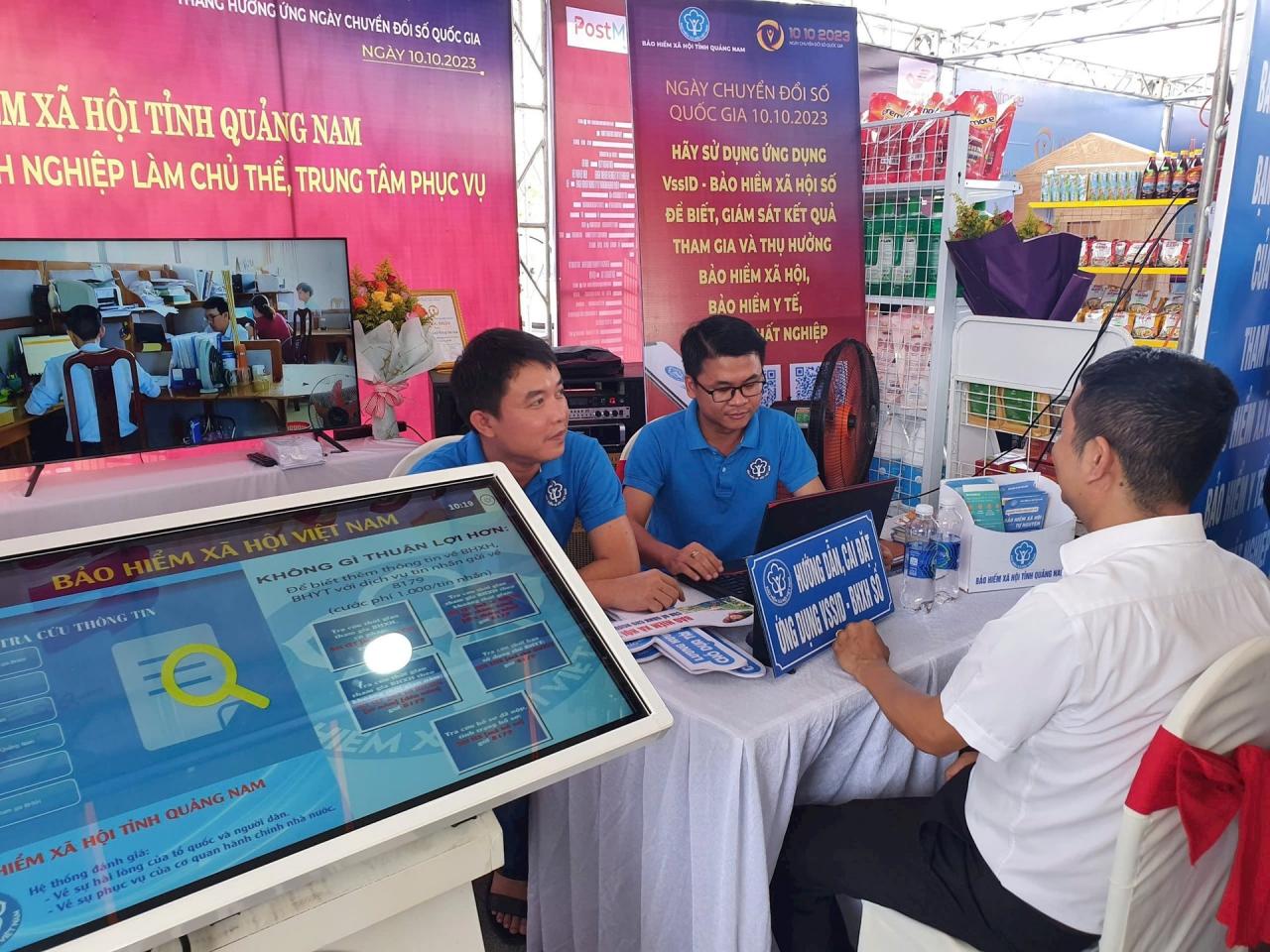
Recent efforts have contributed to improving the rate of online public services in the province. According to the Provincial Public Service Center, the rate of online processing and acceptance of applications in the first six months of 2024 at the provincial, district, and commune levels was 92.4%, 61.5%, and 71%, respectively.
However, while the rate of online public services has increased, there are also many concerns. In reality, the high increase in online applications doesn't stem from the proactive efforts of citizens, but mainly from the support of civil servants, public postal workers, and community technology groups. Fundamentally, people are not yet enthusiastic about using online public services. The main reason lies in the complexity of submitting online applications, especially for services in certain areas like land, which require numerous procedures and documents.
As of August 12, 2024, the total number of administrative procedures providing online services reached 1,159 (60.5%), with 16 (0.60%) partially completed; the province's online service delivery points reached 7.7/12, or 64%; and the online payment points reached 7.6/10, or 76%.
Mr. Nguyen Ba Trong Hien, an employee of a construction consulting company in Tam Ky City, said he has used the online public service portal many times for administrative procedures, especially for renewing construction practice certificates. However, it took him a long time to get used to the operations on the online public service portal. "Initially, the process was quite difficult due to system errors; some documents submitted to the portal were incorrect, so officials from the Department called to request resubmissions, which was quite time-consuming," Mr. Hien said.
An official at the Provincial Public Administrative Service Center admitted that even officials and civil servants are "lazy" when it comes to using online public services, let alone the general public.
In Hiep Duc, the rate of online applications in the first eight months of the year reached 61.1%. However, the rate decreased sharply from July onwards, due to the regulation requiring the use of VNeID as the sole account for carrying out administrative procedures.
Mr. Nguyen Phuoc Nien, Chief of the Office of the People's Committee of Hiep Duc District, said that many people do not yet have electronic identification accounts; some people who handle administrative procedures, especially in the field of land, are often elderly and do not have smartphones, so they cannot install VNeID accounts to submit applications...
For a long time, my work has mainly focused on serving the people. Areas with high rates of online public services benefit from good and proactive support, while areas lacking manpower and skills have low rates. In reality, very few people provide online public services from home, especially in rural and mountainous areas.
Mr. Nguyen Phuoc Nien - Chief of the Office of the People's Committee of Hiep Duc District
What caused the delay?
Ms. Tran Thi Kim Hoa, Director of the Department of Internal Affairs, stated that although the Provincial People's Committee has issued numerous plans to address the issue, the province's public administration assessment indicators have continuously declined over the years; some component criteria have low scores and show no improvement.
Administrative procedure reform remains a weakness in the province's reform efforts due to the slow publication and disclosure of administrative procedures and the high rate of overdue applications. At the provincial level, in August 2024, the total number of applications that had been processed or were overdue was 64; at the district level, 773 applications; and at the commune level, 397 applications. The majority of overdue applications were in the land sector.

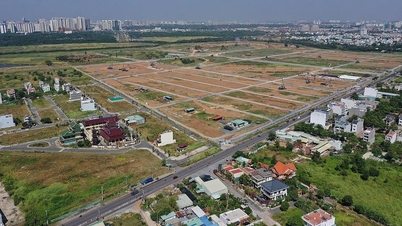
Analyzing this situation, Mr. Bui Ngoc Anh, Director of the Department of Natural Resources and Environment, stated that in the first nine months of 2024, the rate of overdue administrative procedures in the Natural Resources and Environment sector was approximately 6.3%. The reasons for the delays do not lie in the procedures or the administrative reform process, but rather in many causes, the most complex of which is determining the origin of the land.
Currently, many commune-level localities only have one land administration officer, while the volume of land ownership verification cases is large. Not to mention, they also handle many other tasks, from basic construction to land management, issuing land certificates, and compensation for land clearance.
Bui Ngoc Anh - Director of the Department of Natural Resources and Environment
According to Mr. Anh, there are still many problematic "links" in the process of resolving administrative procedures related to land. First, the process of receiving applications via public postal services needs to be re-evaluated. Currently, the procedure only identifies the number of applications based on quantity, without verifying whether they are complete or correct. Therefore, many applications are returned due to deficiencies, causing delays.
Chairman of the Provincial People's Committee Le Van Dung stated that the decline in the administrative reform index is due to several reasons, including cumbersome and bottlenecked administrative procedures; and the roundabout and time-consuming methods used in handling administrative procedures at the one-stop service center.
Citing the example of the Provincial Senior Citizens Association's establishment process, Mr. Dung said: "When they submit the application to the one-stop service center, that center then sends it to the Department of Internal Affairs for assessment. Due to missing documents, it's returned to the one-stop service center, which then returns it to the Association for redo... I think that method is roundabout and too cumbersome."
According to the Chairman of the Provincial People's Committee, Le Van Dung, officials at the "one-stop" service centers, especially at the commune and specialized department levels, guide citizens through administrative procedures in a fragmented manner, forcing people to make multiple trips. Not to mention, in some places, this even leads to harassment and inconvenience.
Action is needed from both sides.
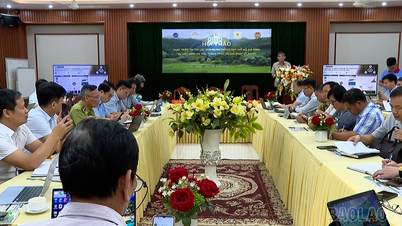
Recently, the Provincial People's Council held a hearing to explain the province's administrative reform work. At this hearing, many issues were thoroughly examined, analyzed, and solutions for improvement were identified.
According to the head of the Department of Internal Affairs, since 2023, the province has completed the merger of the Public Service Portal and the Provincial Electronic One-Stop Information System into the Administrative Procedure Resolution Information System. However, obstacles regarding interoperability, connectivity, data sharing, and data synchronization between the systems have not been addressed promptly.
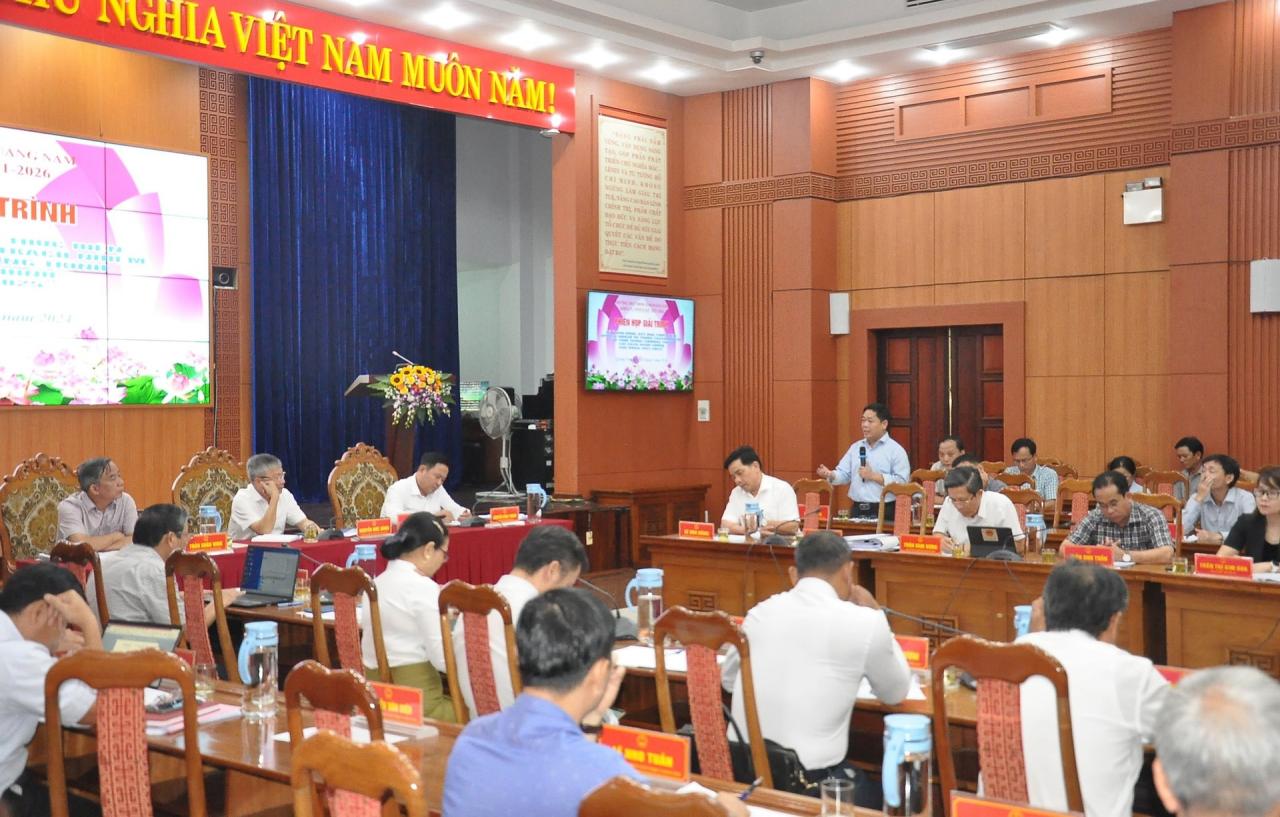
According to Mr. Pham Hong Quang, Director of the Department of Information and Communications, the effective use of online public services requires collaboration from both sides: the service providers (the four levels of state administrative agencies) and the users, i.e., citizens and businesses.
To promote online public services, infrastructure development must come from both sides: government agencies and citizens/businesses. In mountainous areas, online public services have not caught up due to inadequate infrastructure and facilities for the people. In the future, we will advise on categorizing different types of areas to utilize different public services.
Mr. Pham Hong Quang - Director of the Department of Information and Communications
Mr. Nguyen Cong Thanh, Vice Chairman of the Provincial People's Council, stated that for online public services, investing only in state infrastructure is insufficient; it also requires raising public awareness and knowledge, as well as improving telecommunications infrastructure.
Representatives from the Provincial Public Administrative Service Center stated that it's impossible to continue supporting and performing online public services for citizens indefinitely. The goal is to make online public services as user-friendly as a popular application. To achieve this, in addition to public awareness campaigns, it's necessary to simplify processes, reduce procedures, and ensure data is interconnected and synchronized.
Chairman of the Provincial People's Committee Le Van Dung stated that in the coming period, the Provincial People's Committee will not issue any unnecessary procedures and will eliminate some cumbersome ones. At the same time, he directed relevant departments to issue specific, clear, and time-bound sets of procedures for handling administrative procedures, including those related to investment, mineral exploitation licensing, land surveying, and land adjustment.
Overcoming challenges by leveraging local resources.
Using the results as a basis for evaluating and classifying the performance of heads of departments will, to some extent, contribute to improving the rate of processing administrative procedures for citizens and businesses.
During the period 2021-2025, to date, departments and agencies have advised the Provincial People's Committee to issue 17 decisions approving the standardized list of administrative procedures under their jurisdiction and management scope. As of August 2024, the total number of administrative procedures being implemented in the province is 1,870 procedures (1,485 at the provincial level, 351 at the district level, and 161 at the commune level).
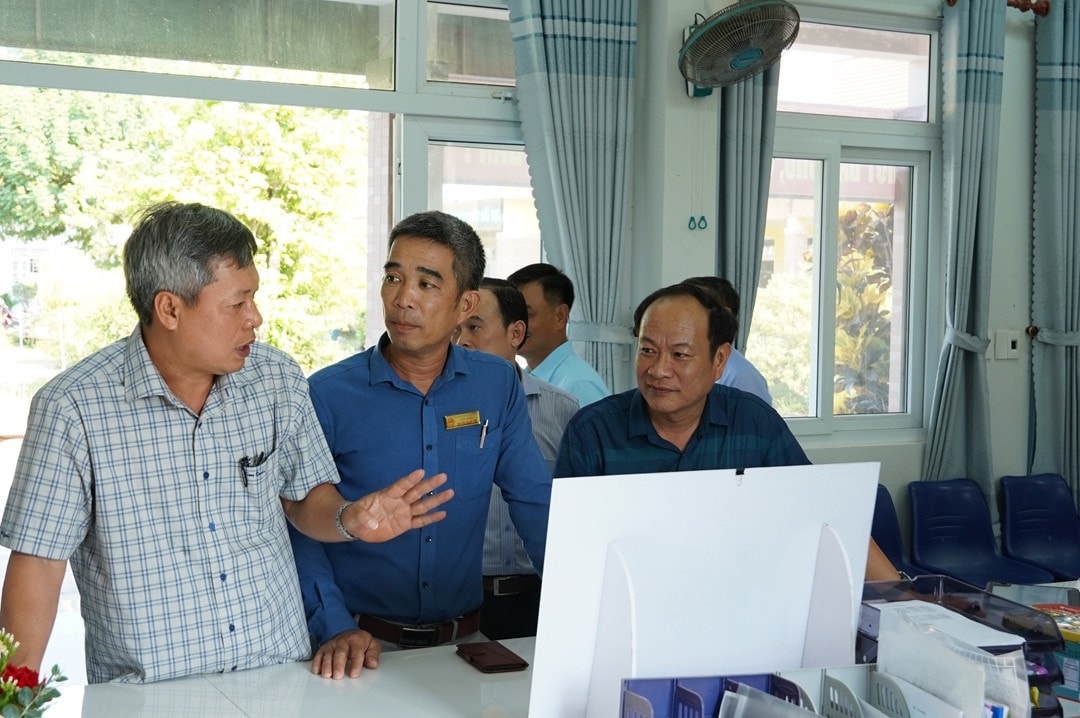
The number of online profiles is still low.
There are currently no digital signature devices available for online public service applications. Therefore, people often choose to submit applications in person and on paper for greater peace of mind. In particular, from July 2024 onwards, citizens will no longer be able to use regular accounts on the systems to submit applications; they must use their VNeID electronic identification account. This has led to significant difficulties for many disadvantaged individuals, the elderly, and people in mountainous areas who do not have access to smart devices.
Furthermore, people are still not proficient in submitting administrative procedures online, resulting in a low number of online applications at the district and commune levels.
The number of applications for electronically certified copies from original documents submitted to the National Public Service Portal has not yet been synchronized with the provincial administrative procedure resolution information system. While the majority of certification applications are processed at the commune-level People's Committees, this procedure does not yet meet the requirements for online public service implementation, resulting in a low rate of online applications at the commune-level People's Committees.
Currently, the information system for handling administrative procedures still faces many shortcomings and difficulties regarding interoperability, data sharing, and data synchronization. Internal administrative procedures are diverse in terms of issuing authority and coordination methods, leading to overlapping authority in reviewing and issuing lists.
Prioritize data cleaning.
In mountainous areas, the investment in information technology infrastructure has not been synchronized, leading to difficulties in connecting, integrating, sharing, and effectively utilizing database resources. The high proportion of ethnic minorities and low levels of education make it difficult to implement the electronic one-stop service mechanism, especially for online public services.
Officials and civil servants responsible for handling administrative procedures in communes lack stability, are frequently rotated and change positions, and have not received professional training, which significantly affects the quality of operation of the "one-stop shop" and "integrated one-stop shop" mechanisms.
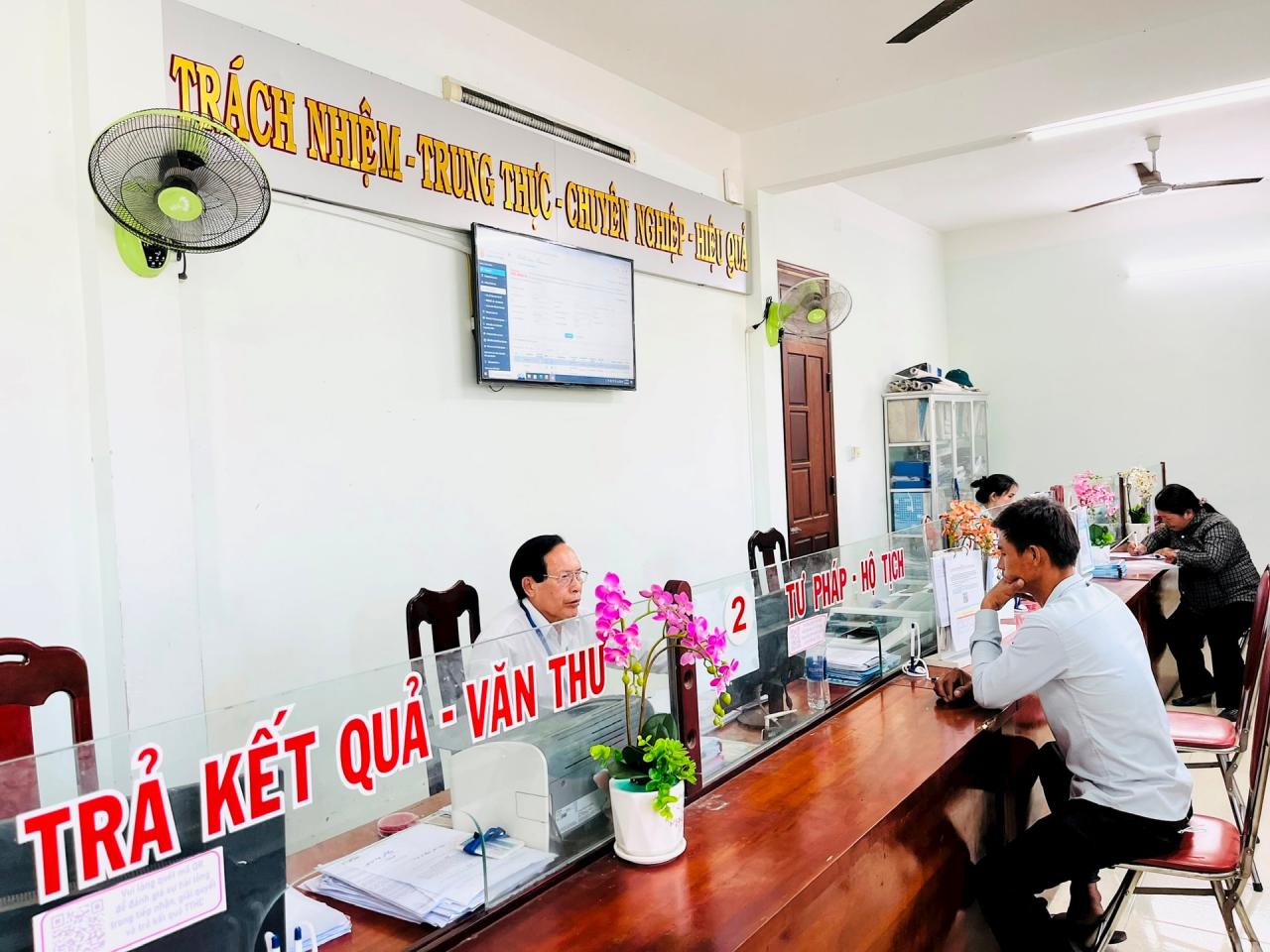
Furthermore, mobile network coverage is only available in the centers of communes and villages in remote areas, and the number of people in mountainous regions with smartphones is low, resulting in a limited rate of application submission. Some components of administrative procedures have large file sizes, making uploading difficult, especially on low-configuration smartphones…
Representatives from the Institute for Policy and Development Research in Communications stated that the level of responsiveness to user needs on local public service portals remains very limited. Specifically, there is a lack of uniformity and consistency nationwide. The procedures and results of administrative procedures are not fully publicized, making them difficult to search and trace.
Many new types of records have only been converted from paper to electronic form, and have not yet reached the point of digitizing processes and leveraging digital data to simplify procedures. The digitization and data cleaning process in some localities is still slow, lacking a clear roadmap and plan.
Furthermore, some agencies and units mainly digitize documents by simply copying them from paper to electronic format, which does not guarantee legal validity. This leads to situations where people submit electronic documents but then return to submit paper documents. This wastes digitization resources and storage resources.
Mr. Ho Quang Buu, Vice Chairman of the Provincial People's Committee, stated that to gradually improve the quality of online public services, the province has allocated resources to units and localities to invest in addressing difficulties related to IT and telecommunications infrastructure. Simultaneously, it has directed specialized agencies to work with businesses on expanding mobile coverage and supporting the conversion of 2G phones to smartphones for citizens. In addition, the review and restructuring of processes continues to be promoted to provide online public services, both partially and fully, in accordance with current regulations, ensuring 100% synchronization of records and processing status of administrative procedures from the Provincial Administrative Procedure Information System to the National Public Service Portal.
Access to many amenities
The Quang Nam Provincial Police currently maintains a high rate of online application submissions through the public service portal, covering 11 essential public services under its purview. Many procedures have achieved a 100% online application acceptance rate, including: permanent and temporary residence registration; notification of stay; seal making procedures; issuance of ordinary passports; motorcycle license plate registration; traffic fines issued remotely, etc.
Register your vehicle at home.
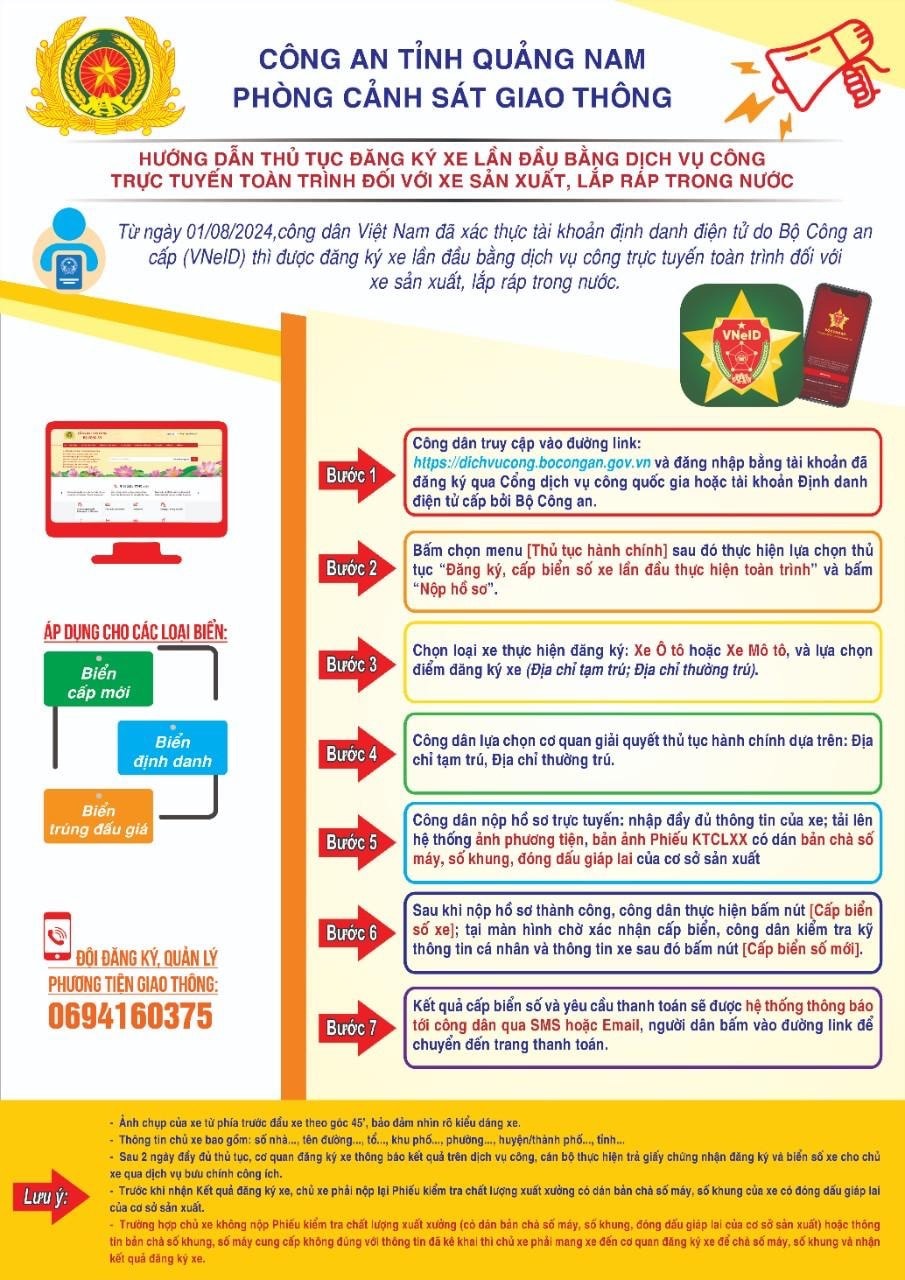
Registering domestically manufactured and assembled vehicles for the first time through a full-process online public service is one of the conveniences that the Traffic Police force has been simultaneously implementing throughout the province since August 1st, based on Circular 28 of 2024 issued by the Ministry of Public Security .
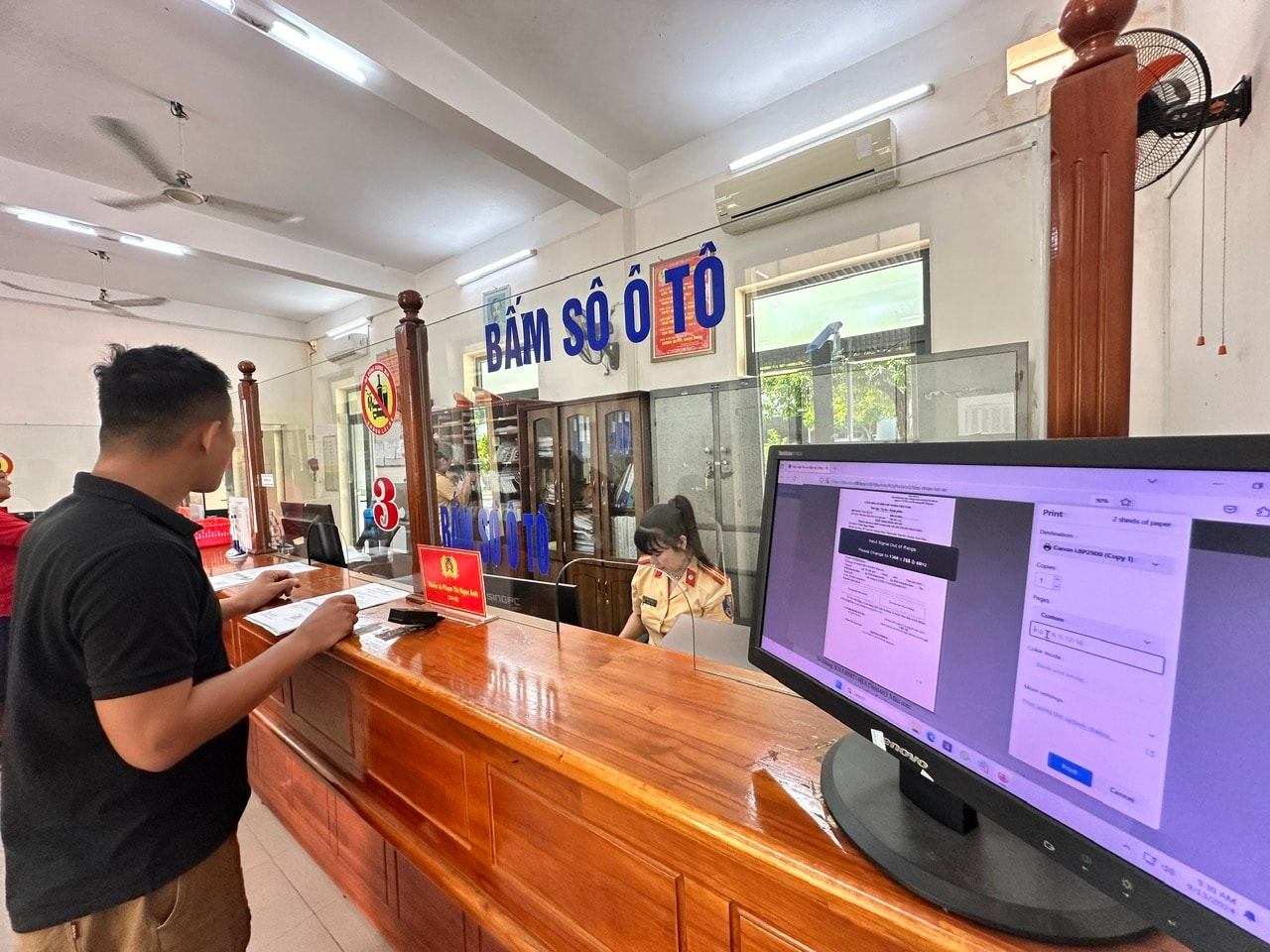
Accordingly, vehicle owners do not have to bring their vehicles to the vehicle registration office, but will use the public postal service to receive their vehicle registration certificate and license plates.
The vehicle owner registers the license plate through the public service portal or the national identification application. The public service portal and the national identification application notify the owner of the issued license plate and provide instructions on paying the registration fee via text message, email, or notification on the national identification application, allowing the owner to pay through the payment utility integrated on the public service portal and the national identification application.
The comprehensive vehicle registration process has been enhanced through information and communication channels by the traffic police, especially on social media platforms.
“According to statistics, the province currently has more than 15 cases of full vehicle registration. The common difficulty now is that vehicle owners have level 2 electronic identification accounts but have not used them for a long time, have not updated the application, or have forgotten their passwords, causing login problems. Other cases have not registered for level 2 identification and therefore cannot use the system. In addition, on the public service system, the synchronization of tax and customs registration data is not timely. This is a technical issue that traffic police have to guide and explain to the people,” shared Lieutenant Colonel Phan Thanh Hong, Head of the Traffic Police Department of the Provincial Police.
According to Mr. Hong, the general mindset of the people is to want things done quickly and fear problems when filing online, so they often choose to do it in person, thus affecting the rate of using online services in this field.
Focusing on the people
The shift from manual methods to the use of online public services is a significant reform of the service-oriented administration, focusing on the people. However, changing mindsets and creating widespread awareness among the people still requires more effort in public awareness campaigns. Delays in processing procedures through online public services still exist, and the complexity of declaring information for some services makes many people hesitant to use them.
Colonel Ho Song An, Deputy Director of the Provincial Police, said that the Quang Nam Provincial Police, in its role as the permanent member of the Provincial Task Force for Project 06, has been actively implementing the models of Project 06. However, there are still many "bottlenecks." The Provincial Police leadership stated that at many times, the Ministry of Public Security's public service portal and the National Public Service Portal have encountered technical issues related to VneID login, preventing the exploitation of population data for online application processing, thus affecting the rate of online public service transactions.
The implementation of pilot models for socio -economic development still faces many difficulties and obstacles, such as: the lack of specific solutions from the Government's Project 06 Task Force; the absence of specific guidelines on technical criteria, procedures for selecting solution providers, and mechanisms for allocating funds for implementation, leading to difficulties and confusion for units in selecting solutions and proposing funding for implementation.
A segment of the population in disadvantaged areas, especially mountainous regions, lacks a VneID electronic identity card due to not owning a SIM card, not using smart devices, and having limited understanding of information technology, thus preventing them from submitting online public service applications. The provincial police have been focusing on promoting the installation, activation, and use of VneID among residents throughout the province.
“The Provincial Police Department has advised the Provincial People's Committee to direct members of the Project 06 working group, heads of departments, agencies, and localities to clearly define their tasks, focus on reviewing and clarifying existing shortcomings, limitations, and bottlenecks within their jurisdiction, and report promptly to find solutions and avoid superficiality. In the coming time, the Provincial Police Department will take the lead in coordinating with the Provincial People's Committee Office to advise the Chairman of the Provincial People's Committee to organize the issuance of a plan and inspect and supervise the implementation of Project 06 by local units, aiming to strengthen the development and exploitation of utilities from Project 06 to serve citizens,” Colonel Ho Song An informed.
Gradually creating favorable conditions for the people.
For the first time, a Public Service Kiosk was piloted to receive administrative procedures for citizens and businesses. Similarly, the pilot model of "5 administrative procedures without waiting" has initially brought satisfaction, helping people adapt to online public services.
Public service kiosks
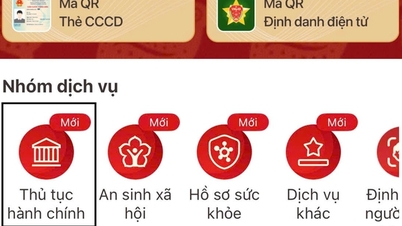
Instead of having to queue for a long time to complete administrative procedures as before, Ms. Le Thi Anh Tuyet (Ly Truong village, Binh Phu commune, Thang Binh district) only needs a few simple steps on the Public Service Kiosk. After selecting the required documents and procedures displayed on the kiosk screen, Ms. Tuyet accesses the service by scanning the VNeID application QR code on her phone to log in.
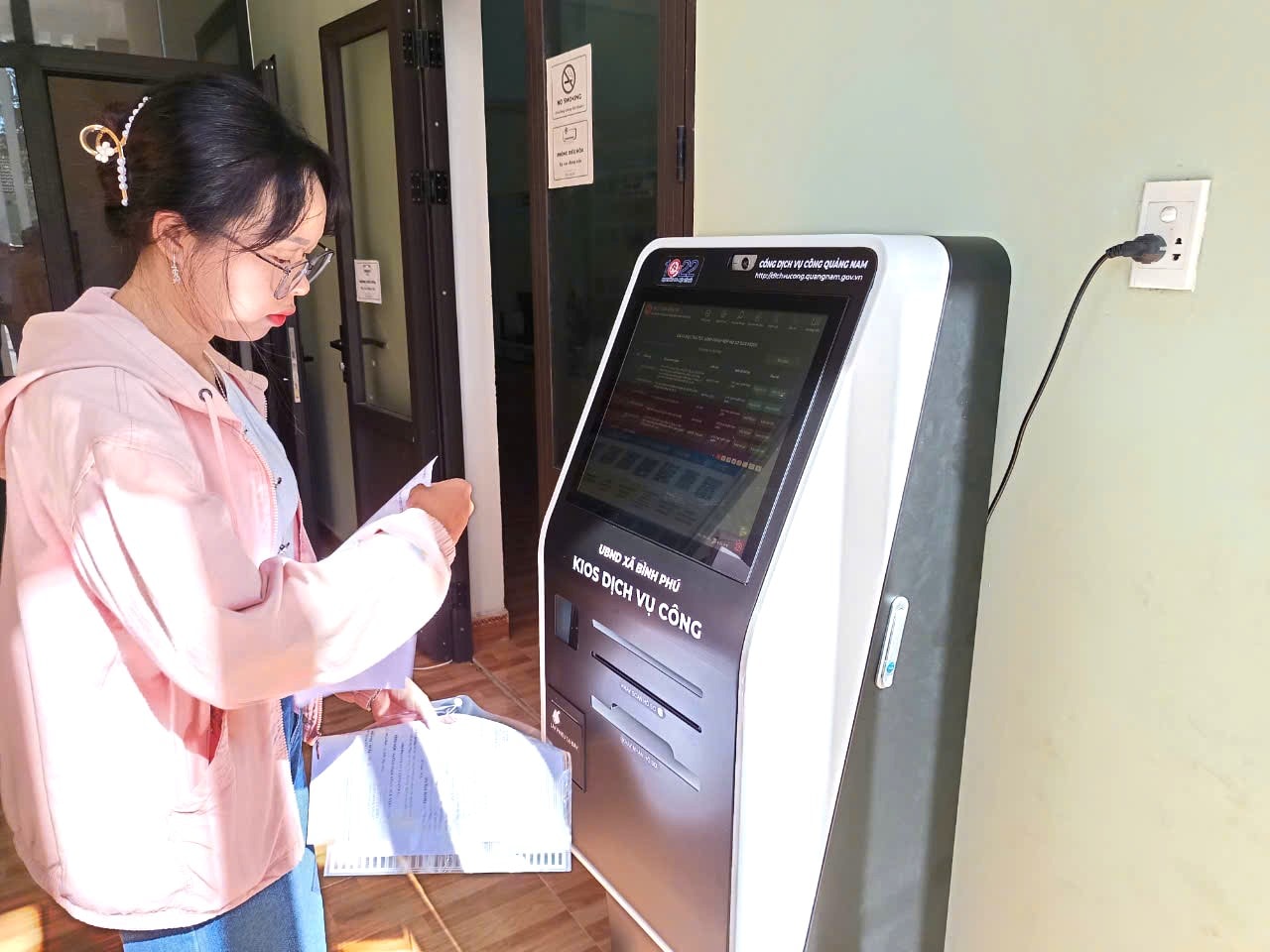
At this point, the kiosk screen displayed a request for Ms. Tuyet to enter all the required information, check, and confirm that all the necessary documents were present. The attached documents only needed to be inserted into the scanner slot; the machine would automatically create copies and return the originals on the spot. After completing these steps, the kiosk asked her to double-check the entered information and enter the confirmation code. Once the information was confirmed, the system displayed a "successful application" message, and the machine automatically printed a receipt. Ms. Tuyet then received the appointment slip and went home to wait for the results.
The DVC kiosk for receiving administrative procedures is very compact, at first glance looking very much like an ATM. The device consists of a touchscreen computer system, integrated printer + scanner, QR code scanner, and is connected to the DVC Gateway via Wi-Fi network.
The advantage of the kiosk is that all content is displayed in Vietnamese, large and clear, the operation is simple, the process is quick, and it is suitable for most people, especially the elderly. After citizens submit their documents, the files will be transferred to the Public Service Portal for staff to receive, process, and return the results on time.
The DVC kiosk is located at the one-stop service center in Binh Phu commune. In addition to a smart sensor system that utilizes data from VNeID, the kiosk's automation technology allows citizens to avoid direct contact with staff when receiving and returning results.
Mr. Tran Thanh Hai, Chairman of the People's Committee of Binh Phu commune, shared that this kiosk system also serves as a benchmark for people to access and evaluate civil servants. “Before this system was implemented, many people came in person, and the processing time for each application was very long, leading to overload and inconvenience for the people. Now, through the kiosks, people can submit their applications and receive appointment slips themselves, which is very convenient…”
Mr. Pham Ngoc Hiep, Deputy Director of VNPT Quang Nam, said that in implementing Project 06, VNPT is coordinating with the government to deploy an automated solution for public administrative centers and one-stop service departments through Public Service Kiosks. This model is tasked with exploiting data from the VNeID application, thereby gradually and effectively achieving the goals of Project 06, serving the administrative reform and digital transformation of the province in the coming time...
Administrative procedures without waiting.
In Que Chau commune (Que Son district), a model of 5 administrative procedures was selected for implementation, including: issuing certificates of marital status; marriage registration; re-registration of death; death registration; and issuing copies of civil registry extracts.
Mr. Nguyen Van Nghia (Phuoc Duc village, Que Chau commune), currently working in Da Nang city, said that recently, he returned to his hometown to complete the procedures for obtaining a Certificate of Marital Status. Compared to before, when Mr. Nghia had to wait a long time, his application was now processed within 15 minutes.
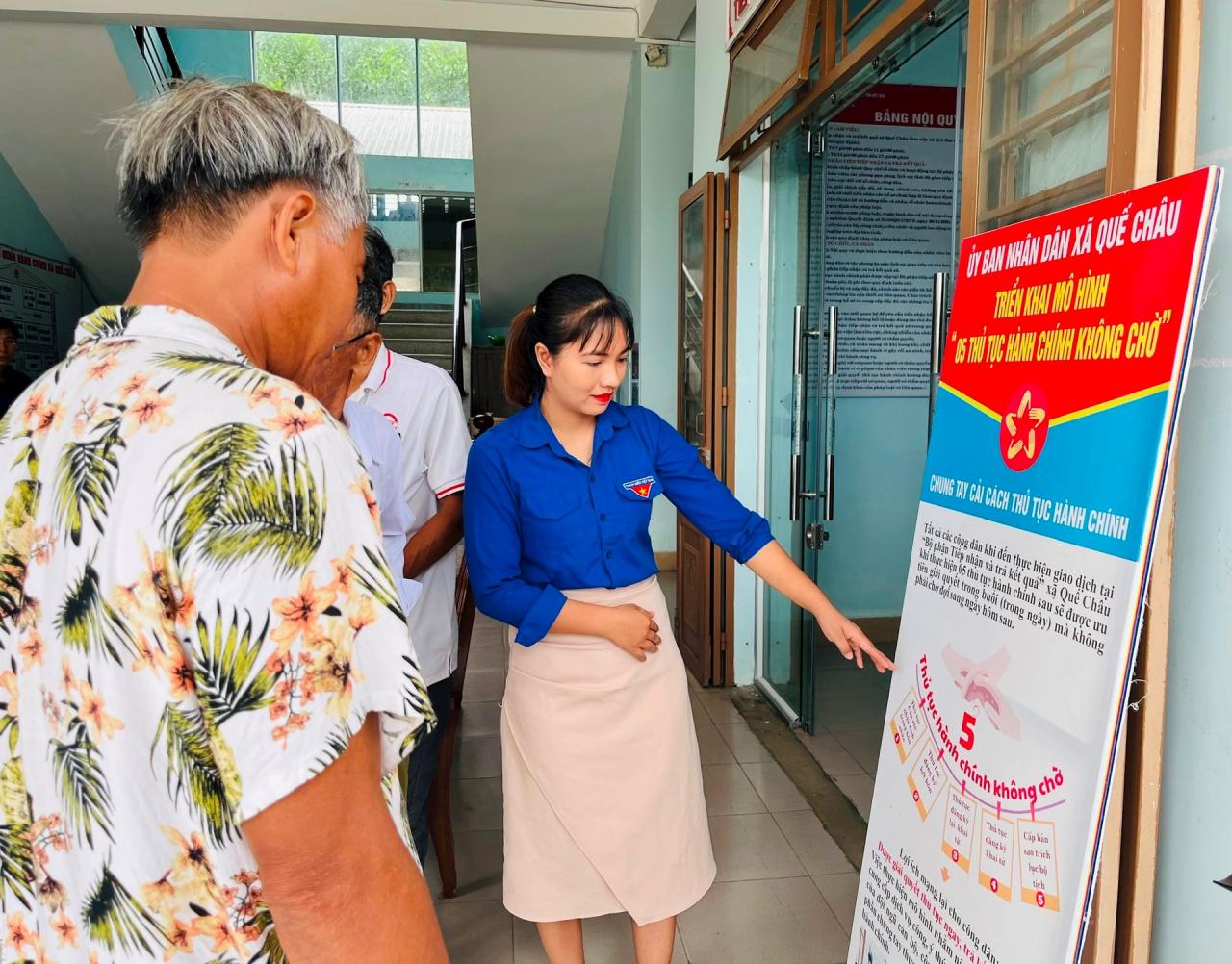
Mr. Nghia said that after receiving instructions, he logged into VNeID, registered an account on the DVC system, selected the procedure he needed to transact, and entered the relevant information. After submitting the information, the Justice and Civil Registry officer of the commune would receive and process the application.
"I find this model very convenient. Previously, it took about 2-3 days, but now I get my marriage status certificate in just 15 minutes, and it saves me a lot of travel time compared to before," Mr. Nghia added.
Mr. Nguyen Van Quang, a Justice and Civil Registry officer in Que Chau commune, said that the "5 administrative procedures without waiting" model originated from the local reality. The justice and civil registry sector was chosen for implementation in the model because these are areas where people frequently interact.
“From August 15th, the first requirement for people wanting to use this model is to have a level 2 VNeID account. The highlight of this model is that all operations in the application processing procedure are done online, thereby reducing travel time for citizens and saving costs for state agencies,” Mr. Quang informed.
According to Mr. Nguyen Minh Sy, Chairman of the People's Committee of Que Chau commune, the "5 administrative procedures without waiting" model was launched at the end of June 2024. To implement the model, civil servants in the Justice and Civil Registry department and staff at the commune's reception and results delivery department received professional training to ensure they fully understand the procedures and relevant legal regulations.
“This model not only improves the quality of service provided by commune officials, but also achieves the goal of increasing people's satisfaction with public services. In the future, the People's Committee of Que Chau commune will consider expanding the scope of application to other administrative procedures, gradually improving the quality of administrative procedure reform to serve people and businesses,” Mr. Sy said.
The prerequisite for upgrading the quality of online public services is to put the user at the center and restructure the entire system based on the needs and convenience of each citizen. From these pilot models, it is hoped that people will increasingly adapt to the benefits of digital transformation.
Source: https://baoquangnam.vn/dich-vu-cong-truc-tuyen-cap-thiet-giai-toa-diem-nghen-3142306.html




































































































Comment (0)