After more than 120 years of existence and service to Hanoi's traffic, the old Duong Bridge is entering its final months of operation. Built in 1902, the bridge is not only a vital transportation artery connecting the inner city with the northeastern part of Hanoi but also witnessed many historical milestones of the country.
Currently, while the new Duong Bridge is nearing completion, the old Duong Bridge continues to bear the heavy traffic every day. According to the plan, the structure is expected to be dismantled in September 2026 after the new bridge is put into use.
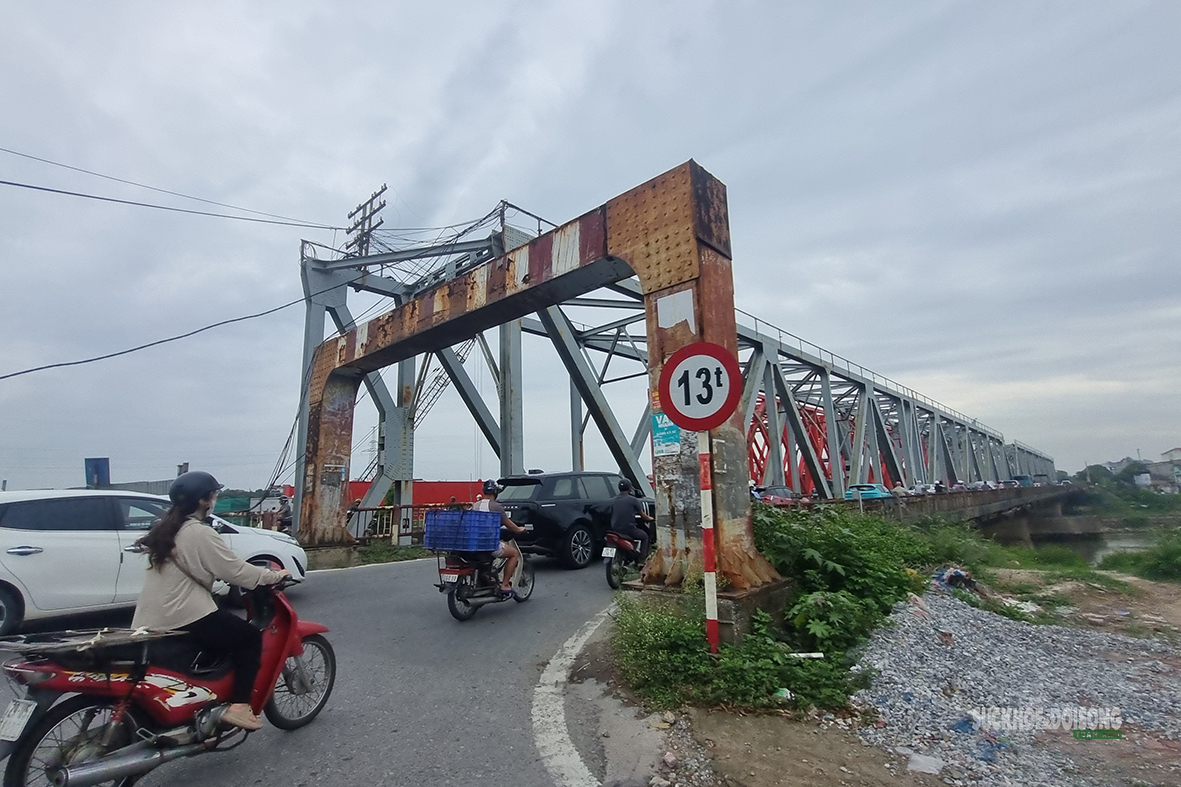
Duong Bridge is one of Hanoi's oldest bridges still in operation today.
The Duong Bridge currently serves both road and rail traffic simultaneously on the same structure. After more than a century of use, the bridge has to accommodate traffic volumes far exceeding its original design capacity.
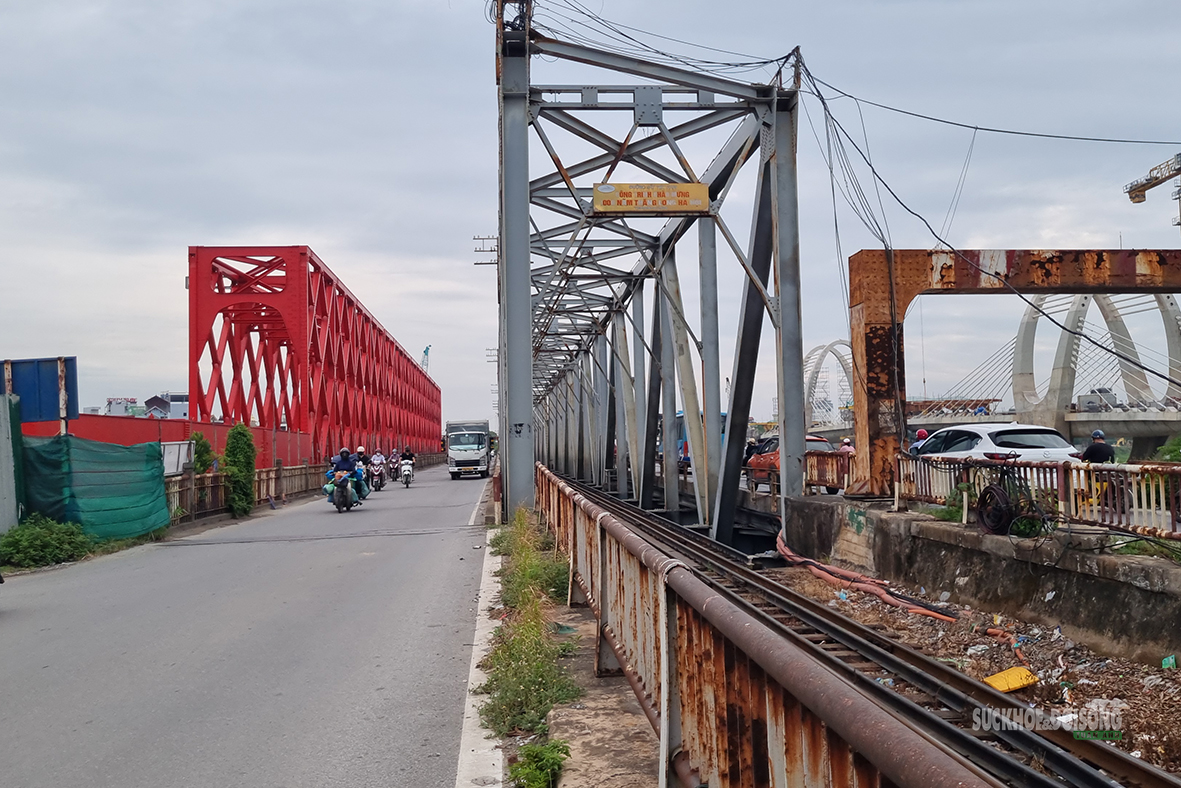
Both road and rail traffic operate on the Duong Bridge.
Having undergone numerous repairs, many parts of the Duong Bridge are showing signs of deterioration. The steel structure, railing system, and load-bearing components bear the distinct marks of time after decades of continuous use.
Not only the bridge deck, but also the bridge piers are strongly affected by the flow and major floods on the Duong River.
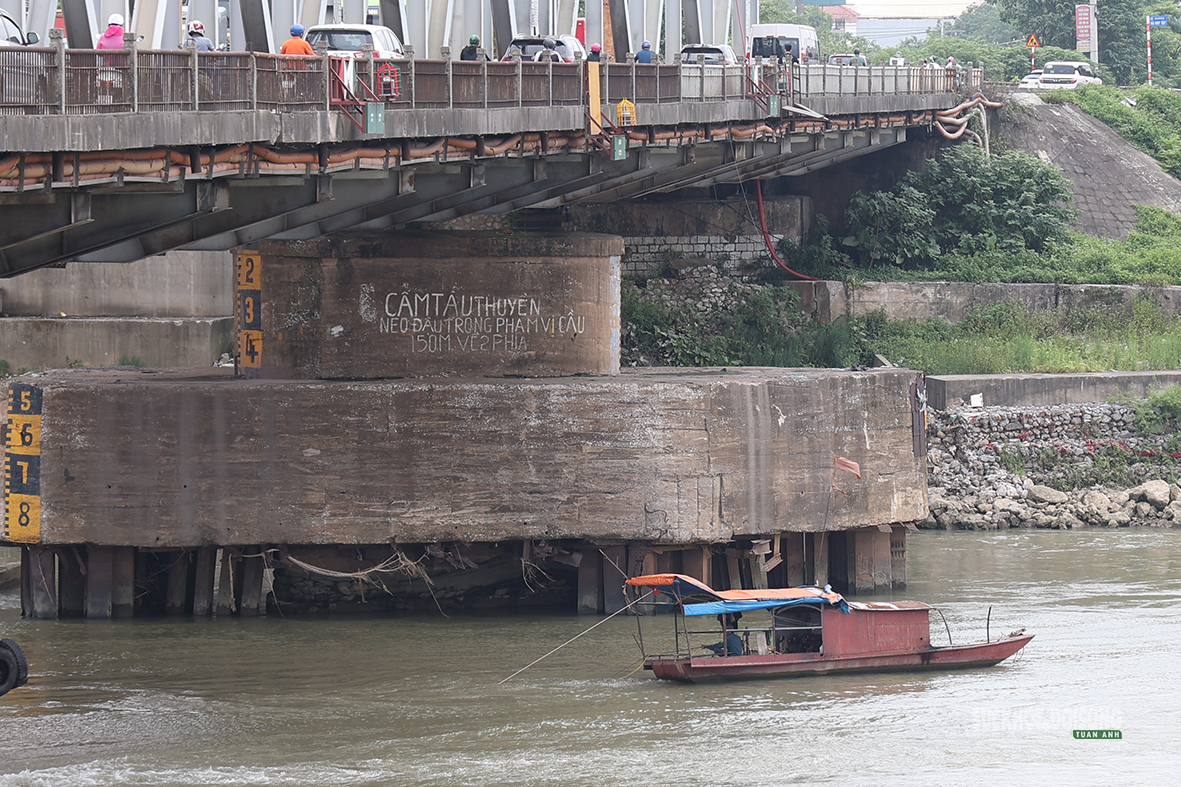
The old Duong Bridge pillars bear many signs of erosion after more than a century of existence.
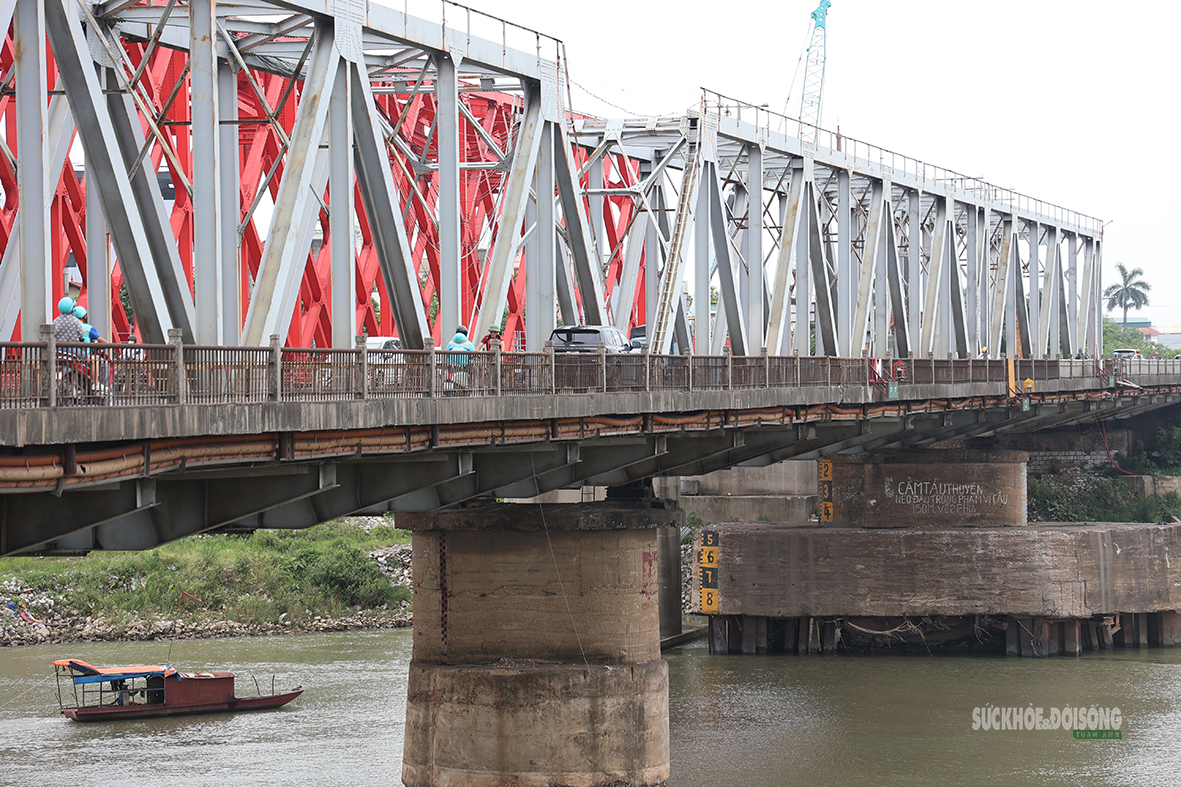
The bridge's components are heavily influenced by natural conditions and river flow.



To replace the old bridge, which had completed its historical mission, the project to build a new Duong Bridge was launched in 2024. The structure is designed to consist of two independent units, separating the road bridge and the railway bridge.
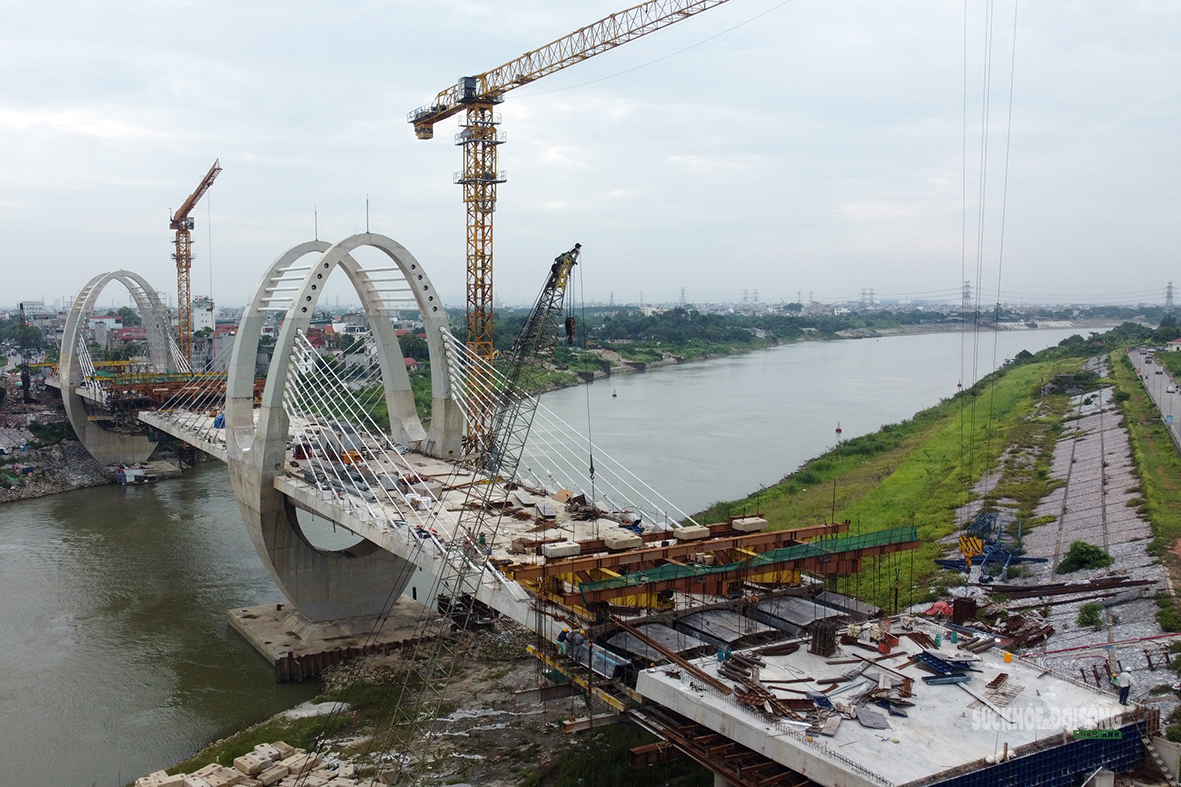
After a period of construction, the new bridge's shape has gradually taken form, with its prominent cable-stayed arch system standing out over the Duong River.
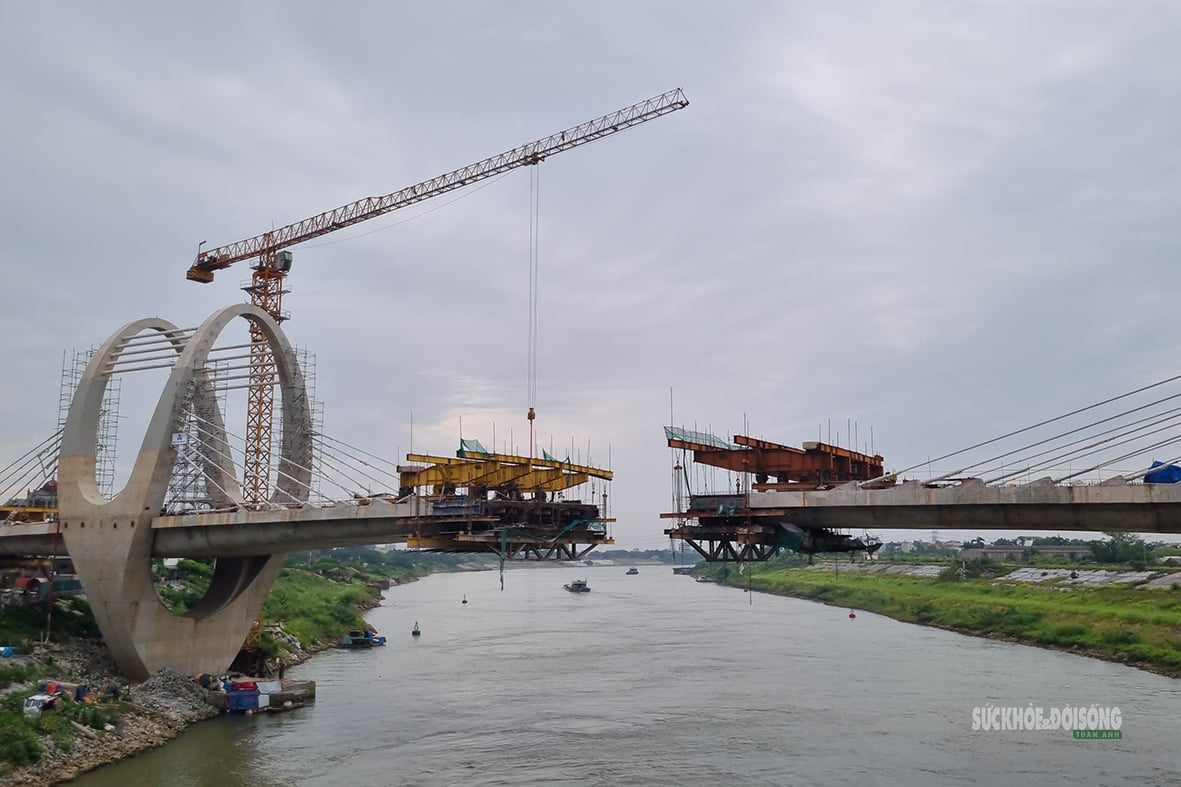
The main components of the new Duong Bridge are currently being constructed across the Duong River.
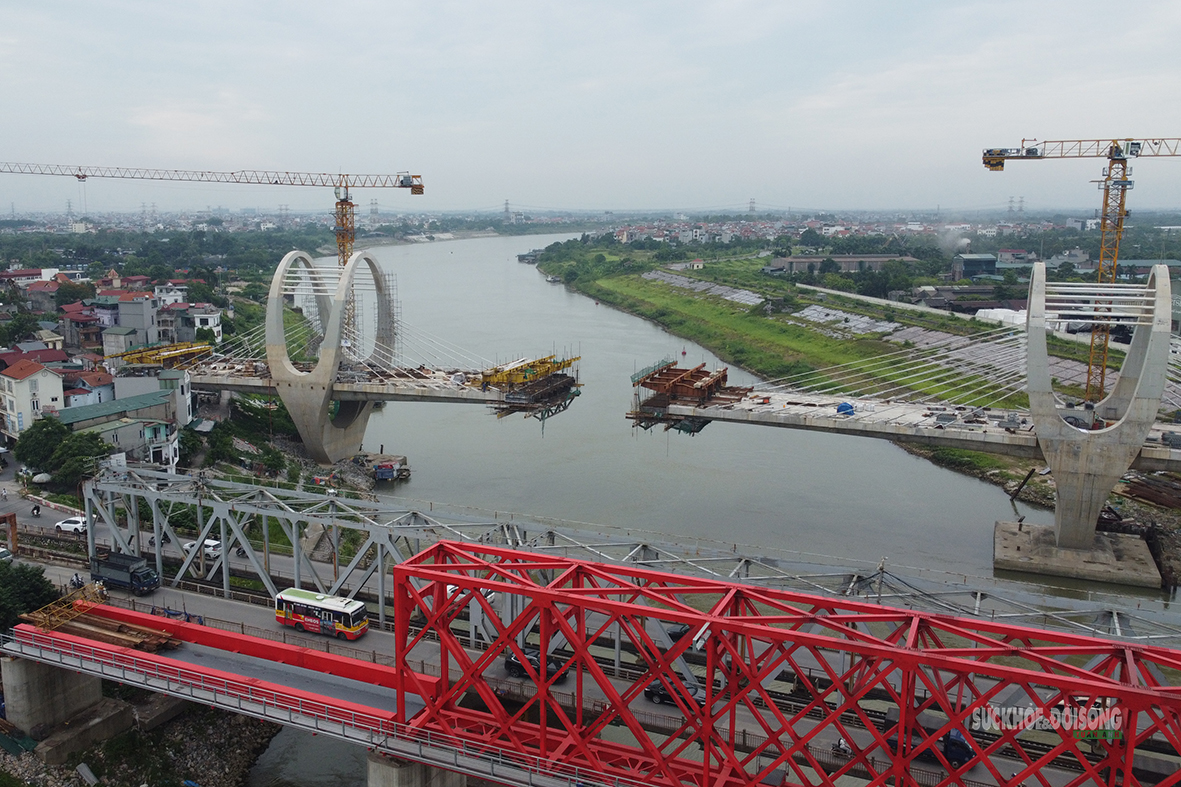
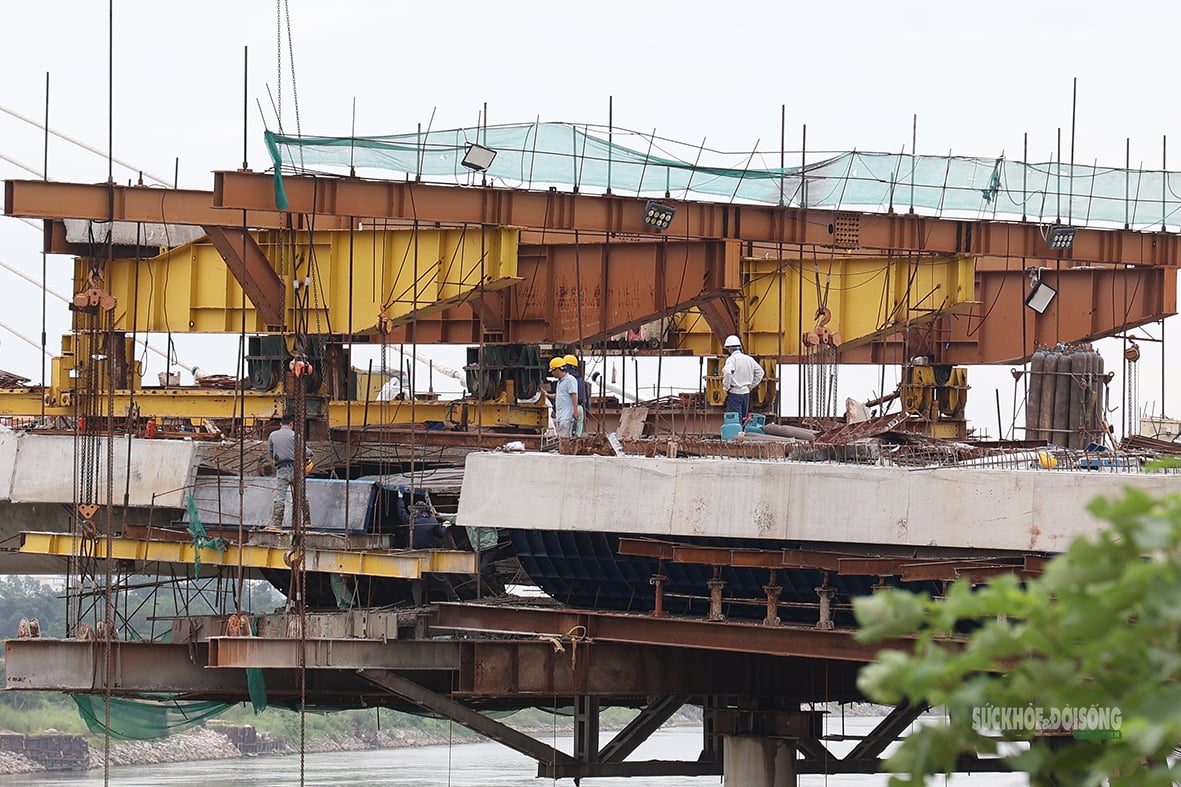
Workers are constructing the main girder segments and span structures of the project.
According to the design, the new road bridge is 382m long, 18.5m wide, and fully equipped with 6 lanes for motorized vehicles and 2 mixed lanes. Meanwhile, the new railway bridge is designed to accommodate both 1,000mm and 1,435mm gauge railways.
In particular, the project has increased the clearance for boat traffic, helping to resolve long-standing limitations on waterway transportation on the Duong River.
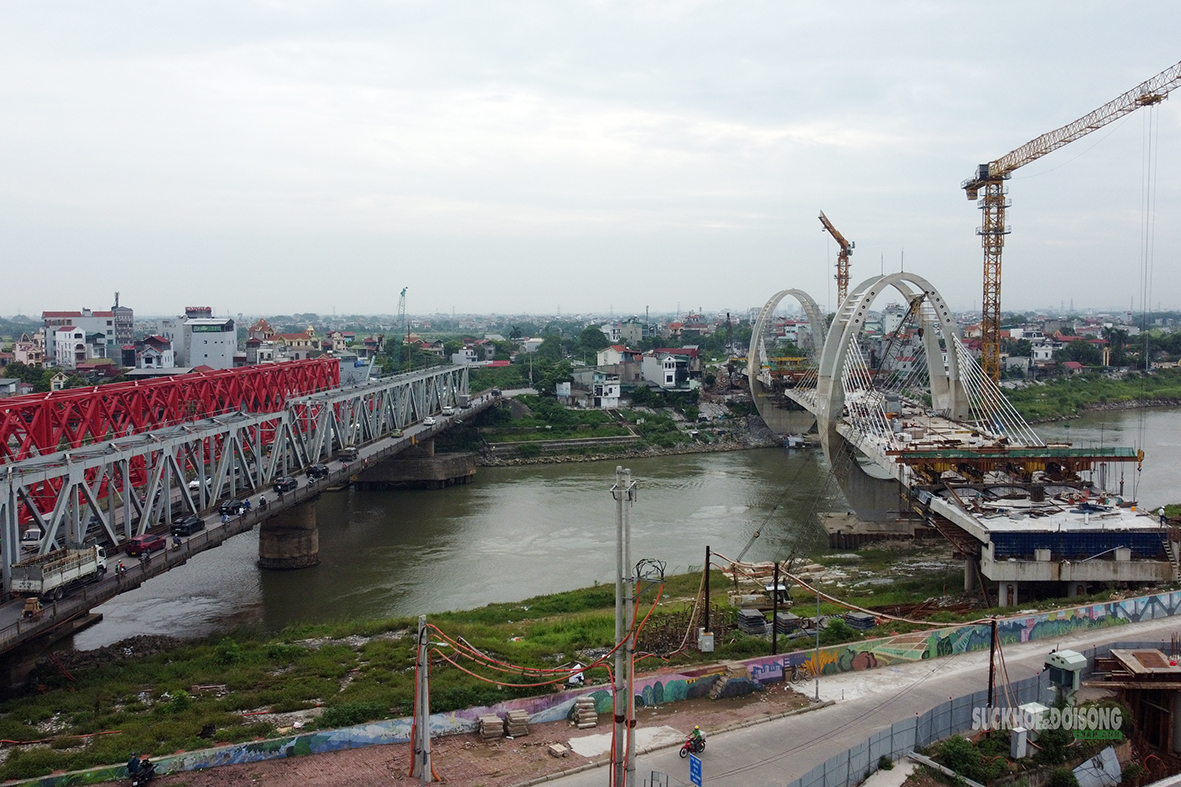
The new Duong Bridge is designed with a significantly larger clearance for ship traffic compared to the current bridge.
While construction of the new bridge is progressing rapidly, many residents living along the Duong River are closely following every change in the project that has been an integral part of their lives for decades.
According to current plans, after the new Duong Bridge is completed and put into operation in 2026, the old Duong Bridge is expected to be dismantled in September 2026. The dismantling aims not only to eliminate a waterway traffic bottleneck but also to pave the way for a more integrated and modern infrastructure system at the northeastern gateway to the capital.



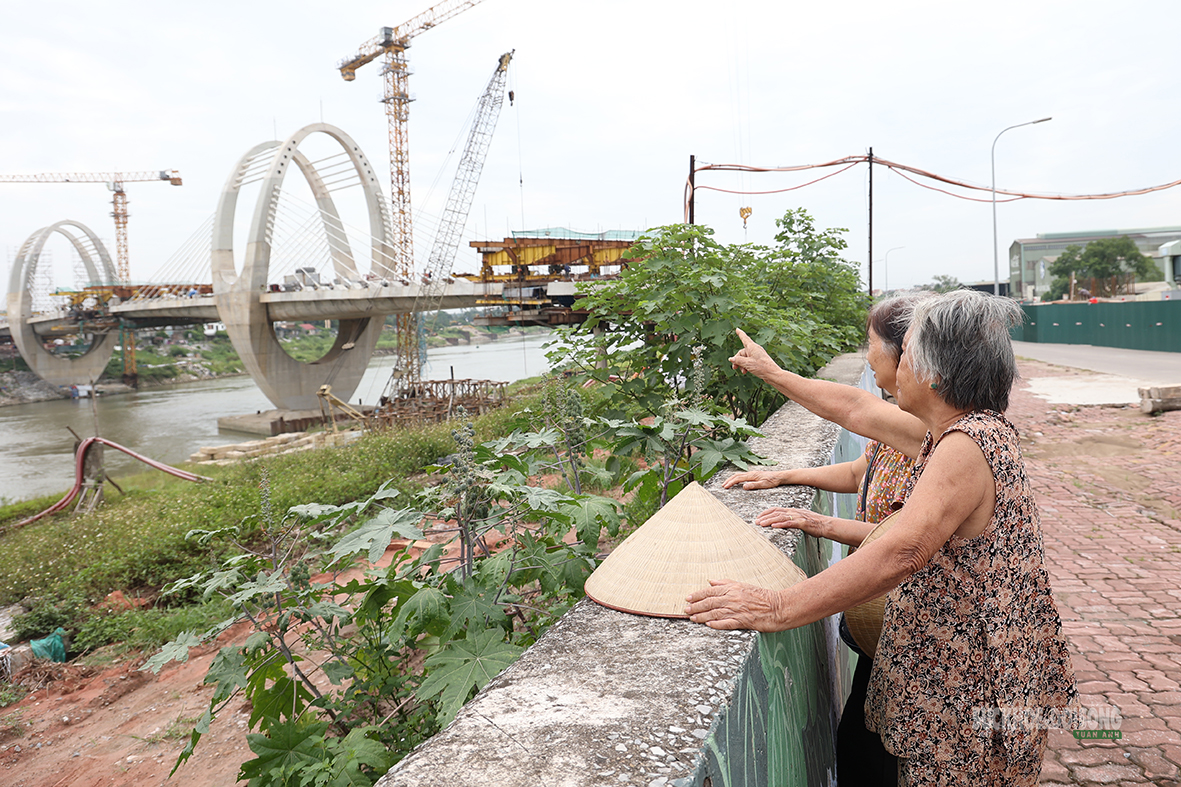
Locals watch the construction of the new Duong Bridge alongside the historic bridge.
When the new bridge becomes operational, the old Duong Bridge is expected to be dismantled, completing its more than 120-year service to traffic.
Having existed for over a century, the Duong Bridge is not just a transportation structure but also a part of the memories of many generations of Hanoians. As the old bridge prepares to close its "historical mission" to make way for a more modern structure, the Duong River is also witnessing a transition marked by time and development.
Source: https://suckhoedoisong.vn/cau-duong-cu-truc-ngay-thao-do-169260611150410455.htm

![[Photo] Overview of the renovation and upgrading of the Ho Chi Minh Museum - Ho Chi Minh City Branch](https://vphoto.vietnam.vn/thumb/1200x675/vietnam/resource/IMAGE/2026/06/24/1782287051250_ndo_br_01-jpg.webp)

![[Image] Paris's oldest bridge goes viral after transforming into a giant cave.](https://vphoto.vietnam.vn/thumb/1200x675/vietnam/resource/IMAGE/2026/06/24/1782283441197_ndo_br_dsc05314-jpg.webp)
![[Photo] Opening Ceremony of the 13th National Congress of the Ho Chi Minh Communist Youth Union](https://vphoto.vietnam.vn/thumb/1200x675/vietnam/resource/IMAGE/2026/06/24/1782286753905_ndo_br_1-8510-jpg.webp)