

The crane's-neck plant is a valuable medicinal herb in traditional and folk Vietnamese medicine, widely used for its diverse pharmacological properties to treat bone and joint pain, kidney failure, protect the liver, and support diabetes management, among other benefits.
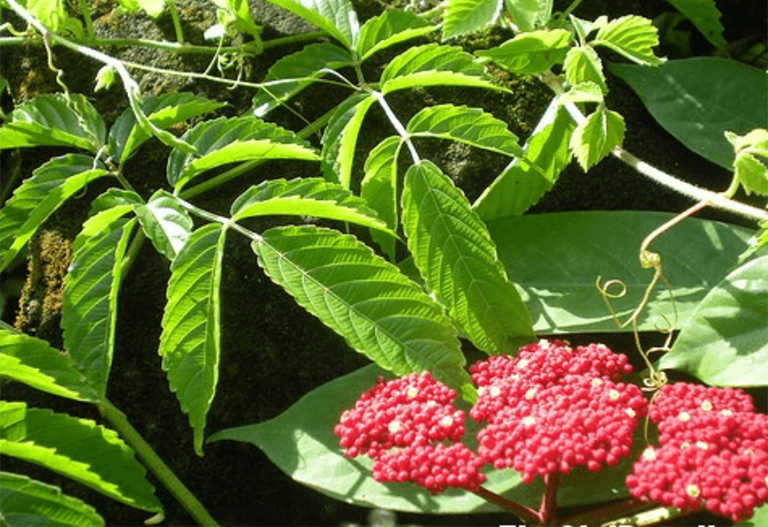
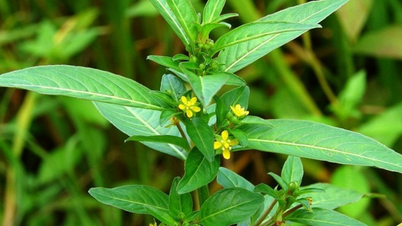
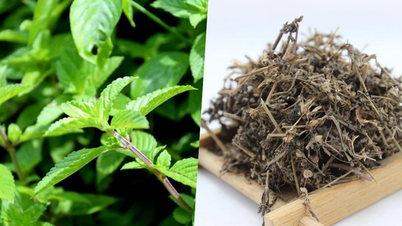
The crane's-neck plant contains many valuable active ingredients for treating diseases - Photo: BSCC
Many valuable active ingredients have medicinal effects.
According to Dr. Quách Tuấn Vinh, a member of the Executive Committee of the Hanoi Traditional Medicine Association, Leea rubra, also known as crane's knee vine, knee vine, mountain castor oil vine, monkey bone, monkey blood tree, scientifically named Leea rubra or Leea indica, belongs to the Leeaceae family and is a valuable medicinal plant that grows wild in mountainous areas.
The leaves are compound, pinnate, glossy green with slightly serrated edges; the flowers are small, clustered, red or purple; and the fruit is a small, spherical shape that turns black when ripe.
The root of the plant is mainly in the form of a tuber, which is white, yellow, or pink in color and is usually harvested during the winter months each year.
The roots are dug up, washed, sliced thinly, then dried in the sun or in a dryer and used as medicine. To ensure the quality of this medicinal material, it needs to be stored in a dry, cool place, away from moisture and mold.
According to modern medicine, the crane's-neck plant helps prevent and treat bone and joint pain, menorrhagia, abdominal pain, numbness, acute rheumatism, and chronic rheumatism.
Numerous studies have identified the chemical composition of the crane's-neck plant, which contains valuable active compounds:
Flavonoids: Antioxidants that help protect blood vessels.
Tannins: Possess hemostatic and antibacterial properties.
Saponin: Boosts immunity and has anti-inflammatory properties.
Alkaloids: Reduce pain and support nerve function. Additionally, it contains trace elements such as iron, calcium, and magnesium, which help supplement the body's nutrition.
Crane's-foot pillow has the following pharmacological effects:
- Detoxification: It has a cooling and detoxifying effect, especially effective in treating boils and skin ulcers.
- Improves blood circulation and relieves pain: Used to treat bone and joint pain, arthritis, and rheumatism.
- Hemostasis: Treatment of nosebleeds, menorrhagia, and gastrointestinal bleeding.
- Kidney tonic: Supports improved kidney function, treats kidney failure, and relieves back pain and knee pain.
- Anti-inflammatory: For external use to treat swelling and injuries.
There are several scientific studies proving the medicinal effects of Crane's Nest:
Anti-inflammatory: Research from the Journal of Ethnopharmacology (2019) indicates that extracts from the leaves of the *Gynura procumbens* plant have anti-inflammatory effects similar to non-steroidal anti-inflammatory drugs (NSAIDs).
Antioxidant: Research from Hanoi University of Pharmacy (2022) demonstrates the strong antioxidant capacity of flavonoids in the plant, especially in protecting the liver.
Supports diabetes treatment: A study on mice showed that crane's-eye extract significantly reduced blood sugar after 4 weeks.
Boosting immunity : The saponins in the plant help stimulate the immune system, making it suitable for people with weakened bodies.
Some traditional remedies utilize crane pillow to treat illnesses.
Doctor Quách Tuấn Vinh stated: According to traditional Chinese medicine, crane's knee has a cooling nature, a slightly bitter and astringent taste, and acts on the Liver, Kidney, and Large Intestine meridians. This herb is used for its anti-inflammatory, antibacterial, and blood circulation-enhancing properties, helping to reduce swelling.
In traditional Chinese medicine, crane pillows are used in many medicinal remedies:
To treat bone and joint pain, reduce pain and support joint flexibility: 20g dried *Gynostemma pentaphyllum* root, 15g *Achyranthes bidentata*, 10g *Tinospora cordifolia* vine, 4g *Glycyrrhiza glabra*. Boil with 1 liter of water, drink twice a day. This remedy has the following effects: Reduces pain, improves blood circulation, and supports joint flexibility.
Nerve rehabilitation : 15-20g dried *Gynostemma pentaphyllum* root, 12g *Achyranthes bidentata*, 12g *Achyranthes bidentata*, 10g *Smilax glabra*, 5g licorice. Wash all ingredients thoroughly and decoct with 1 liter of water. Simmer over low heat until only about 300ml of water remains.
Take twice daily after meals. This remedy helps to relieve pain, soothe inflammatory symptoms, and restore nerve function.
For muscle spasms: 100g of fresh *Gynostemma pentaphyllum* root. 200ml of white wine. Crush the fresh *Gynostemma pentaphyllum* root, then mix with the white wine. Heat the mixture and apply directly to the spine or painful joints. Secure with a clean cloth and leave for 1-2 hours.
Alternatively, boil dried crane's knee root in water and soak the swollen area for 15 minutes, 1-2 times a day. This remedy helps reduce local pain, inflammation, and muscle stiffness.
This remedy has the following effects: Reduces local pain, helps reduce inflammation and muscle stiffness.
Strengthening spinal health: Dried *Gynura procumbens* root: 1 kg. White wine: 5 liters (40-50% alcohol). Instructions: Wash the *Gynura procumbens* root thoroughly, slice it or leave it whole. Soak the root in white wine, store in a cool, airy place, and let it soak for 30-40 days.
Take 20ml each time, 1-2 times a day, do not exceed 50ml/day. This remedy is effective in: strengthening spinal health, reducing bone and joint pain, and supporting blood circulation.
To support the treatment of kidney failure: 15g of *Gynostemma pentaphyllum* root, 10g of *Cynanchum stauntonii*, 10g of *Morus alba* parasitic plant, 5g of licorice root. Boil and drink once a day.
Alternatively, take 15g of dried Cynanchum root, 10g of Eucommia bark, 12g of Loranthus parasiticus, and 10g of Coix seeds. Boil these ingredients together and drink one dose daily, divided into two servings. This remedy is effective in strengthening kidney function and reducing pain caused by herniated discs.
Supporting treatment for high blood pressure and diabetes: 15g of *Gynostemma pentaphyllum* root, 15g of *Gymnema sylvestre* vine, 10g of *Cynanchum auriculatum* root, 12g of *Dendrobium nobile*, 12g of *Gynostemma pentaphyllum*. Boil and drink one dose daily. It has the effect of lowering blood sugar and blood pressure.
Treatment for boils and ulcers: 15g of fresh *Gynura procumbens* leaves, 10g of betel leaves. Instructions: Crush the ingredients thoroughly and apply to the affected area twice a day.
Some folk remedies use this plant, such as: stopping bleeding: Use fresh, crushed leaves of the crane's-neck plant and apply directly to the bleeding wound; treating diarrhea : Boil 10g of fresh crane's-neck leaves with 300ml of water and drink twice a day.
Notes on usage
Dosage and method of use: Decoction for oral administration: 12-20g dried or 30-50g fresh per day. Topical application: Amount varies, usually 20-30g of fresh, crushed herb.
Contraindications : Not for use in pregnant women. Not for use in individuals with an allergy to the root of the Chinese angelica plant.
Side effects: If taken in excessive doses, it may cause diarrhea or gastrointestinal discomfort.
Drug interactions: Do not use concurrently with anticoagulants as this may increase the risk of bleeding.
Source: https://tuoitre.vn/cay-goi-hac-vi-thuoc-nam-quy-chua-nhieu-benh-20241223210308057.htm


















































![[Video] Sunset at Lap An Lagoon – Where the sun sets over the fishing nets](https://vphoto.vietnam.vn/thumb/1200x675/vietnam/resource/IMAGE/2026/05/31/1780192137701_beach-landscape-sea-water-nature-grass-745871-pxhere-com.jpeg)







































Comment (0)