Every year, as spring arrives and peach blossoms bloom on the mountain slopes, the Muong ethnic people in Thanh Son eagerly celebrate their traditional New Year. In communes such as Yen Lang, Yen Son, and Cu Dong, Muong families still preserve the custom of erecting a New Year's pole as a unique cultural tradition in the early days of the new year.
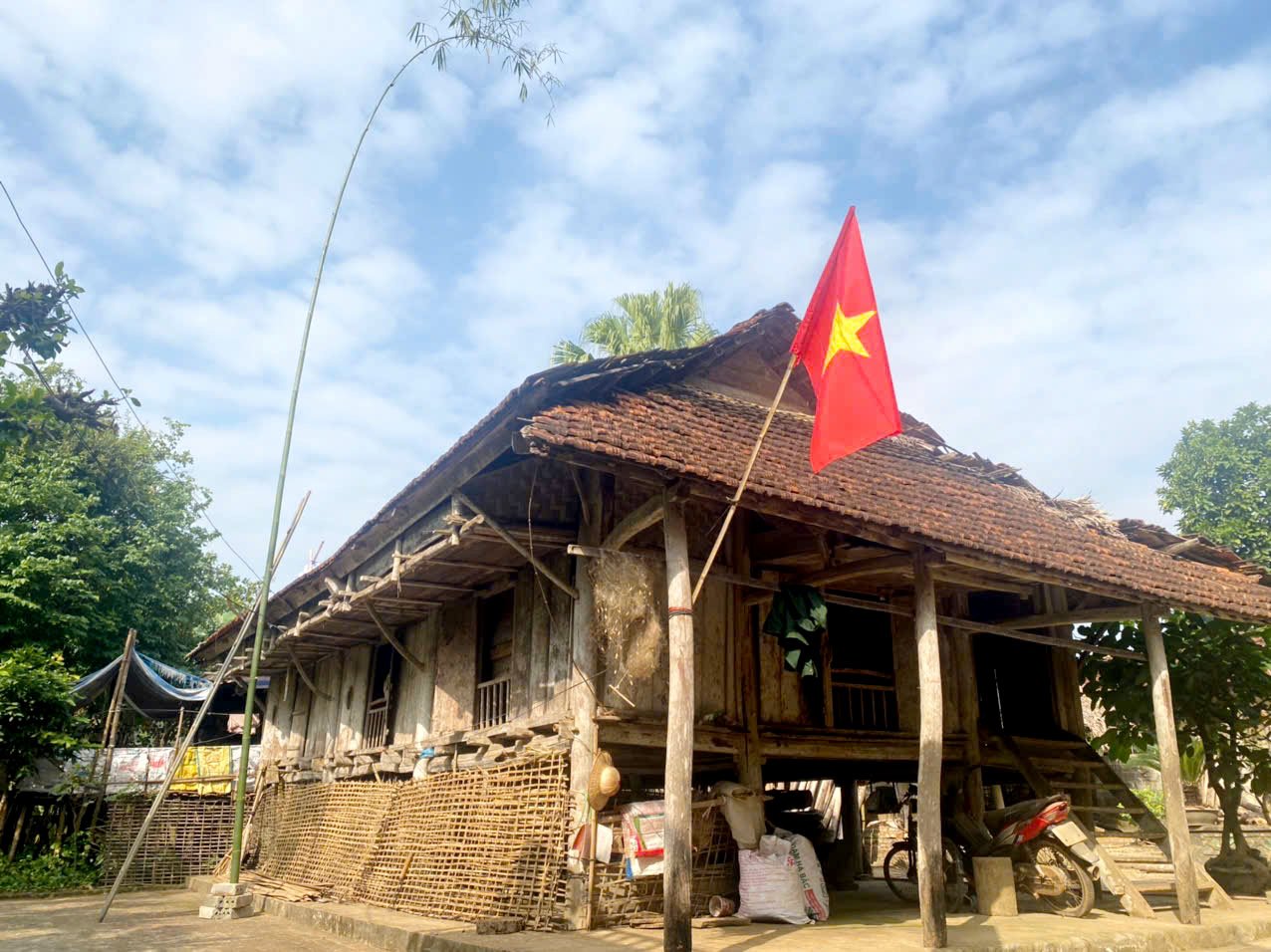
The family of Mr. Dinh Van Mot, in Yen Lang commune, still maintains the tradition of planting the New Year's pole during Tet.
The custom of erecting a New Year's pole among the Muong people living in Thanh Son is a beautiful cultural tradition preserved for generations. Traditionally, from the 25th day of the 12th lunar month, families in the Muong village choose the most spacious and beautiful spot in front of their house to plant the New Year's pole, hoping to ward off evil, welcome their ancestors to celebrate Tet with their descendants, and welcome good fortune, happiness, and prosperity in the new year. This is a long-standing custom, rich in cultural value, containing humanistic meaning, and closely linked to the folk religious life of the Muong people.
In the days leading up to Tet (Lunar New Year), homes are filled with laughter and conversation. People take time off from farming to shop and decorate their houses for the holiday. On Tet day, the ancestral altar is usually arranged, cleaned, and incense prepared by the men of the family. After this ritual comes the erection of the New Year's pole. The pole is typically made from bamboo or a related plant, with a very straight trunk, long segments, a round crown, and the soil ball must remain intact when dug up so that the pole stays fresh for a long time. On the pole hang bundles of gold ingots and gold leaf made from split betel leaves; along with a few strings of sausages wrapped in bamboo; thin pieces of bamboo hooked together; some woven bamboo pieces in the shape of fish or triangles dyed in various colors; and a small container (like a "dáng" or "ốp") holding a handful of ripe rice stalks. This custom is still maintained today.
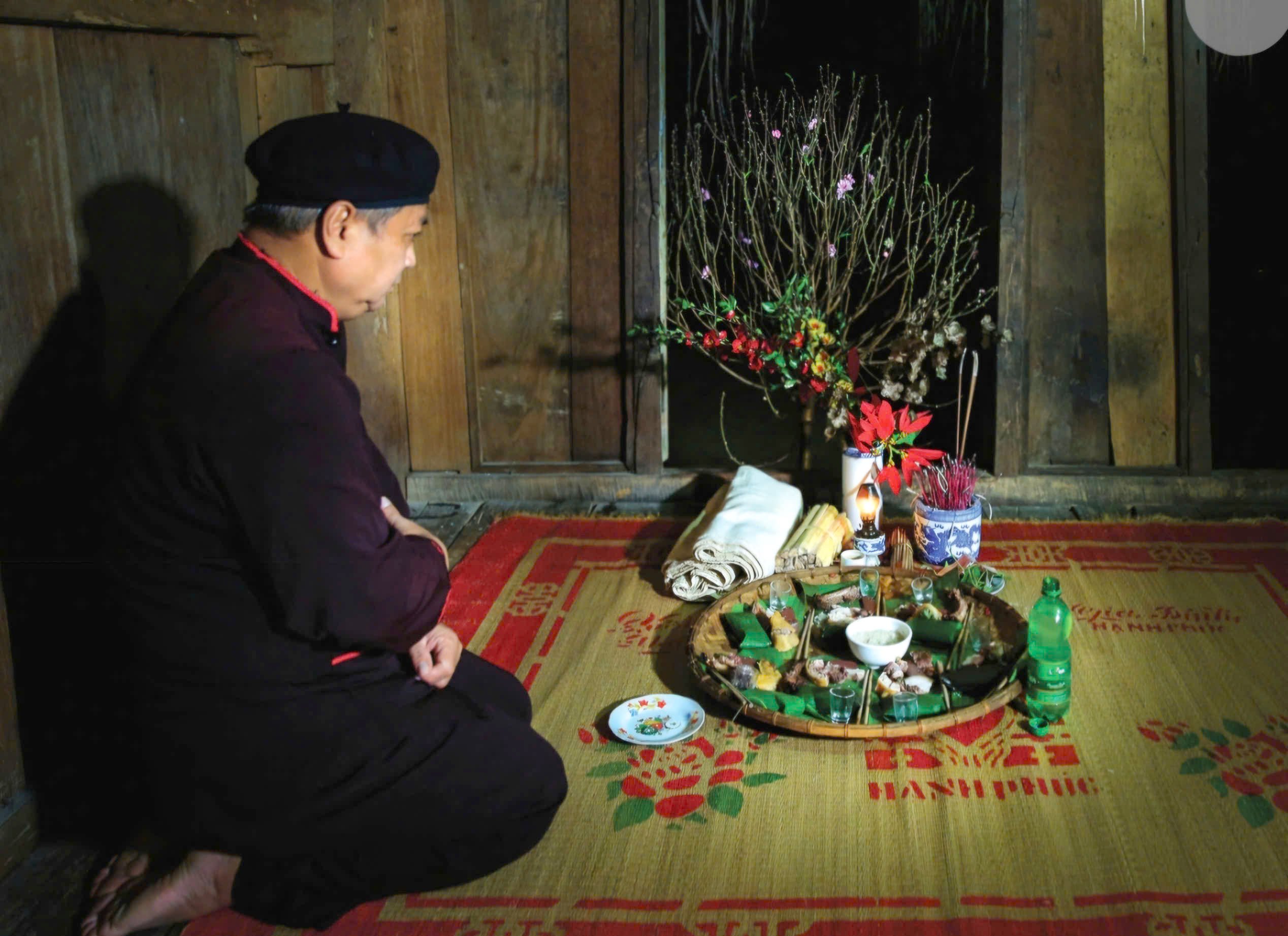



The custom of inviting ancestors to come and celebrate Tet (Vietnamese New Year).
Mr. Dinh Van Mot, 84 years old, from Yen Lang commune, shared: “As someone born and raised in this land, according to the old customs, on Tet (Lunar New Year), each Muong family usually takes four bundles of rice stalks and hangs them on the four corners of the kitchen hearth. On the 7th day of the first lunar month (the day the New Year's pole is taken down), they take them down and pound them into feed for livestock, hoping for smooth progress in farming and animal husbandry. In addition, my family still maintains a traditional three-room stilt house, consisting of one main room and two side rooms, which symbolizes the culture of the Muong people.”
The Muong people in Yen Son commune still maintain the traditional custom of erecting a New Year's pole (cay neu) during Tet (Lunar New Year) with the hope of a lucky and bountiful year. Mr. Nguyen Van Thang , Chairman of the People's Committee of the commune, said: "Today, despite modern life, the people here still maintain the beautiful tradition of their ancestors – erecting a New Year's pole – because besides its beauty, it also has profound humanistic significance, educating people about love for their homeland and country, and reminding descendants of filial piety towards their grandparents and ancestors."
In Cu Dong commune, in recent years, both the Muong ethnic group and the Kinh people have adopted this custom from Yen Lang and Yen Son communes. Mr. Phung Minh Toi, from Chon area, Cu Dong commune, enthusiastically said: "Every Tet holiday, my children go looking for tall, straight bamboo stalks with long, curved segments to erect the New Year's pole, combining it with modern decorations. Through this, we hope to forget the worries of the old year and look forward to a new year filled with good fortune, abundant harvests, and flourishing nature... and also to preserve the traditional culture of our people."
In addition, during Tet (Vietnamese New Year), the Muong people also have a "cooked rice" meal - similar to the New Year's Eve meal of the Kinh people. The Muong usually eat this meal in the evening, with the meaning of a family reunion meal. This is an important and sacred meal with the purpose of bidding farewell to the old year and preparing to welcome the new year with hope for better things.
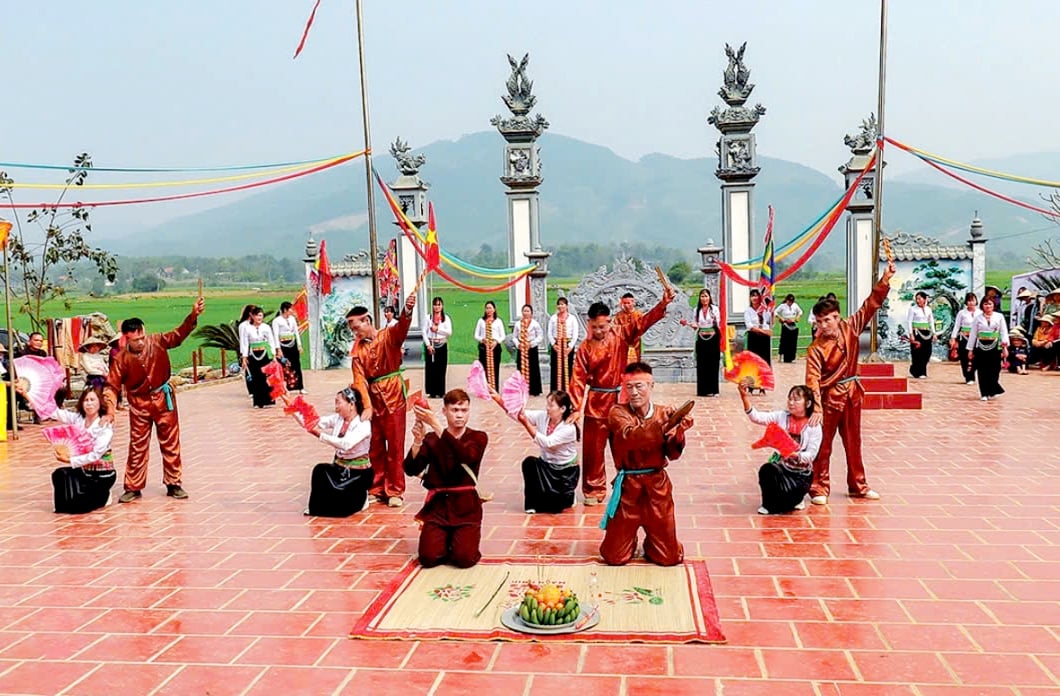
Besides the custom of erecting the ceremonial pole, the people also organize new dances to preserve the traditional culture of the Muong people.


Nowadays, life has changed and become more modern, so the decorations on the Muong people's New Year's pole have also changed and become more creative, such as adding silk ribbons, lanterns, or LED lights (or flags), expressing joy at celebrating the Party, the Spring Festival, and the renewal of the homeland and country. The top of the pole must be left with natural foliage; the more beautiful the pole, the more joy and good things will come in the new year. And especially, no matter how tall the pole is, no additional stakes should be added to the base when erecting it.
It can be seen that the ritual of erecting the New Year's pole in Thanh Son, a Muong custom, is a beautiful tradition, containing many symbols, cultural values, and humanistic significance during Tet. The image of the poles along with the national flag creates a unique and distinctive scene in the Muong villages during the time when the homeland and country enter spring.
Dinh Tu
Source: https://baophutho.vn/cay-neu-ngay-tet-227067.htm