

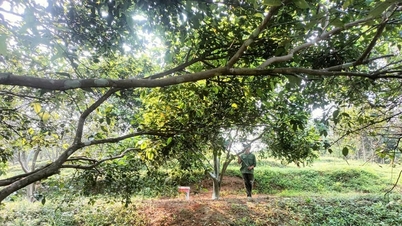
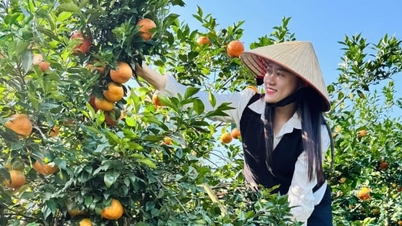
The family of Mr. Pham Dinh Hao (Tan Hoa village, Kim Hoa commune) has over 2 hectares of mandarin orange trees with about 500 trees. Compared to last year, this year the area planted with mandarin oranges has expanded, the number of trees ready for harvest has increased significantly, and the yield is expected to increase by 10-15%. At this time, Mr. Hao's family is focusing on tending and nurturing the fruit, hoping for a successful harvest during the upcoming Lunar New Year (Year of the Horse).
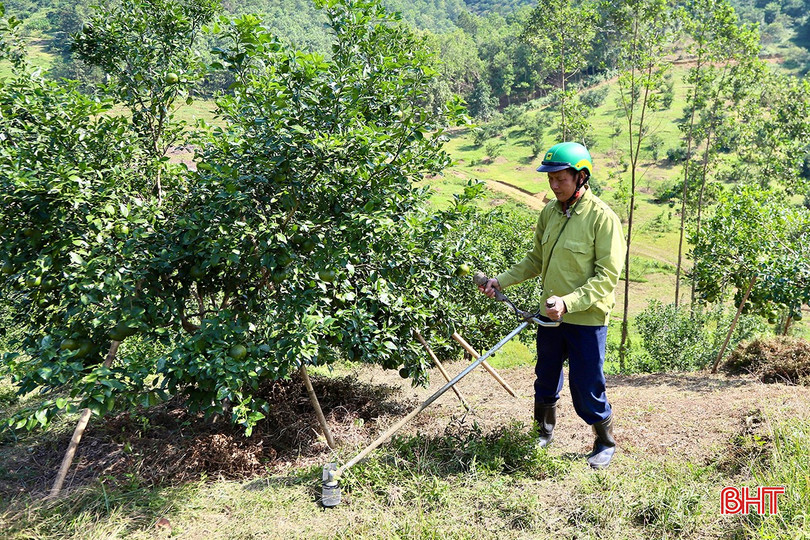
“Last season, my family's pomelo orchard yielded nearly 40 tons, worth over 1.5 billion VND. With the current yield, I hope to reach 45 tons this season. Currently, the pomelo trees are entering the fruit-bearing stage, and my family is focusing on weeding and maintaining nutrients for the trees; adding manure and potassium fertilizer to increase the sweetness and juiciness of the fruit; using lime to balance the pH, and watering just enough to protect against frost in cold weather,” Mr. Hao shared.
Kim Hoa commune, formed by the merger of two communes, Kim Hoa and Ham Truong, in the former Huong Son district, is considered the "capital" of mandarin oranges, with over 1,000 hectares, of which over 900 hectares are currently in production. As the main crop, harvested only once a year, local authorities and residents are actively implementing various solutions to ensure productivity and quality during the final stages of cultivation, tailored to the weather conditions and the characteristics of this specialty fruit.
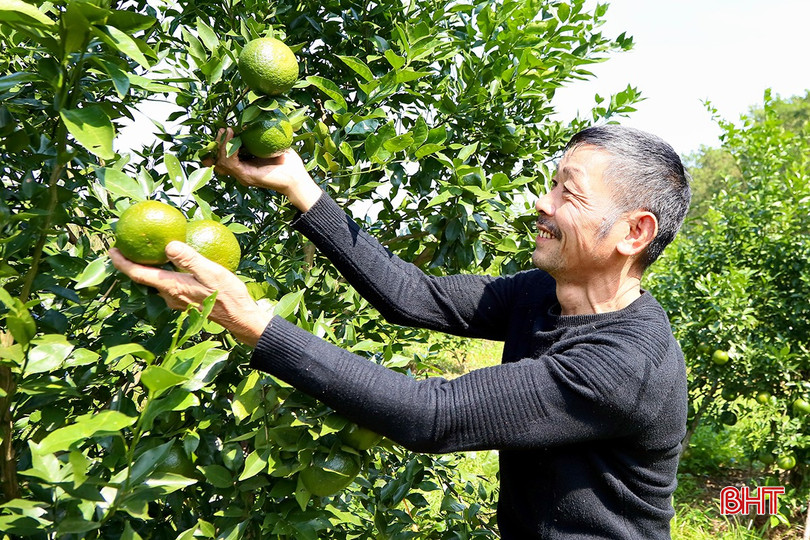
Mr. Phan Xuan Duc – Head of the Economic Department, Kim Hoa Commune People's Committee, shared: “According to surveys, the yield of pomelo oranges this year is expected to increase by 2-5 tons/ha, equivalent to about 12-15 tons/ha. This is a positive sign showing the effectiveness of the care and labor of the people and the suitability of the tree to the local soil and climate conditions. Currently, we regularly send officials to monitor the area, assess and survey the quality of the oranges; guide farmers in pruning leaves, cleaning the orchards; manage pests and diseases, support branches, and increase nutrients at the end of the season…”
In Vu Quang commune, statistics show that there are approximately 155 hectares of mandarin orange trees, of which about 153.5 hectares are producing fruit, concentrated in the villages of Tho Dien and Quang Tho (formerly). For many mandarin orange growers, this is considered a crucial stage that determines the economic efficiency and income after a year of diligent care.
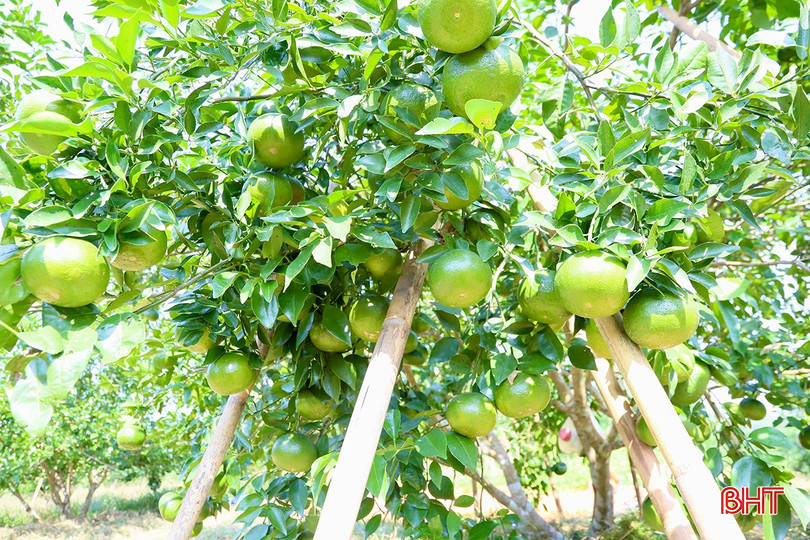
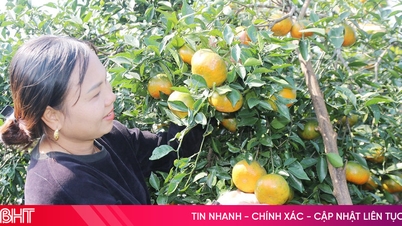
Ms. Nguyen Thi Tan (Tho Dien Hamlet 1, Vu Quang Commune) shared: “Thanks to effective investment in cultivation and pest control, more than 160 pomelo trees in my family are now developing well, expected to yield a high productivity of 200-250 kg per tree. If we maintain the beautiful appearance and sweet, refreshing taste, pomelos can be sold for 45,000-50,000 VND/kg at the orchard.”
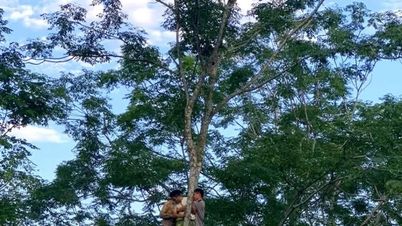
According to Ms. Tan, many trees are currently laden with fruit, and farmers have to support them with bamboo stakes to maintain the yield and prevent branches from breaking. At this time, some traders have also begun surveying and placing deposits to secure supply for the year-end market.
Mr. Nguyen Viet Toan – Head of Tho Dien Hamlet 1 (Vu Quang Commune) said: “The entire hamlet currently has 20 households growing pomelo oranges with a total area of approximately 15 hectares. For many years, pomelo oranges have become the main crop, bringing stable income to the people. On average, each hectare can generate hundreds of millions of dong in revenue. Along with the final stages of year-end care, we are also planning to guide the people to continue maintaining, expanding, and restoring the degraded pomelo orchards.”
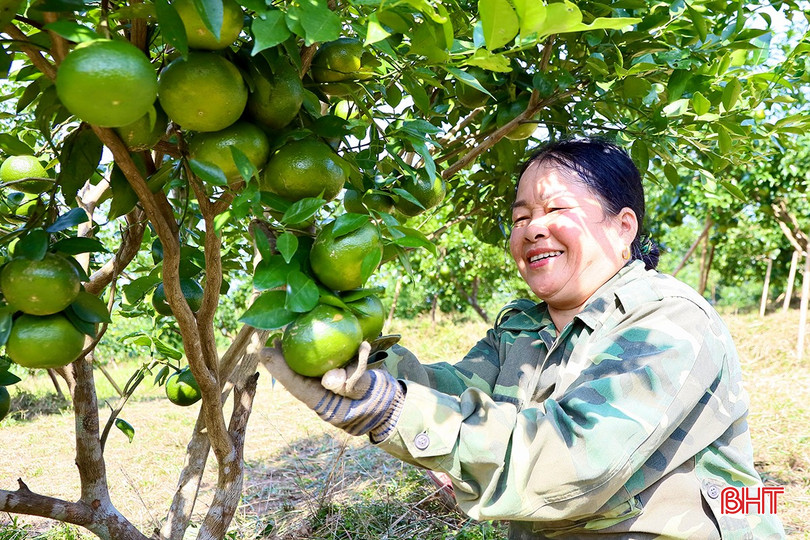
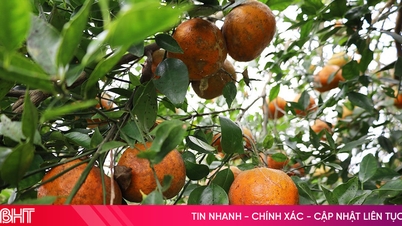
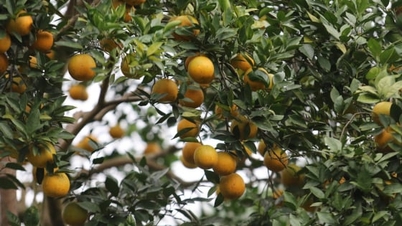
Statistics show that the province currently has over 1,400 hectares of mandarin oranges, concentrated in the communes of Kim Hoa, Huong Son, Son Hong, Vu Quang, etc. At this time, most of the orange trees have fruits that have reached full size and are beginning to turn a deep yellow color.
Experts advise farmers to focus on gentle care techniques to enhance sweetness and improve the flavor of oranges. This includes moderate application of potassium and calcium; pruning and removing cracked or damaged fruit; monitoring for common late-season pests such as red spider mites, aphids, and leaf miners; and maintaining moderate soil moisture, avoiding overwatering which can lead to cracking and rotting fruit. Focusing efforts on the final stages of cultivation will significantly contribute to the appearance and quality of oranges for the upcoming Tet (Lunar New Year) market.
Source: https://baohatinh.vn/cham-cam-bu-chang-nuoc-rut-post300372.html





















































































Comment (0)