Practical realities demand tools capable of accurately measuring and monitoring the law-making process. Therefore, the pilot project for evaluating and scoring (KPIs) the law-making process, currently being implemented by the Government , is not merely an administrative solution, but a concrete step in realizing modern governance thinking to improve the quality of policy planning and accountability.
According to the Ministry of Justice , the system of evaluation and scoring criteria is being reviewed and improved to clearly define the responsibilities of each entity involved in the law-making process. If properly designed, the criteria could become an important tool for improving the quality of institutions.
However, refining the criteria requires addressing a core issue: is the ultimate goal of scoring to assess the level of task completion by each agency in the law-making process, or to evaluate the developmental capacity of the state apparatus?
This question is particularly significant in the context of Politburo Resolution No. 66, which identifies the reform of lawmaking and enforcement as a key task in perfecting the socialist rule of law in Vietnam. When institutions are recognized as a resource for development and a national competitive advantage, the quality of lawmaking becomes a measure of national governance capacity.
Every law enacted reflects the state apparatus's ability to identify problems, select policy solutions, and organize effective implementation. An agency that fails to identify institutional bottlenecks will find it difficult to propose solutions. A policy designed without a solid foundation or with inadequate foresight can increase costs for citizens and businesses and reduce the effectiveness of state management.


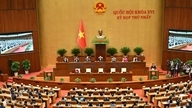
In that sense, evaluating the legislative process is not only about assessing the quality of the legislative process but also about assessing the institutional capacity, governance capacity, and enforcement capacity of the state apparatus.
In reality, a draft law may be completed on schedule, with all necessary documents and following the correct procedures, but this does not necessarily guarantee a good law. What the country needs now are laws that can unleash resources, promote innovation, enhance competitiveness, and better protect the legitimate rights and interests of citizens and businesses.
Therefore, the evaluation criteria cannot simply measure the level of compliance with procedures and processes by agencies in the law-making process, but must also assess the capacity to identify and solve problems; the ability to accurately identify development bottlenecks and propose appropriate institutional solutions. Along with this, it must evaluate policy design capacity through the quality of impact assessments, the ability to quantify costs and benefits, forecast risks, reduce administrative procedures, and unlock development resources.
More importantly, the evaluation must extend to the effectiveness of implementation after the law is enacted. The quality and effectiveness of the law must be tested in practice. A good law should create positive change, reduce compliance costs, remove barriers to development, and improve the efficiency of state management.
If designed to assess the entire policy lifecycle, from problem identification, policy formulation, drafting, evaluation, verification, to implementation and post-enactment impact assessment, the criteria would not only reflect the quality of lawmaking but also the developmental capacity of each agency within the state apparatus.
Ultimately, the goal of scoring and evaluating the work of lawmaking is not to rank ministries and agencies or create additional administrative procedures. The greatest significance of this tool is to accurately identify the institutional capacity, governance capacity, and implementation capacity of the agencies entrusted with the responsibility of lawmaking.



In a period where institutional reform is defined as a "breakthrough of breakthroughs," evaluating the work of lawmaking needs to go beyond simply counting documents, progress, or procedures. The ultimate measure must be the ability to create better policies, better laws, and better conditions for the country's development. This is also a way to measure the extent to which the requirements for building a modern, development-oriented, and highly effective socialist rule of law state are realized, in the spirit of Resolution 66.
Source: https://daibieunhandan.vn/cham-diem-cong-tac-xay-dung-phap-luat-10421479.html
![[Image] Schools organize meetings and introduce teaching models to students admitted to grade 10.](https://vphoto.vietnam.vn/thumb/1200x675/vietnam/resource/IMAGE/2026/06/25/1782368077271_ndo_br_z7970052192242-1ec8daeb77a6eed1a4e9f58c564ddd3e-jpg.webp)


![[Image] Ho Chi Minh City: Ma Lang area, Chicken-Rice Market about to change its appearance](https://vphoto.vietnam.vn/thumb/1200x675/vietnam/resource/IMAGE/2026/06/25/1782377698627_ndo_br_m1-jpg.webp)

![[Photo] General Secretary and President To Lam receives Palestinian Ambassador Saadi Salama](https://vphoto.vietnam.vn/thumb/1200x675/vietnam/resource/IMAGE/2026/06/25/1782365384740_a1-bnd-9423-8322-jpg.webp)


![[Infographic] Allowance levels for village and neighborhood officials after reorganization in Ha Tinh](https://vphoto.vietnam.vn/thumb/402x226/vietnam/resource/IMAGE/2026/06/26/1782428701331_fb_anh-dai-dien-infographic-khanh-phuong-1-png.webp)