

The breadth of African football
At Qatar 2022, Morocco made the world see Africa in a different light. They were not just a surprise team; they were the first African team to reach the World Cup semi-finals, a symbol of the belief that African football is no longer just about going to major tournaments to learn, gain experience, or wait for a few romantic moments.

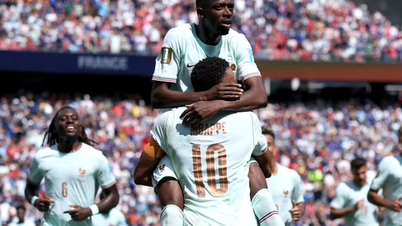
With a 2-0 victory over Curaçao, Ivory Coast secured their place in the round of 16.
Four years later, Morocco still holds that position. Their qualification for the Round of 16 at the 2026 World Cup after the group stage is no longer seen as a shock, but almost as a testament to their ability. A team that once reached the World Cup semi-finals, that once stood firm against strong opponents, is now progressing not to retell past events, but to prove that Qatar's miracle was not a fleeting flash of lightning.
But the interesting thing about the 2026 World Cup is that Africa isn't just looking at Morocco anymore. South Africa has already progressed. Ivory Coast has also advanced. Ghana and Egypt are very close to the knockout stage.
Cape Verde, Algeria, Congo DR, and Senegal still have different chances before the final round of matches. This creates a broader picture: if Morocco was the pinnacle of African football in the previous World Cup, this World Cup is showcasing the breadth of African football.
South Africa rewrites its memory.
For South Africa, reaching the round of 16 holds a very special meaning. In 2010, as the host nation of the World Cup, South Africa left behind many beautiful images, from the sound of vuvuzelas to the festive atmosphere, but failed to advance beyond the group stage. It was a bittersweet ending to a historic World Cup on African soil.

One ticket is enough to mark a new chapter for South African football (right) after many years of waiting.
Now, no longer the host nation, no longer in the spotlight like in 2010, South Africa has achieved what they once missed: reaching the knockout stage. A victory that rewrote memories. A ticket that marked a new chapter for South African football after years of waiting.
The brilliance of South Africa lies not only in their qualification, but also in how they progressed from a group that included host nation Mexico and its own unique pressures. The 2026 World Cup is expanding, but that doesn't mean every ticket will come easily.
To survive the group stage, a team must know how to endure, how to bounce back after difficult times, and how to seize opportunities in crucial matches.
South Africa achieved this in their decisive final group stage match: a 1-0 victory over South Korea , changing their fate – from being eliminated to advancing to the round of 16.
Ivory Coast makes history by opening its doors.
If South Africa rewrote the memories of 2010, Ivory Coast reopened a door that had been closed to so many of their biggest stars.

Ivory Coast (right) under coach Emerse Faé is no longer just a team of inspiration.
The 2-0 victory against Curaçao not only secured Ivory Coast's place in the Round of 16, but it also marked the first time in history that "The Elephants" had advanced beyond the group stage of the World Cup. This milestone came after three previous missed opportunities in 2006, 2010, and 2014, when they boasted big names like Didier Drogba, Yaya Toure, Kolo Toure, Salomon Kalou, and Gervinho.
The difference now lies in the fact that Ivory Coast is not just about name recognition. They have a clearer system, more discipline, and know how to win the games they need to win. Against Curaçao, Nicolas Pépé's brace came at the right time when the team needed a decisive player. The early opening goal relieved the pressure on Ivory Coast, while the second goal in the 64th minute almost extinguished all hope for the Caribbean newcomers.
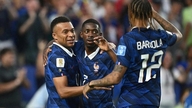

But behind those two goals was a whole different system. Yan Diomande and Amad Diallo brought speed, technique, and the ability to make a difference on the flanks. Ibrahim Sangare provided the decisive through ball for Pépé to score the second goal.
The defense maintained its focus against a Curaçao side that played with great effort, but lacked the personnel quality to penetrate the penalty area of one of the best defensive teams in Africa today.
It's worth noting that Emerse Faé's Ivory Coast is no longer just a team of inspiration. They qualified for the 2026 World Cup in the African region with a very convincing record, winning 8 out of 10 matches and conceding none. Specifically in 2026, they also showed considerable consistency. A team that may not always be brilliant, but knows how to control the pace of the game, knows when to slow down, and knows when to deliver the finishing blow.
Therefore, Ivory Coast's qualification is of great significance. It's not only a reward for the current generation, but also a belated explanation for old regrets: football needs not just stars, but also a balanced team to get through the big matches.
Ghana, Egypt, and the open doors.
If it were just Morocco, South Africa, and Ivory Coast, Africa could be satisfied. But the 2026 World Cup is not just about that.

Morocco qualifies for the Round of 16 at the 2026 World Cup.
Ghana has a very good chance. As long as they don't lose to Croatia, they will control their own destiny. Even in an unfavorable scenario, Ghana could still advance as one of the best third-placed teams. For a team that caused disappointment across Africa at the 2010 World Cup, every time Ghana gets close to the knockout stage, it evokes many memories.
Egypt is also in a favorable position. A draw or a win against Iran would take them to the next round. With Mohamed Salah and a rich football tradition in Africa, Egypt always carries expectations far greater than their ranking. They not only want to advance, but also want to prove that the gap between continental success and making an impact at the World Cup is not too wide.
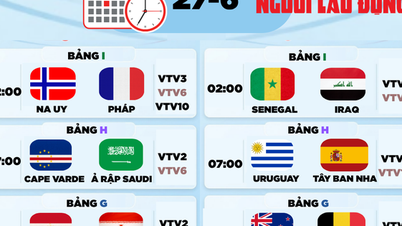
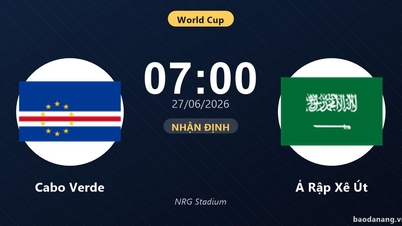
Cape Verde, however, is a different story. They lack World Cup experience, a glorious history, a large population, or a thriving football tradition. But precisely because of this, every point Cape Verde earns at the 2026 World Cup holds its own unique beauty. A small newcomer, yet they have managed to stand firm against stronger opponents; now they only need a victory against Saudi Arabia to secure their place in the next round. If that happens, Cape Verde will be one of the most beautiful stories of the tournament.

African teams are no longer alone.
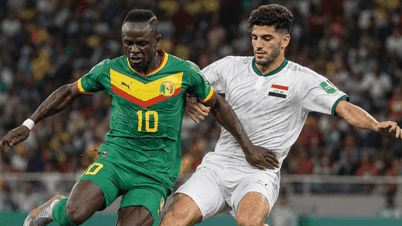
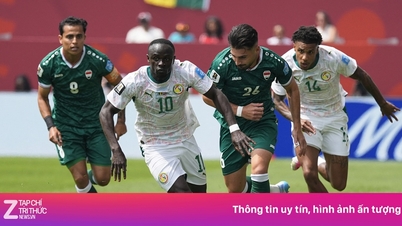
Algeria, Congo DR, and Senegal face more difficult situations, but hope is not lost. Algeria needs to beat Austria to save themselves. Congo DR must win against Uzbekistan and then wait for the results in other groups. Senegal, after two goalless matches, needs to win against Iraq and also depends on external factors. Those doors are not wide open, but the World Cup still thrives on teams that refuse to give up.
African teams are no longer alone.
The 48-team format has been controversial. Some worry that the World Cup will become diluted. Others fear that the group stage will lose its intensity. But for Africa, this expanded playing field is creating a real opportunity: more representatives, more stories, and more paths to survival after the group stage.

The expanding playing field is creating a real opportunity: more representation, more stories from African football.
Ivory Coast is the clearest example. In a 32-team World Cup, being drawn into a difficult group, or slipping up in just one match, can quickly close the door to the knockout stage. But in a 48-team World Cup, teams have more breathing room, more opportunities to correct mistakes, and more paths to prove their worth.
That doesn't diminish the significance of victory. On the contrary, it rewards organized, resilient, and resilient teams. An expanded World Cup doesn't automatically make a team stronger. It only provides more opportunities. The rest is still up to ability.
Africa is making good use of this. Not every team plays explosively. Not every match is beautiful. But as the tournament progresses, it becomes clear that African teams are no longer alone in their single iconic image.
Morocco remains a major force, but behind them are South Africa, Ivory Coast, and possibly Ghana, Egypt, Cape Verde, or Algeria.



That's the crucial signal. A strong footballing nation doesn't just need one team to go far. It needs many teams that are competitive, have the courage to get through the group stage, and are capable of making big opponents wary. The 2026 World Cup is showing that African football may not be as balanced as Europe or South America, but it is no longer a land of isolated hopes.
Africa's place at the 2026 World Cup as of the morning of June 26th.
Qualified for the Round of 16 : Morocco, South Africa, Ivory Coast.
Eliminated : Tunisia.
Bright spots : Ghana, Egypt.
There's still hope, but they need to win or wait for other conditions to be met: Cape Verde, Algeria, Congo DR, Senegal.
Source: https://nld.com.vn/chau-phi-va-nhung-giac-mo-khong-con-don-doc-196260626125958056.htm