


Farmers in Chau Phong commune cultivate high-quality rice for export. Photo: MINH HIEN
The pressure isn't just from the numbers.
The growth plan for Chau Phong commune in 2026 sets out a very clear roadmap. A 10% increase in the first quarter, 11% in the first six months, 12% in the first nine months, and a target of 12.8% for the whole year. This is not a typical growth rate at the commune level. The pressure comes primarily from the pace. Growth not only needs to be sustained but also needs to increase gradually in each stage. The final months of the year are the "final sprint," requiring a strong acceleration. If one step slows down, the entire plan will be affected.
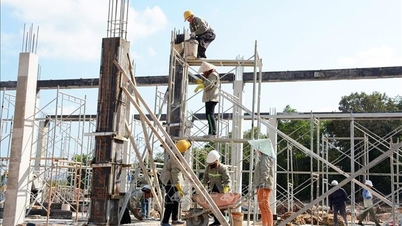
The next challenge stems from the economic structure. Chau Phong commune still relies heavily on agriculture. Meanwhile, this sector is directly affected by climate change, rising input costs, and an unstable market. With an expected rice production of over 66,000 tons, 70% of which is high-quality rice, the challenge is not just production, but also increasing value and controlling risks. Another pressure lies in scale and resources. Total retail sales of goods and services are projected at over 4,262 billion VND, and industrial production value at nearly 1,943 billion VND. Total social investment needs to reach nearly 292 billion VND. The larger the scale, the narrower the growth potential. This forces the locality to find new drivers, instead of continuing with old methods.
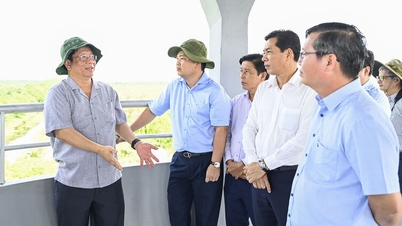
Mr. Nguyen Thanh Minh, Chairman of the People's Committee of Chau Phong commune, stated: "This is not just about numbers, but about the need to innovate methods, effectively exploit advantages and potential to create momentum for sustainable development." In practice, people have proactively changed their methods to improve efficiency. Mr. Nguyen Van Tran, a farmer in Vinh Tuong 2 hamlet, shared: "To achieve high growth, we cannot continue doing things the old way. Farmers are gradually shifting to producing high-quality rice, linking consumption, and reducing costs to improve efficiency."
Overall, Chau Phong's growth pressure doesn't lie in a single indicator. It's a combination of progress, economic structure, resources, and natural factors. This is precisely what forces the locality to change its development approach. Notably, the requirement for double-digit growth is not just a local issue. At the national level, Vietnam aims for growth exceeding 10% from 2026 onwards, striving to become a high-income country by 2045. This goal is linked to the need to innovate the growth model, leverage domestic resources, and promote public and private investment. In response to this requirement, double-digit growth clearly reflects the capacity for governance and the decisiveness in implementing tasks. At the grassroots level, Chau Phong is a prime example of concretizing this goal through practical solutions.
The solution lies in transformation and innovation.
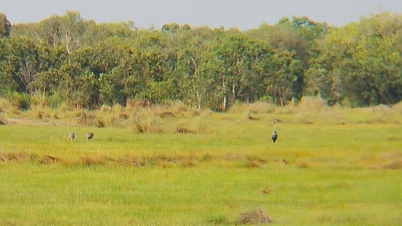
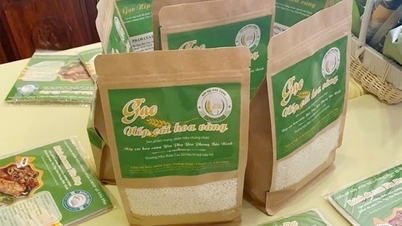
Instead of pursuing extensive growth, Chau Phong commune has decided to restructure its economy towards sustainability, creating new momentum from quality and added value. The first step is high-quality agriculture . The commune participates in the 1 million hectare high-quality rice cultivation project with approximately 600 hectares. Advanced farming processes such as "1 must, 5 reductions," SRP, and GAP are applied synchronously. Production is linked to planting area codes and consumption linkages. This approach helps reduce costs, increase value, and stabilize output. Mr. Lai Van Tuan, a local farmer, said: "Following new techniques, costs are reduced while efficiency remains high, and output is stable, so farmers feel secure."
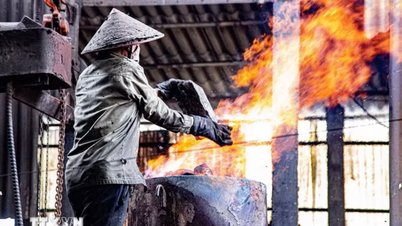
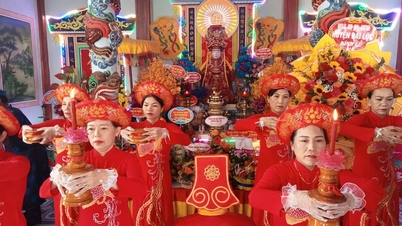
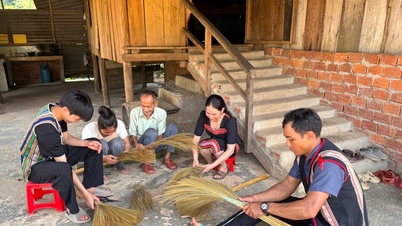
The second direction is the development of industry, trade, and services. Processing, mechanical engineering, and construction materials industries are encouraged to expand. The Phu Vinh and Le Chanh markets are upgraded and operated under a socialized model. Commercial activities are promoted, contributing to market expansion and revenue generation. The third direction is exploiting the cultural values of the Cham people, creating a unique selling point in development. Traditional brocade weaving is linked to experiential tourism and homestays. This approach both preserves cultural identity and creates new economic value.
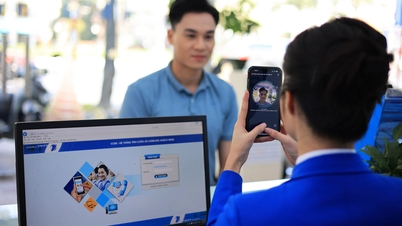
Mr. Nguyen Thanh Lam, Secretary of the Chau Phong Commune Party Committee, said: “Economic development cannot be separated from preserving and promoting cultural identity. This is not only a responsibility but also an important endogenous resource that helps Chau Phong create distinctive value and achieve sustainable development.” In addition, digital transformation and the OCOP program are opening up new market spaces. Products are being listed on e-commerce platforms. Cashless payments are becoming increasingly common. These changes help increase product value and expand market outlets.
Notably, the solutions were implemented according to the "six clear principles": clear person, clear task, clear time, clear responsibility, clear product, and clear authority. This is a key factor in transforming policies into concrete results. From these synchronized solutions, it is evident that Chau Phong is clearly shifting from growth based on output to growth based on quality, from dependence on agriculture to diversified development, creating a more balanced and sustainable economy.
Source: https://baoangiang.com.vn/chau-phong-tim-cach-dat-tang-truong-2-con-so-a482638.html
![[Photo] General Secretary and President To Lam visits and delivers a policy speech at Tsinghua University.](https://vphoto.vietnam.vn/thumb/1200x675/vietnam/resource/IMAGE/2026/04/14/1776164592318_vna-potal-tong-bi-thu-chu-tich-nuoc-tham-va-phat-bieu-chinh-sach-tai-dai-hoc-thanh-hoa-trung-quoc-8700658-5437-jpg.webp)
![[Photo] General Secretary and President To Lam and his wife begin their state visit to China.](https://vphoto.vietnam.vn/thumb/1200x675/vietnam/resource/IMAGE/2026/04/14/1776133794926_z7723148772587-ffefa3c4b1e54e100de1554593a862c6-jpg.webp)
![[Image] Expediting land clearance at Alley 310 Nghi Tam to facilitate the construction of Tu Lien Bridge](https://vphoto.vietnam.vn/thumb/1200x675/vietnam/resource/IMAGE/2026/04/14/1776160406551_ndo_br_z7724148990408-9e5d4777e3c4504998b4286178b2e66e-jpg.webp)









![[Photo] General Secretary and President To Lam receives Slovak Prime Minister Robert Fico](https://vphoto.vietnam.vn/thumb/1200x675/vietnam/resource/IMAGE/2026/04/13/1776080592076_a1-bnd-8227-6002-jpg.webp)


































Comment (0)