

1. What does it mean to run slowly?
- 1. What does it mean to run slowly?
- 2. Health benefits of slow running
- 3. Is running slowly always the best option?
- 4. How do I start running slowly?
Slow running means running at a slower pace than normal, taking more time to complete the desired distance. However, "slow" is a personal concept, depending on each person's fitness level and background.
According to Dr. Todd Buckingham, a lecturer in exercise science at Grand Valley State University (USA), a slow run typically has the following characteristics:
- Heart rate below 70% of maximum heart rate: Maximum heart rate can be estimated by subtracting age from 220.
- It's possible to chat while running without getting too out of breath.
- Slower than the threshold speed by 90 seconds to 2 minutes/km: The threshold speed is the speed you can maintain for about an hour.
From a simpler perspective, slow running is a pace that makes you feel comfortable, can be maintained for a long time, and allows you to enjoy the run.
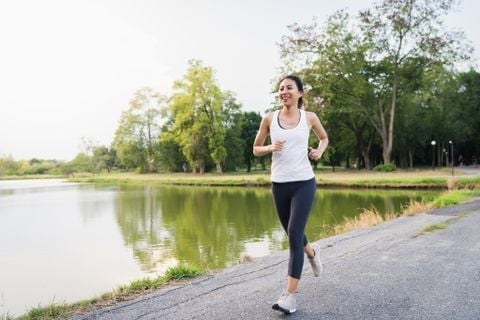
Slow running means running at a slower pace than normal, taking more time to complete the desired distance.
One of the biggest reasons why slow running is so popular is its inclusivity. The concept breaks down the stereotype that only fast runners deserve to be called "runners." Many people want to run but feel they aren't fast enough to belong to the community; slow running opens doors for everyone.
Slow running allows runners to chat and connect with friends – something almost impossible when pushing oneself at high speeds. Running slowly with friends allows for sharing life stories, dreams, and goals… making running more enjoyable and sustainable.
2. Health benefits of slow running
2.1 Reduced risk of injury: According to Buckingham, trying to run fast in every training session is unsustainable and easily leads to injury. Running slowly allows the body time to adapt, recover, and progress safely.
2.2 Increased endurance and improved cardiovascular health: Most running training programs – even for professional athletes – are based on slow runs. This type of training helps increase muscle endurance, improve heart and lung function, and enhance overall fitness…
2.3 Improved aerobic capacity (VO₂ max): Slow running helps the body adapt by increasing the number of capillaries, allowing oxygen to reach the muscles more efficiently; it also increases mitochondria, the "energy factories" of cells… As a result, the body uses oxygen and produces energy more effectively throughout the exercise.
3. Is running slowly always the best option?
According to health information, while slow running offers many benefits, it doesn't mean you can't overexert yourself. Even at a slow pace, you still need to gradually increase intensity and ensure adequate rest. Combining rest days, strength training, and stretching is key to preventing injuries.
In addition, speed running also plays a role. Speed runs help improve the lactate threshold (anaerobic threshold) – the body's ability to process lactic acid and use it as fuel. This is a crucial factor in improving performance.
4. How do I start running slowly?
If you're considering adding slow running to your workout routine, Dr. Todd Buckingham suggests an alternating run-walk method, especially suitable for beginners or those wanting to control their heart rate. For example, run for 4 minutes, walk for 1 minute, repeating for 30 minutes. You can absolutely design your workout to best suit you.
Whether you're a beginner or an experienced runner, slow running plays a crucial role in recovery, maintaining motivation, and preventing both physical and mental exhaustion. Slow running is the secret to a lifelong running career. Sometimes, running isn't about going faster, but about enjoying the scenery, taking a beautiful photo, or completing your first 5km run with friends...
Readers are invited to read more:
Source: https://suckhoedoisong.vn/chay-cham-la-gi-loi-ich-cua-chay-cham-16925122315535852.htm




![[Image] Nearly 125,000 Hanoi students completed the Literature exam for the 10th grade entrance exam.](https://vphoto.vietnam.vn/thumb/1200x675/vietnam/resource/IMAGE/2026/05/30/1780117233041_ndo_br_thiet-ke-chua-co-ten-2-png.webp)





















































































Comment (0)