

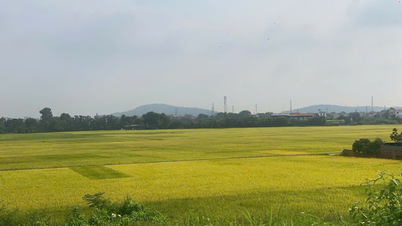
One dry season morning, while mist still shrouded the small roads of Ca Mau , the vehicles of the K90 team continued their journey to Hung My and Phu My communes. This southernmost region is now peaceful, with shrimp farms, rice paddies, and calm canals. Few can imagine that this place was once a fierce battlefield, ravaged by bombs and bullets throughout the years of the resistance war. The person the team sought out was veteran Pham Van Thuan, one of the few witnesses who still remembered quite clearly the temporary cemeteries during the war.
 |
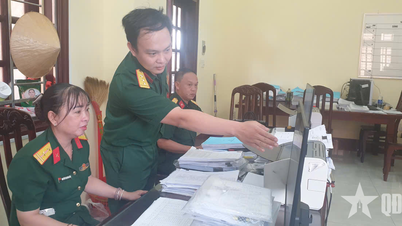
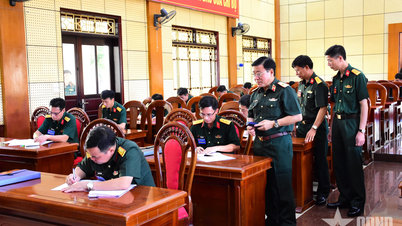
| Team K90 ( Political Department of Military Region 9) studies documents to determine the location for searching for the remains of fallen soldiers. Photo: CONG KHANH |
In his twilight years, his memory is no longer coherent. Sometimes, Mr. Thuan has to pause for a long time before remembering a place name or an old battle. But when he speaks of fallen comrades, the old soldier's voice softens. On a map faded by time, Mr. Thuan points to the locations circled in faint lines: Thi Tuong, Rau Dua, Giap Nuoc – these were once the burial places of dozens, even hundreds, of martyrs during the most intense period of the war. “The bombing was terrible! Sometimes, after burying our comrades, we hadn't even had time to build the mounds before the enemy attacked. Some people went to bury their comrades and then they themselves perished…” Mr. Thuan recounted, his eyes reddening.
Despite having guidance, according to officers of Team K90, searching for the remains of fallen soldiers in the Mekong Delta is difficult due to the constantly changing terrain and waterways. After more than 50 years, many riverbanks have eroded, mangrove forests have become residential areas, and canals have changed course. Therefore, traces of war have gradually disappeared over time. Thus, the search for the remains of fallen soldiers is described by the officers as a race against memory.
During the day, they roam the fields, and at night, the K90 Team's work area remains brightly lit. On the desks are old military maps, files of fallen soldiers, battle diagrams, and witness accounts, meticulously cross-referenced down to the smallest detail. Some information begins with a single statement from an elderly villager. Sometimes it's just a memory of "a mound of earth that once had many graves." But for the soldiers involved in the work of collecting and searching for the remains of fallen soldiers, no detail is overlooked. Major Kim Vang Tha, a staff member of the K90 Team, said that the most difficult thing isn't digging through mangrove forests or flooded swamps, but accurately determining the location after decades of terrain changes. "Many witnesses only remember vaguely. The location then and now are completely different. Some places used to be riverbanks, now they've become public roads. There are areas where it took decades to find the remains of fallen soldiers," Tha shared.
Many expeditions end quietly when all clues lead to a dead end. But the next morning, the officers and soldiers of Team K90 continue their journey. Because behind each uncollected remains of a fallen soldier lies the long-awaited hope of their family members, spanning decades. To gather more information, workshops are held locally, without elaborate podiums, just veterans, military officers, and local people sitting together, carefully piecing together fragments of war memories to connect the past. Some recount a major offensive in 1969, others recall the main unit that fought in the Thi Tuong area... From these fragmented memories, data is gradually connected, opening up more hope for Team K90 on its journey to find the remains of fallen soldiers, through perseverance and responsibility. Lieutenant Colonel La Phu Huy, Team Leader of Team K90, said: “There are families who have been searching for their loved ones for decades. Some elderly mothers have passed away without knowing where their children are buried. Therefore, no matter how difficult it is, we are determined to find them and bring them home.”
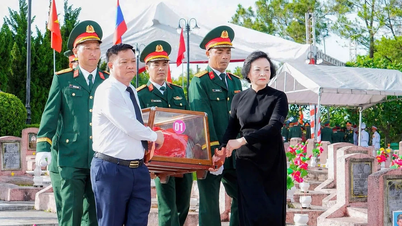
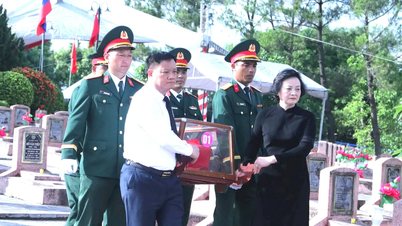
Each recovered remains of a fallen soldier is not only another son returning to his homeland, but also marks the end of a family's long wait, and represents the gratitude of today's generation to those who sacrificed their youth on the battlefield so that the country could achieve peace and unity.
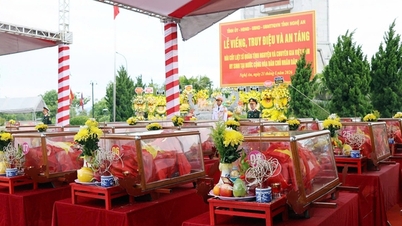
During the 2025-2026 dry season (up to May 14, 2026), Team K90 searched for and collected 142 remains of fallen soldiers, with 1 remains identified (of which 121 were collected domestically and 21 in Cambodia). |
Source: https://www.qdnd.vn/xa-hoi/chinh-sach/chay-dua-voi-ky-uc-de-dua-liet-si-tro-ve-dat-me-1041098































































Comment (0)