

Next-generation DNA technology offers hope for identifying fallen soldiers.
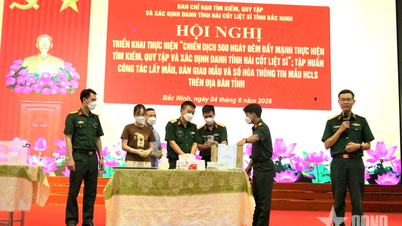
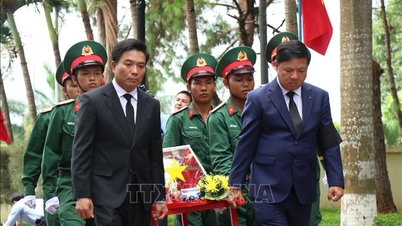
This activity holds profound political and humanitarian significance, demonstrating the gratitude and responsibility of the Party, the State, and the people towards the heroic martyrs who bravely sacrificed their lives for the independence and freedom of the Fatherland. The event is part of the "500-Day Campaign to Intensify the Search, Collection, and Identification of Martyrs' Remains," leading up to the 80th anniversary of the Day of War Invalids and Martyrs (July 27, 1947 - July 27, 2027).

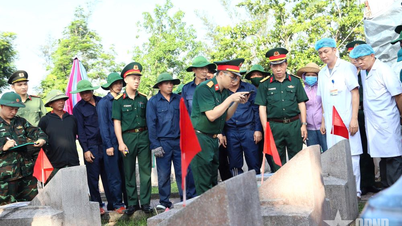
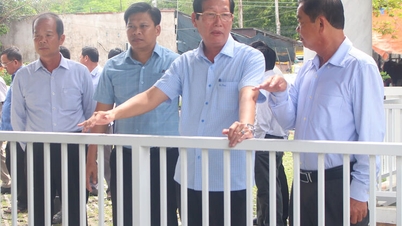
In the solemn atmosphere of the cemetery, incense sticks were lit respectfully amidst the May rain. Beneath the rows of time-worn tombstones, many graves bear only the words "Martyr," without names carved into the cold gray stone. The war ended more than half a century ago, but the anguish of finding the identities of these heroic martyrs remains. This is not only the hope of those who fell, those who lie buried here for the independence and freedom of the Fatherland, but also the fervent wish of countless families who await news of their loved ones day and night.
Currently, nearly 300,000 graves of martyrs across the country remain unidentified. Each unmarked tombstone represents a deep sense of loss, a responsibility, and a sacred sentiment of the Party, the State, and the people towards those who dedicated their youth and lives to the cause of national liberation and the defense of the Fatherland. Therefore, the journey to find the names of these heroic martyrs is not only a political task but also a command from the heart, expressing the profound gratitude of the entire Vietnamese nation.

Professor, Dr. Chu Hoang Ha, Vice President of the Vietnam Academy of Science and Technology, and a member of the National Steering Committee for the Search, Collection, and Identification of the Remains of Martyrs (National Steering Committee 515), emphasized that the campaign carries profound humanitarian value, reflecting the Vietnamese people's moral principles of "Remembering the source when drinking water" and "Showing gratitude." At the same time, it is also a sacred responsibility to fulfill the longing and aspiration to find the identities of fallen heroes and bring them back to their families and hometowns after many long years of waiting.

The Vietnam Academy of Science and Technology is assigned to carry out key tasks such as: DNA identification of martyrs' remains in the areas assigned by the National Steering Committee 515; research and development of next-generation DNA identification technology NGS-SNP; participation in the development of regulations, standards, and a gene bank for relatives of martyrs; coordination in developing a plan for collecting samples of martyrs' remains from unrecorded graves in martyrs' cemeteries; providing input on methods and procedures for sample collection, transportation, preservation, and storage to ensure technical standards for new technologies; participation in coordinating the development of technical plans and software for managing information on martyrs' remains samples; and participation in developing a process for digitizing information on the sample collection process and upgrading the national database on martyrs, connecting it with population data.
A journey of gratitude and the aspiration to bring them back to their homeland.
As the leading scientific research institution in the country, the Vietnam Academy of Science and Technology recognizes that applying advanced scientific achievements to the identification of the remains of fallen soldiers is both an important political task and a profound humanitarian responsibility of its scientific staff.

Over the past period, the Vietnam Academy of Science and Technology has proactively researched, accessed, and mastered advanced genetic technologies worldwide . “We have closely collaborated with international experts, especially the US Government and the International Commission on Missing Persons (ICMP), to receive, test, and develop next-generation gene sequencing technology combined with SNP analysis. This is a significant breakthrough, opening up prospects for overcoming the limitations of traditional mitochondrial DNA identification methods,” said Professor Chu Hoang Ha.
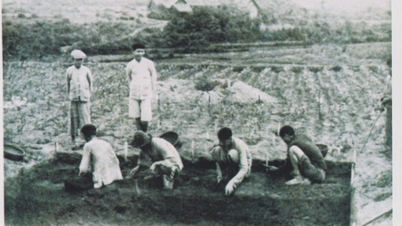
According to Professor Chu Hoang Ha, through the ODA project "Enhancing the capacity for identifying war remains through cooperation, technology transfer, and the acquisition of equipment, chemicals, and consumables," the Vietnam Academy of Science and Technology was assigned by the Prime Minister to be the focal agency for receiving and implementing the project. Scientists from the Academy not only successfully acquired the technology but also gradually mastered the entire technical process, from excavation, processing, and extraction of difficult bone samples to genetic data analysis and kinship matching according to international standards.

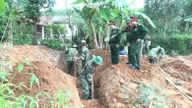
In 2025, the new DNA identification technology process (NGS-SNP) was applied at the Tra Linh Martyrs' Cemetery in Cao Bang province. The results showed that the new technology significantly improved the success rate of identification compared to previous processes; DNA extraction and SNP data were successfully obtained for 54 out of 58 samples, achieving a success rate of 93%. Based on the obtained data, matching was made with relatives from 14 families of martyrs, and DNA identification results were provided to two families of martyrs.
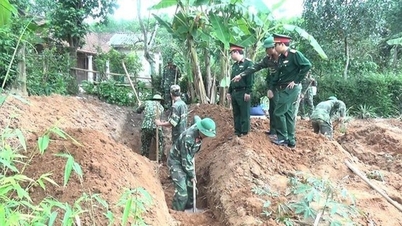
Based on these results, the larger-scale excavation and collection of biological samples from the remains of fallen soldiers at Giồng Riềng Martyrs' Cemetery is an important step in testing and evaluating the feasibility of deploying the next-generation DNA testing process on a large scale to identify the remains of fallen soldiers whose identities are still unknown.
Source: https://baotintuc.vn/thuc-hien-nghi-quyet-57/ung-dung-cong-nghe-adn-the-he-moi-xac-dinh-danh-tinh-liet-si-20260521142428463.htm















































![[Video] Sunset at Lap An Lagoon – Where the sun sets over the fishing nets](https://vphoto.vietnam.vn/thumb/1200x675/vietnam/resource/IMAGE/2026/05/31/1780192137701_beach-landscape-sea-water-nature-grass-745871-pxhere-com.jpeg)


































Comment (0)