

Back then, the fields were our world .
The first thing you see when you open your eyes is the rice paddies. You walk through the rice paddies to school. You herd buffalo in the rice paddies. On June afternoons, the barefoot, bareheaded children would crouch down catching crabs, and in the evenings they would excitedly scoop fish from the ditches. Our meager meals consisted only of boiled vegetables, pickled eggplant, and a bowl of crab soup, but laughter always filled the yard.
Back then, poverty was everywhere, but people seemed closer to one another. When someone got married, villagers would spontaneously bring chairs and trays to help. On summer nights, the whole village would spread mats in the yard to listen to the radio and current events, then share stories about the harvest and their children's studies. The village was poor, but it possessed an intangible asset that was incredibly rich: human kindness.
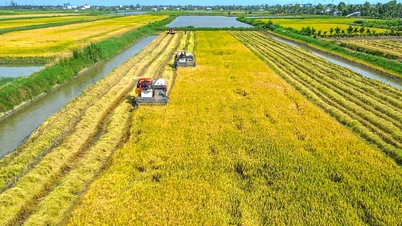
After the reforms, dirt roads were replaced with gravel and then concrete roads. Electricity reached the villages. Rice threshing machines replaced oxen and buffaloes. The first motorbikes appeared, captivating the children. Farmers began to learn about economics , trade, and travel beyond the village boundaries. At that time, my hometown had a movement to cultivate winter crops. Winter vegetables such as cabbage, tomatoes, kohlrabi, and lettuce became increasingly abundant. The farmers in my hometown began to have enough to eat and save, no longer sweating profusely just to make ends meet during the difficult months of March and August.
From dilapidated thatched houses, multi-story buildings have sprung up in the villages. Children who once went barefoot like us now have the opportunity to go to university, become engineers, doctors, and civil servants. Today, many villages in my hometown of Bac Ninh , which were once filled only with the sounds of frogs and toads, now have industrial zones, factories, and lights shining all night long. The reforms have opened doors for farmers to break free from the vicious cycle of "selling their faces to the earth and their backs to the sky." Instead of going to the fields in the morning, many people go to the factory in their uniforms.
But it was also from this point that the countryside began to change in ways many had never imagined. The fields of childhood gradually shrank. Where rice paddies once stood, urban areas, factories, or abandoned projects overgrown with weeds. Young people left their villages for the cities, either to work abroad or as laborers far from home. The countryside began to lack the sounds of children, and even the sounds of people.
There are villages that are so quiet during the day it's as if they're asleep. Only the elderly linger on their porches, waiting for phone calls from their children and grandchildren far away. Material poverty is gradually disappearing, but sometimes the spiritual loneliness is even greater than before.
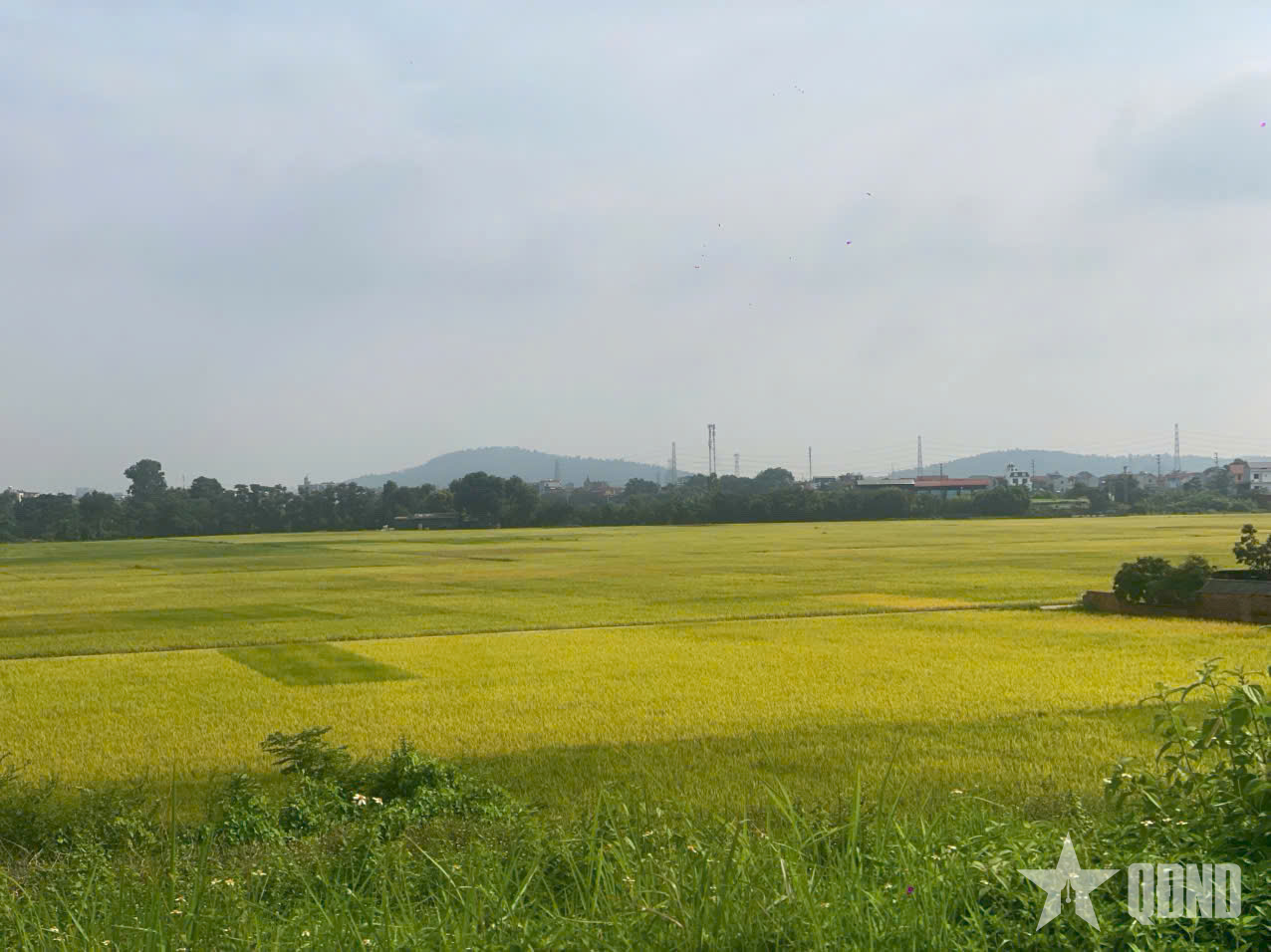 |
Rice fields ripening in May. Photo: THAO TRANG |
In the old days, people lacked food, but few locked their doors. Now, houses are bigger and more spacious, but many people live next to each other without knowing each other's names. Family meals are becoming less frequent. Those moonlit nights when the whole neighborhood would sit in the yard chatting are also disappearing, replaced by the blue light of smartphones.
Innovation brings convenience, but it also subtly changes the structure of Vietnamese villages, which were once considered the cradle of community spirit and communal culture.
I once met an old friend from my hometown. He pointed to the fields where they used to be and smiled sadly: "Nowadays, children probably don't know what the smell of freshly harvested straw is like anymore."
That statement haunted me for a long time.
Because every change has its price. When a society develops rapidly, it's often measured by the growth rate, by GDP figures, by the height of buildings, or the number of vehicles. But there are things lost that are not easily quantified: the calls of people in the fields, meals shared by three generations, or the feeling of a child growing up surrounded by the love of their entire village.
My village in Bac Ninh, like many places in Vietnam, is currently caught between two currents: on one side, the aspiration for modernization, and on the other, the fear of losing its cultural roots.
Farmers now use smartphones, sell goods online, and control rice transplanters with technology. But deep down, many still cherish the memory of a time of poverty that was nonetheless warm and simple—a time when people lived at a slower pace, were closer to each other, and shared more with one another.
The car sped along the wide road. Outside, the golden fields were receding behind the window. I suddenly realized that modernization had changed the face of the countryside and the souls of the people born from the mud. If the fields shrink, and agricultural production methods are no longer dominant but replaced by industrial and service production, then the very essence of the homeland will also change.
At that time, the memories of people living in the present will no longer be as pure and innocent as they were in our time. They will have different thoughts, different memories, and will no longer possess the same innocence and purity as before.
Source: https://www.qdnd.vn/van-hoa/van-hoc-nghe-thuat/cam-tac-mua-lua-chin-1041114



![[Image] Close-up view of the interchange connecting the two expressways and Long Thanh Airport.](https://vphoto.vietnam.vn/thumb/1200x675/vietnam/resource/IMAGE/2026/05/25/1779703378210_ndo_br_z7863716673926-224453a31600126cce10622af6290afd-4549-jpg.webp)
![[Image] Hanoi's urban life under the challenge of a "scorching hot" environment](https://vphoto.vietnam.vn/thumb/1200x675/vietnam/resource/IMAGE/2026/05/25/1779706979265_nang-nong-t5-2026-minh-duy-7-4636-jpg.webp)








































































Comment (0)