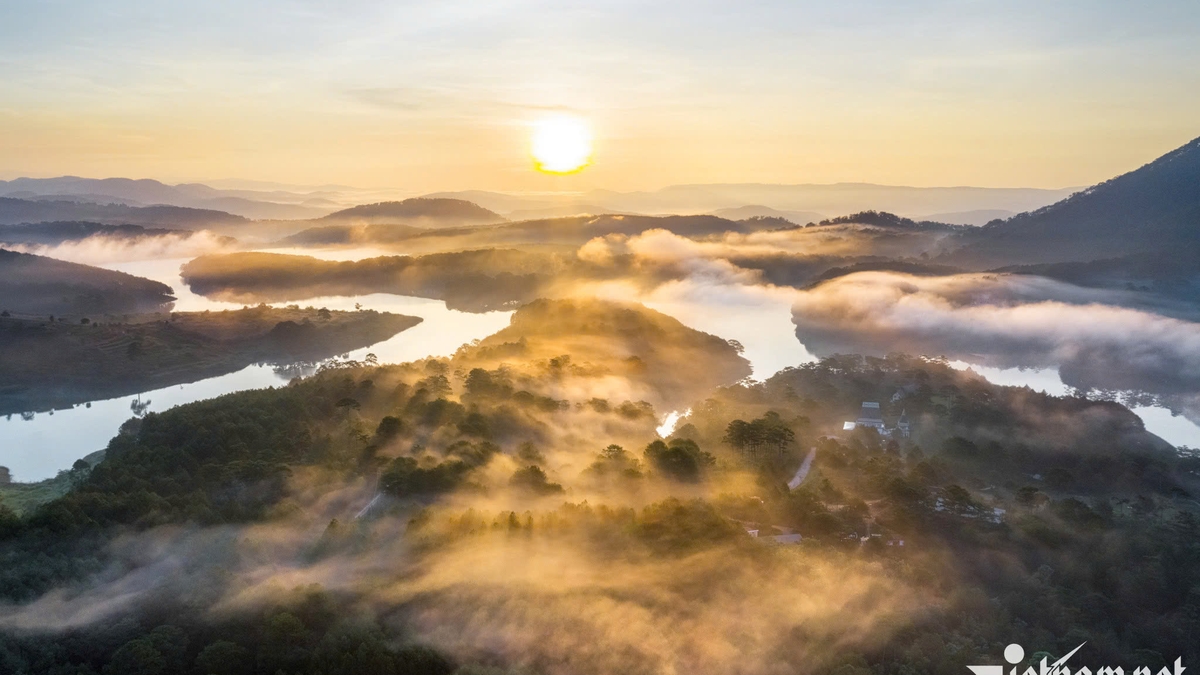
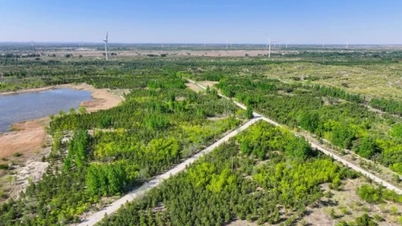
Ripe rice fields in Vinh Phong. Photo: PHAM HIEU
Back then, the rice harvest season wasn't just for adults; it was a special time in my childhood. When the rice fields began to turn yellow, my father would often say, "The harvest season is almost here." That simple phrase would immediately get the whole family busy. My father would prepare his sickle. My mother would mend the sacks for the rice and prepare the banana fiber ropes. And my four siblings and I would eagerly await the day we could go to the fields with our parents.
My family was struggling back then. Six mouths to feed depended solely on ten acres of rice paddies. Therefore, each rice harvest brought with it so much hope. The whole family just hoped for favorable weather, few pests and diseases, and no rats to destroy the crops so that we could have a good harvest. A successful rice crop not only brought joy but also provided the family with money to cover living expenses for many months afterward.
The harvest season started very early in the morning. At dawn, my father woke me up. The morning air was cool, and dew still clung to the leaves along the canal. We went by boat, my father pushing the pole along the ditch leading to the fields. The water was calm, a gentle breeze rustled, and my family chatted lively.
The ripening rice fields stretched before our eyes, a golden expanse extending to the horizon. The heavy, grain-laden rice stalks bowed their heads. The wind rippled the entire field like small waves. My father looked at the rice paddies and whispered, "This year will surely be a good harvest." All I saw was the field, beautiful as a vast painting.
Back then, harvesting rice was still primarily done by hand. My parents would hold small sickles, bending down to cut each rice stalk and gather them into bundles. My older brothers would tie the rice into neat bunches. I would help with odd jobs like gathering the rice or pulling the bundles closer. The work wasn't easy, but for a 10-year-old like me, it felt like an exciting experience in the vast rice fields.
As the sun rose higher, the fields became hotter. Beads of sweat rolled down my father's forehead, soaking into his sun-faded shirt. My mother occasionally stopped to wipe away the sweat before continuing to cut the rice. I sometimes sat and rested on the edge of the field, other times picking wild fruits. At that time, watching my parents and brothers diligently working in the golden rice paddies, I still didn't fully understand their hardship.


Around midday, the whole family would usually sit and rest under the shade of a tree by the ditch. Lunch was very simple, just leftover rice brought along with some braised fish, a few cucumbers, or a plate of boiled vegetables. But after a morning of working in the fields, that meal tasted unusually delicious. My father often joked that rice eaten in the fields always tasted better than at home. As I ate, I looked out at the golden rice fields in front of me, feeling strangely happy.
In the afternoon, as the wind began to subside and the sun softened, the rice harvesting resumed. Bundles of rice were transferred to the boat and neatly arranged in rows. The boat gradually filled with rice, and my father paddled it to higher ground, waiting for the threshing machine to arrive.
The rice harvest days were also the busiest time for my family. After threshing the rice, sacks of rice were carried back and stacked in front of the yard or behind the house. Sometimes, when the rice hadn't been sold yet, my father would set up a mosquito net and sleep next to the freshly harvested sacks. The old net was temporarily hung in a small patch of ground, next to the sacks of rice still smelling of straw. My father jokingly said that he had to "protect the treasure," because those sacks of rice represented months of hard work for the whole family.
Not every rice harvest goes as planned. Some years the rice is affected by pests and diseases, other years there are unusual storms that reduce yields. After selling the rice and deducting the costs of fertilizer, pesticides, and threshing machinery, there's hardly anything left. During those times, my parents would often sit quietly on the porch. Although a little sad, they didn't complain much. My father would gently say to my mother, "Next season we'll try to take better care of the fields, and if God is merciful, we'll have a better year."
Back then, I was too young to fully understand my parents' worries. Only when I grew up did I realize the immense hardship and hope behind those rice harvests. Each harvest was associated with my parents' simple wish: to have enough rice to eat, enough money for their children's education, and a slightly less difficult life.
After each day of harvesting, the yard would be covered with drying rice. My mother would use a rake to turn the rice over so it dried evenly, while we ran and jumped around the yard, sometimes playfully drawing small circles on the golden rice. In the evening, the whole family would sit on the porch, the cool breeze from the fields carrying the familiar scent of straw. My father would tell stories about the harvest, my mother would remind us that we had to go to the fields early the next day, and I would drift off to sleep, exhausted after a long day in the fields.
Time has passed, and many things in my hometown have changed. Combine harvesters have replaced the old sickles, making rice harvesting much faster. But whenever I see a field of ripe rice, I still remember the harvests of yesteryear, when my parents' shirts were soaked with sweat in the fields, when the small boat full of rice moved slowly along the canal, and when my father slept under a mosquito net next to the sacks of freshly harvested rice in front of our house.
My childhood was spent amidst those rice harvests. Those golden rice fields nourished my four siblings and me, nurturing the simple dreams of a family with only 10 acres of rice paddies for our livelihood. We were able to go to school and grow up under the hard work of our parents.

Although time has passed and many things in my hometown have changed, every time I see the ripening rice fields, I am reminded of the harvests of yesteryear. Those very fields nurtured my childhood and the childhoods of many other children from poor villages. Amidst the transformation of my homeland today, the rice fields remain a precious asset, the sweat and livelihood of countless farming families. For me, the golden color of ripe rice will always be the color of memories, of my homeland that I cherish.
NGUYEN KHANH
Source: https://baoangiang.com.vn/nho-mua-lua-chin-a479223.html