

 |
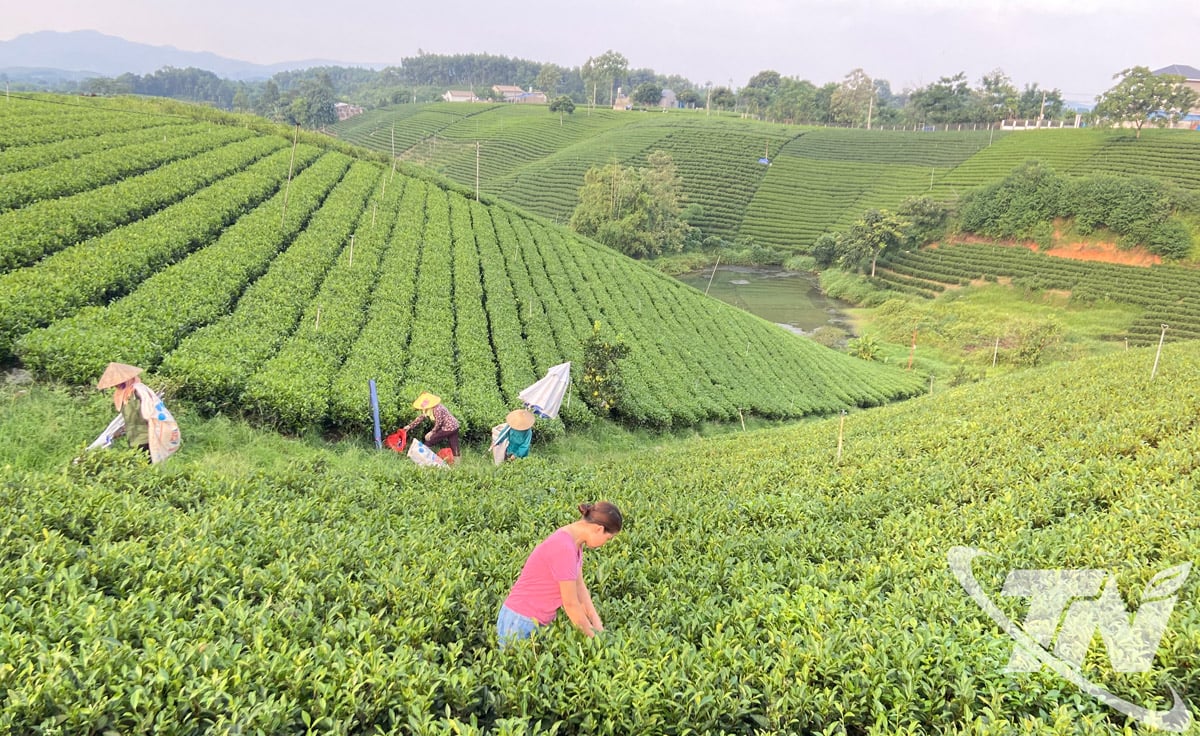
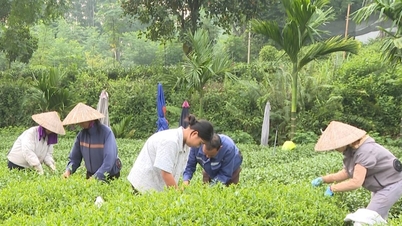
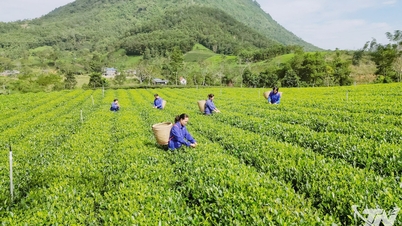
| People in Cau Da hamlet (La Bang commune) are harvesting tea. |
In line with the green production trend
Thai Nguyen currently has over 24,000 hectares of tea plantations, producing approximately 280,000 tons annually, accounting for over 18% of the total tea plantation area and over 24% of the total fresh tea leaf production nationwide. The value generated by tea cultivation reaches approximately 13.6 trillion VND per year. The average product value in some key tea-growing areas reaches 400 million VND/hectare/year. In addition, other areas in the province have lower selling prices, ranging from 200-300 million VND/hectare/year.
It can be seen that tea production is more efficient than some other crops, contributing to increasing the value of the product obtained per hectare of cultivated land in the province. However, the main market for Thai Nguyen tea remains domestic consumption.
To enhance the export value of tea, in the context of increasingly stringent international markets, globalization trends, and the strong demand for natural and organic beverages, the first step is to establish raw material areas that meet international standards.
Many businesses and cooperatives in the province have joined the green production movement by shifting from traditional to organic production.
As one of the pioneering organic tea producers in the province, the Khe Coc Safe Tea Cooperative, located in Vo Tranh commune, has now developed a raw material area of nearly 100 hectares, of which about 20 hectares have been certified organic. Mr. To Van Khiem, Director of the Cooperative, said: "Switching to organic farming is not just about changing techniques, but about changing the entire production mindset. We must strictly adhere to regulations prohibiting the use of inorganic pesticides and fertilizers before receiving certification."
Along with Khe Coc Safe Tea Cooperative, Tan Cuong Xanh Cooperative, Phuc Triu Cooperative, Thai Minh Tea Company, etc., are pioneering units applying organic farming processes, managing raw material areas using electronic logs, and controlling pesticide residues with rapid analysis equipment. From this pilot project, the province has identified this as a strategic direction, both protecting consumer health and increasing the value of the "First-Class Tea" product.
Accordingly, the province is strongly focusing on expanding the area of organic tea and VietGAP-certified tea, encouraging farmers to switch to farming methods that reduce chemical use, protect the ecosystem, and improve the quality of tea leaves.
The stated goal is to increase the proportion of concentrated production area adhering to VietGAP and organic standards, considering this a sustainable path to maintaining the Thai Nguyen tea brand in the domestic and export markets.
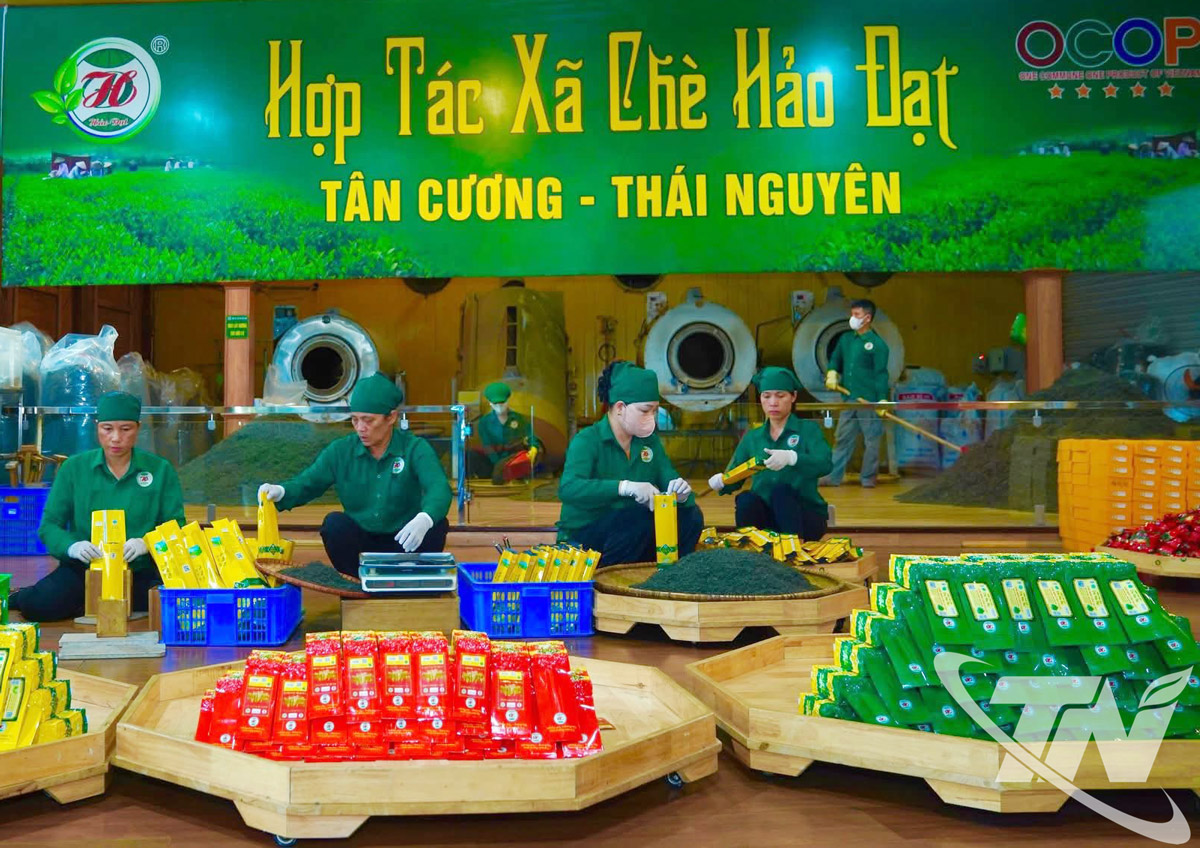 |
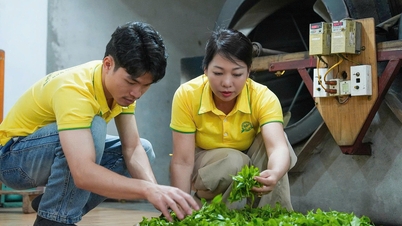
| Packaging of young shrimp tea leaves at Hao Dat Tea Cooperative. |
According to statistics from the Department of Agriculture and Environment, the area of tea plantations certified as organic in the province currently exceeds 80 hectares. This represents a significant shift in production mindset, not only improving the quality of tea leaves but also building the necessary credibility for the product to enter markets with high standards such as the EU, Japan, the US, and the Middle East.
Investing in deep processing
Currently, the value of the tea industry worldwide is shifting strongly towards convenient products with high technological content and wide applications. Tea bags, bottled beverages, matcha used in cuisine and cosmetics, EGCG extract, etc., are becoming popular consumer trends in Europe, North America, and East Asia.
To keep up with this trend, Thai Nguyen province has identified deep processing as a key step in enhancing product value and expanding foreign markets. Accordingly, the province has issued many policies to support tea processing. In particular, Resolution No. 11-NQ/TU for the period 2025–2030 clearly states the priority of investing in modern processing lines, traceability systems, and export promotion.
The Provincial People's Council also has policies to support the development of the tea industry, aiming to create favorable conditions for businesses to invest in deep processing. These policies create a "boost" for the entire tea-growing region to shift from selling raw materials to deep processing, increasing revenue for growers and processing facilities.
Currently, many businesses, cooperatives, and processing facilities in the area have shifted their investment towards modern drying, grinding, and packaging technologies to create convenient, value-added products such as matcha, essences, extracts, and premium packaged teas.
Tam Tra Viet Cooperative and several brands such as Tan Cuong Xanh have developed green tea powder products, applying a process of selecting young leaves, drying, finely grinding, and packaging that meets VietGAP/OCOP standards to serve the beverage and food markets. These units both preserve traditional processing techniques and combine fine grinding technology to produce matcha products with the distinctive flavor of Thai Nguyen.
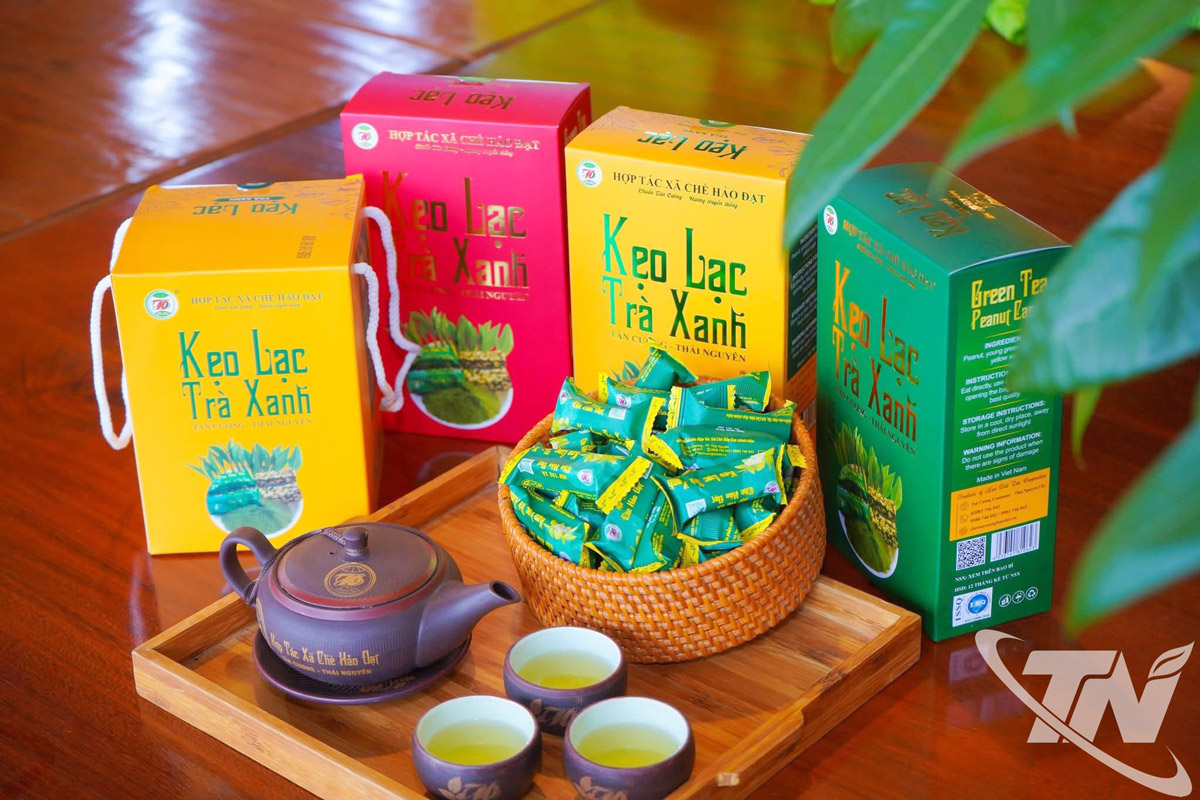 |
| Green tea peanut candy is one of many tea-based products made by Tan Cuong Xanh Cooperative. |
Several large-scale factories have reached sufficient capacity to supply both the domestic and export markets. In addition, many small cooperatives are developing OCOP, VietGAP, matcha, and other processed products for beverages and food. These are high-tech processed products that have initially achieved stable quality and are easy to sell.
Once a product is well-made, a brand becomes the "passport" for that product to enter the global market. Thai Nguyen province has been doing quite well in building, managing, and protecting intellectual property. In recent years, the province has implemented a comprehensive approach, from establishing geographical indications and developing collective and certification trademarks to supporting promotion, trade facilitation, and tourism development linked to tea culture.
Among these achievements, the most prominent is the Xinjiang Geographical Indication. Products bearing this geographical indication have been protected by the European Union (EU) under the EVFTA Agreement, becoming one of the few Vietnamese agricultural products to enter the most demanding market. In addition, Thai Nguyen currently has 10 collective trademarks that have been granted certificates by the Intellectual Property Office.
In addition, there are two certified trademarks: Phu Luong Tea and Vo Nhai Tea. Notably, the collective trademark "Thai Nguyen Tea" has been protected in six countries and territories. Alongside trademark protection, Thai Nguyen also focuses on modern marketing and sales promotion.
Over 154 tea products meeting OCOP 3-5 star standards have been connected to major e-commerce platforms such as C-ThaiNguyen, Vo So, Postmart, etc. Bringing tea to the digital space not only opens up new consumption channels but also serves as an effective promotional method, helping Thai Nguyen tea brands reach a wider range of customers both domestically and internationally.
Although direct exports are currently modest compared to their potential, reaching over 1,040 tons annually, with the proactive efforts of businesses, intellectual property protection for the product, combined with green production, deep processing, and trade and tourism promotion, it is certain that in the near future, a strong impetus will be created for Thai Nguyen tea to enter the world with its unique identity.
Source: https://baothainguyen.vn/kinh-te/202512/che-thai-va-khat-vong-vuon-xa-9d02628/

![[Photo] Reception to welcome General Secretary and President To Lam and his wife on their State visit to the Philippines](https://vphoto.vietnam.vn/thumb/1200x675/vietnam/resource/IMAGE/2026/06/01/1780295488620_vna-potal-chieu-dai-chao-mung-tong-bi-thu-chu-tich-nuoc-to-lam-va-phu-nhan-tham-cap-nha-nuoc-toi-philippines-8798060-7855-jpg.webp)



![[Photo] General Secretary and President To Lam and the President of the Philippines hold talks.](https://vphoto.vietnam.vn/thumb/1200x675/vietnam/resource/IMAGE/2026/06/01/1780286997787_anh-man-hinh-2026-06-01-luc-11-09-43.png)

































































Comment (0)