

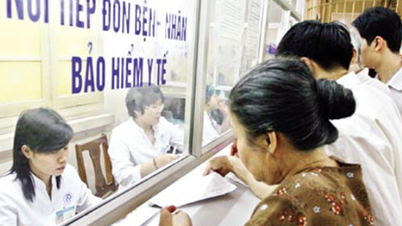
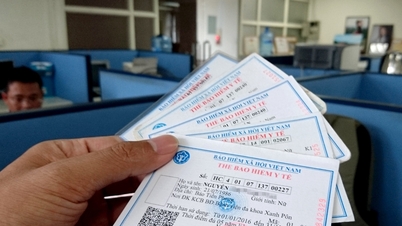
Accordingly, nationwide there were 40.4 million health insurance-covered medical examinations and treatments, an increase of 6.47% compared to the same period in 2023; with the amount paid by the health insurance fund being 30,974 billion VND, an increase of 14.9% compared to the same period in 2023. Notably, some medical facilities saw their medical examination and treatment expenses increase by more than 5-10 times compared to the same period last year.
According to estimates by the Vietnam Social Security, by June, the whole country had approximately 89.552 million visits for medical examinations and treatment covered by health insurance (an increase of 6.563 million visits, equivalent to 7.91% compared to the same period in 2023); with the amount of audited and paid exceeding 66.920 billion VND. Several provinces experienced significant increases in medical examination and treatment costs, such as Hanoi , Ho Chi Minh City, Thanh Hoa, Nghe An, Quang Binh, Da Nang, Dak Lak, and Can Tho… These are the units that account for a very large proportion of the total national health insurance medical examination and treatment costs.
According to the Vietnam Social Security (BHXH), the unusual increase in health insurance medical examination and treatment costs in the provinces is due to several reasons, including: a lack of genuine concern for this issue among BHXH leaders in some localities; poor coordination with the provincial health departments; and outdated, uncreative approaches. In addition, there is an excessively high rate of emergency and inpatient referrals at some medical facilities.
Handling alerts regarding high average cost increases.
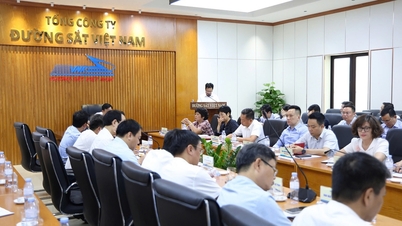
Given the significant increase in the use of health insurance medical examination and treatment costs nationwide in the first few months of the year, the Vietnam Social Security (BHXH VN) has issued numerous directives to provincial and city social security offices to strengthen control over health insurance medical examination and treatment costs.
Mr. Duong Tuan Duc, Director of the Health Insurance Assessment Center and the Multi-Route Payment Center (Vietnam Social Security), said that the unit has developed many tools to support cost control activities at local Social Security offices. The Center also organizes training for provincial and city Social Security offices on methods and skills for assessing unreasonable cost increases, management tools, and risk identification. These tools and solutions have been effective and are supporting the control of health insurance medical examination and treatment costs in accordance with regulations.
The leaders of Vietnam Social Security further informed that the agency has built and supplemented a comprehensive system for reporting indicators and requirements in accordance with Decree No. 75/2023 on guiding measures for implementing some articles of the Health Insurance Law.
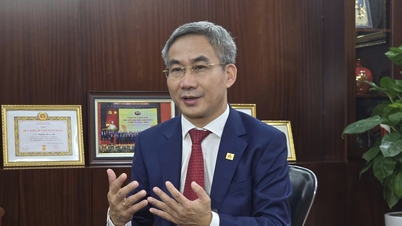
Accordingly, the situation regarding the use of health insurance medical examination and treatment costs in each province will be statistically detailed, covering inpatient treatment, laboratory tests, and diagnostic imaging; with assessments and comparisons with the national and regional levels; and identifying issues requiring focused inspection and review. "This is an effective and important tool that local Social Insurance directors need to access and utilize more effectively for management purposes; at the same time, it enhances the responsibility of provincial and city Social Insurance directors in resolving issues within their authority and clearly coordinating with the Department of Health for implementation," said Nguyen Duc Hoa, Deputy General Director of Vietnam Social Insurance.
Coordinate with the health sector to address the shortcomings.
Speaking to Thanh Nien newspaper, Mr. Nguyen Duc Hoa said that controlling health insurance medical examination and treatment costs aims to limit unnecessary and unreasonable prescriptions, prevent waste in the use of services, and prevent prolonged use of medication, contributing to focusing resources on treating patients, especially those with serious and chronic illnesses.
To ensure that health insurance medical examination and treatment costs are paid in accordance with the law, Mr. Hoa noted: "Local social insurance agencies need to proactively review and detect anomalies that are flagged on the inspection system and promptly send warning information to medical facilities about costs that are significantly higher than the average costs of medical facilities of the same category, level, and specialty; update and report the results of specialized inspections in accordance with regulations."
Mr. Hoa also suggested that provincial social insurance agencies need to coordinate closely with the health departments and medical facilities to share information and support each other in implementing health insurance-covered medical examinations and treatments; focusing on resolving unreasonable aspects in drug bidding, emergency prescriptions, tests, inpatient care, referrals, etc.
Source: https://thanhnien.vn/chi-phi-kham-chua-benh-tang-cao-18524070123482227.htm
![[Photo] General Secretary and President To Lam presides over a meeting with the Central Organizing Committee.](https://vphoto.vietnam.vn/thumb/1200x675/vietnam/resource/IMAGE/2026/06/03/1780482764658_a1-bnd-4741-3342-jpg.webp)


![[Photo] Secretary of the National Assembly Party Committee, Chairman of the National Assembly presides over the meeting of the Standing Committee and Executive Committee of the National Assembly Party Committee.](https://vphoto.vietnam.vn/thumb/1200x675/vietnam/resource/IMAGE/2026/06/03/1780480353201_ndo_br_bnd-2585-jpg.webp)
























































![[Video] Sunset at Lap An Lagoon – Where the sun sets over the fishing nets](https://vphoto.vietnam.vn/thumb/1200x675/vietnam/resource/IMAGE/2026/05/31/1780192137701_beach-landscape-sea-water-nature-grass-745871-pxhere-com.jpeg)






![[Photo] General Secretary and President To Lam attends the 14th Congress of the Vietnam Trade Union](https://vphoto.vietnam.vn/thumb/402x226/vietnam/resource/IMAGE/2026/06/04/1780543339765_anh-man-hinh-2026-06-04-luc-10-22-07.png)



























Comment (0)