Rice yields begin to reach saturation when nitrogen levels are around 70-100 kg/ha (data from the International Rice Research Institute - IRRI), but many farmers still apply 100-200 kg/ha. This means that while some fertilizer doesn't produce more rice grains, it still increases production costs and greenhouse gas emissions. Therefore, the challenge in rice production is no longer about reducing the amount of fertilizer, but about how to make each kilogram generate more value.
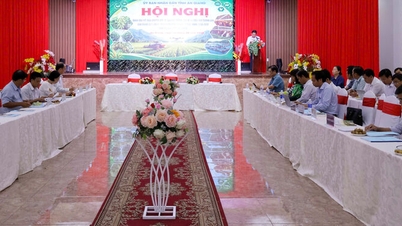
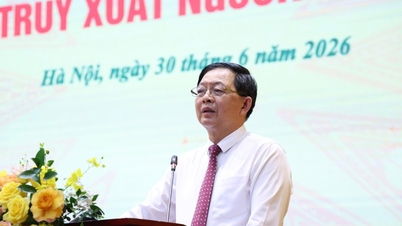
This was also the overarching message from the research and practical models implemented by IRRI in the Red River Delta within the framework of the "Proper Fertilizer Use" project, as presented at the seminar and exhibition on solutions for proper fertilization in high-efficiency, low-emission rice cultivation on June 30th.

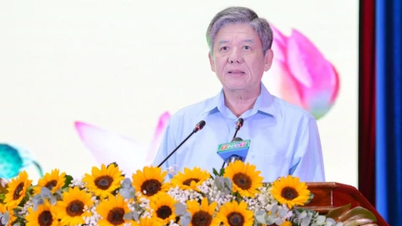
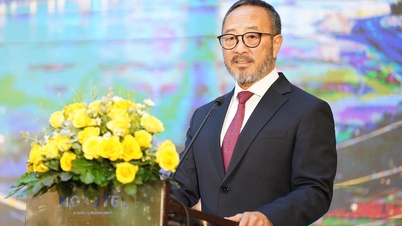
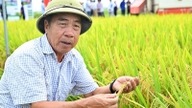
Associate Professor Dr. Nguyen Van Hung, senior expert at IRRI. Photo: Bao Thang.
Nutrient efficiency is more important than the amount of fertilizer.
According to Associate Professor Dr. Nguyen Van Hung, a senior expert at IRRI, a survey of over 10,000 rice-growing households in the Mekong Delta in 2024 showed that fertilizers accounted for approximately 30% of total farming costs. When fertilizer prices rise, this expense continues to be a major burden, even causing many farmers to lose their profit.
In the Red River Delta, the pressure is even greater due to rising labor costs. The cost of transplanting rice seedlings alone reaches approximately 180,000 VND per sao (Northern Vietnam), equivalent to nearly 10 million VND per hectare if including seedling preparation, transportation, and labor. Meanwhile, the traditional practice of transplanting rice seedlings is maintained because farmers are hesitant to sow directly in the cold spring season or during the rainy season, fearing that the seeds are easily washed away and the rice plants are prone to lodging.
Not only are fertilizer costs high, but there is also significant room for improvement in fertilizer efficiency. IRRI data shows that farmers currently use between 50-200 kg/ha of nitrogen. However, big data analysis shows that yields only increase up to around 70-100 kg of nitrogen/ha, after which they almost plateau. In other words, applying more fertilizer does not necessarily guarantee a higher rice yield, while costs, nutrient losses, and emissions continue to rise.
Mr. Hung analyzed that nutrient utilization efficiency does not depend solely on the amount of fertilizer but is also simultaneously affected by soil, variety, season, water management, seed quantity, and even straw disposal methods. Therefore, the mindset of "applying more fertilizer to be safe" needs to be replaced with data-driven nutrient management.
One of the cornerstones of this new approach is the creation of detailed soil-nutrient maps, down to individual 30x30 meter plots, using machine learning technology. The system integrates information on pH, organic matter, nitrogen, phosphorus, potassium, silicon, zinc, and soil mechanical properties to provide fertilizer recommendations tailored to specific regions, rather than applying a single formula to all fields.
In addition, IRRI is developing an integrated e-agricultural extension application that combines regional nutrient management, AI chatbots, and supply chain support tools, enabling farmers to access technical recommendations directly on their phones. The ultimate goal is to shift from experience to data-driven decision-making.

Ms. Luong Thi Kiem, Deputy Director of the Department of Agriculture and Environment of Hai Phong. Photo: Bao Thang.
Apply fertilizer to the right place instead of applying more.
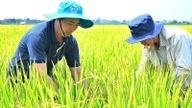
If data is the foundation of "proper fertilization," then sowing technology combined with fertilizer embedding is the solution to put that principle into practice.
Associate Professor Dr. Nguyen Van Hung shared that pneumatic seeders do not scatter seeds on the field surface like traditional methods, but instead bury the seeds about 1-2 mm deep, while simultaneously placing fertilizer at a depth of about 5-6 cm right under the root zone. As a result, the seeds are not washed away by rain, the roots access nutrients earlier, while fertilizer loss is reduced and plants absorb it more effectively.
The machine also creates wide and narrow rows, allowing light and oxygen to penetrate deep into the rice paddies, increasing photosynthesis, reducing pests and diseases, and minimizing lodging. Results in the Mekong Delta show that the amount of pesticides used can be reduced by 20-30% due to better ventilation in the fields.
In the spring of 2026, this technology was tested in Hung Yen, Hai Phong , and Ninh Binh – areas previously dominated by rice cultivation due to specific climatic conditions. Notably, the model not only replaced the transplanting process but also significantly reduced costs. Statistics from IRRI show that the cost of traditional transplanting is approximately 10 million VND/ha, while direct seeding combined with fertilization costs only about 1.5 million VND/ha.
Field results show that the effectiveness of "proper fertilization" lies not only in reducing fertilizer use but is also directly reflected in the economic benefits for rice farmers.

Mr. Nguyen Van Du, Director of Nam Cuong Cooperative (Ninh Binh). Photo: Bao Thang.
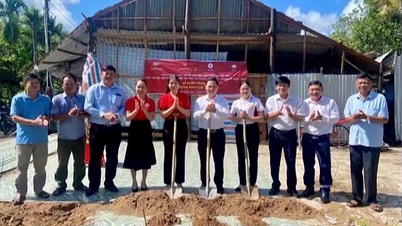
According to Mr. Nguyen Van Khien, Chairman of the Farmers' Association of Tan An commune (Hai Phong), previously, each plot of land typically used 15-16 kg of fertilizer, but with the model of sowing combined with burying fertilizer, the amount of fertilizer has been reduced to about 10 kg, equivalent to a reduction of nearly one-third.
Input costs decreased, while productivity remained at around 2.7-2.8 quintals of dry rice per sao (approximately 1000 square meters), higher than conventional production methods. According to him, profits increased by about 500,000 VND per sao, which is the basis for Huu Chung Cooperative's decision to expand the model area to nearly 10 hectares this harvest season.
While economic efficiency is the deciding factor for farmers, a shift in mindset is what determines the model's scalability. Mr. Nguyen Van Du, Director of Nam Cuong Cooperative (Ninh Binh), stated that what surprised farmers most wasn't the seeding machine itself, but the fact that they only needed to apply fertilizer once, using about 40% less than the traditional method, yet the rice plants still grew well. After one production season, many households, initially skeptical, proactively requested to expand the model.
According to Mr. Du, the cooperative not only wants to apply this method to other fields but also hopes to test this nutrient management technique on peanuts and potatoes - the two main crops of the locality - and hopes to have more training courses to help farmers change their farming practices.
"The results achieved did not come from a single technique, but from a synchronized combination of sowing combined with fertilization, alternating wet and dry irrigation, pest and disease management according to IPM, and utilizing post-harvest straw to produce organic fertilizer," commented Ms. Dong Thi Phuong, Head of the Hung Yen Department of Crop Production and Plant Protection.
According to her, the next step is no longer to prove the model's effectiveness, but to refine the process for each type of soil, each crop season, and the specific weather conditions of the Red River Delta so that it can be replicated on a large scale.

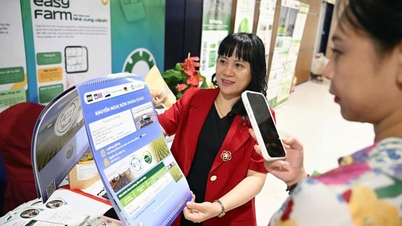
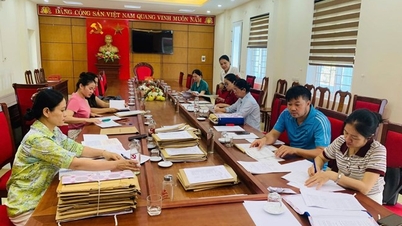
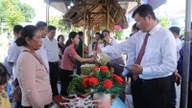
Ms. Vu Thi Lan Huong (in red shirt), Deputy Head of the Hai Phong Plant Protection and Crop Production Sub-Department, and delegates review the contents of IRRI's 'Recommendations for Proper Fertilization' handbook. Photo: Bao Thang.



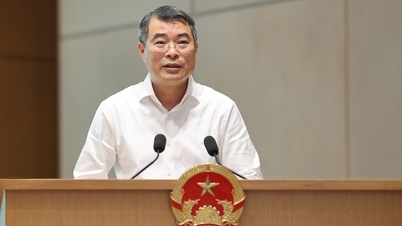
That is also the direction that Ms. Luong Thi Kiem, Deputy Director of the Department of Agriculture and Environment of Hai Phong, hopes for in the future, not only for the city but also for other localities in the North.
"Reducing emissions in rice production is not just about cutting greenhouse gases, but about innovating the entire process, from seeds, water management, nutrition to byproduct treatment and production organization," she emphasized. In this process, fertilizers are no longer simply inputs but have become a technological solution, where fertilization decisions are increasingly supported by data, mechanization, and scientific and technical knowledge.
From its initial models, "proper fertilization" is demonstrating a different approach to traditional rice production. Instead of viewing the amount of fertilizer used as a measure of investment, the focus shifts to improving the efficiency of each kilogram of nutrients delivered to the field. This also forms the basis for reducing production costs and gradually meeting the requirements of future low-emission agriculture.
In addition to demonstration models, IRRI and its partners introduced a handbook titled "Recommendations for Proper Fertilization" for rice production. Unlike previous general guidelines, each handbook is tailored to specific farming conditions, from cropping season, soil type, rice variety to target yield and sowing method.
The handbook outlines fertilization procedures for each growth stage, recommends fertilizer types, amounts per hectare, and timing of fertilization after sowing. The document also integrates comprehensive solutions such as using certified seeds, straw management, sowing combined with burying fertilizer, and encourages the use of drones for topdressing.
The new feature is that all recommendations are linked to IRRI's Right Fertilizer Management (RCM) application via QR code. Producers can access it on their computers or smartphones to update recommendations tailored to specific field conditions, instead of applying a fixed fertilization formula for all areas.
Source: https://nongnghiepmoitruong.vn/chi-phi-trong-lua-khong-nam-o-luong-phan-bon-d819190.html


![[Photo] Strengthening character and expertise: Intense training for artillery soldiers.](https://vphoto.vietnam.vn/thumb/1200x675/vietnam/resource/IMAGE/2026/06/30/1782815602541_lu-368-1875-4571-jpg.webp)