

On days with heavy rain and strong winds, when we couldn't go to work in the fields, my mother would gather us girls and sit on the rattan chairs at the front of the house sewing. My grandmother, wearing her reading glasses, would thread her needle, smiling toothlessly at the funny stories we children told. The rattan chairs creaked under the weight of our bodies, accompanied by our giggling laughter.
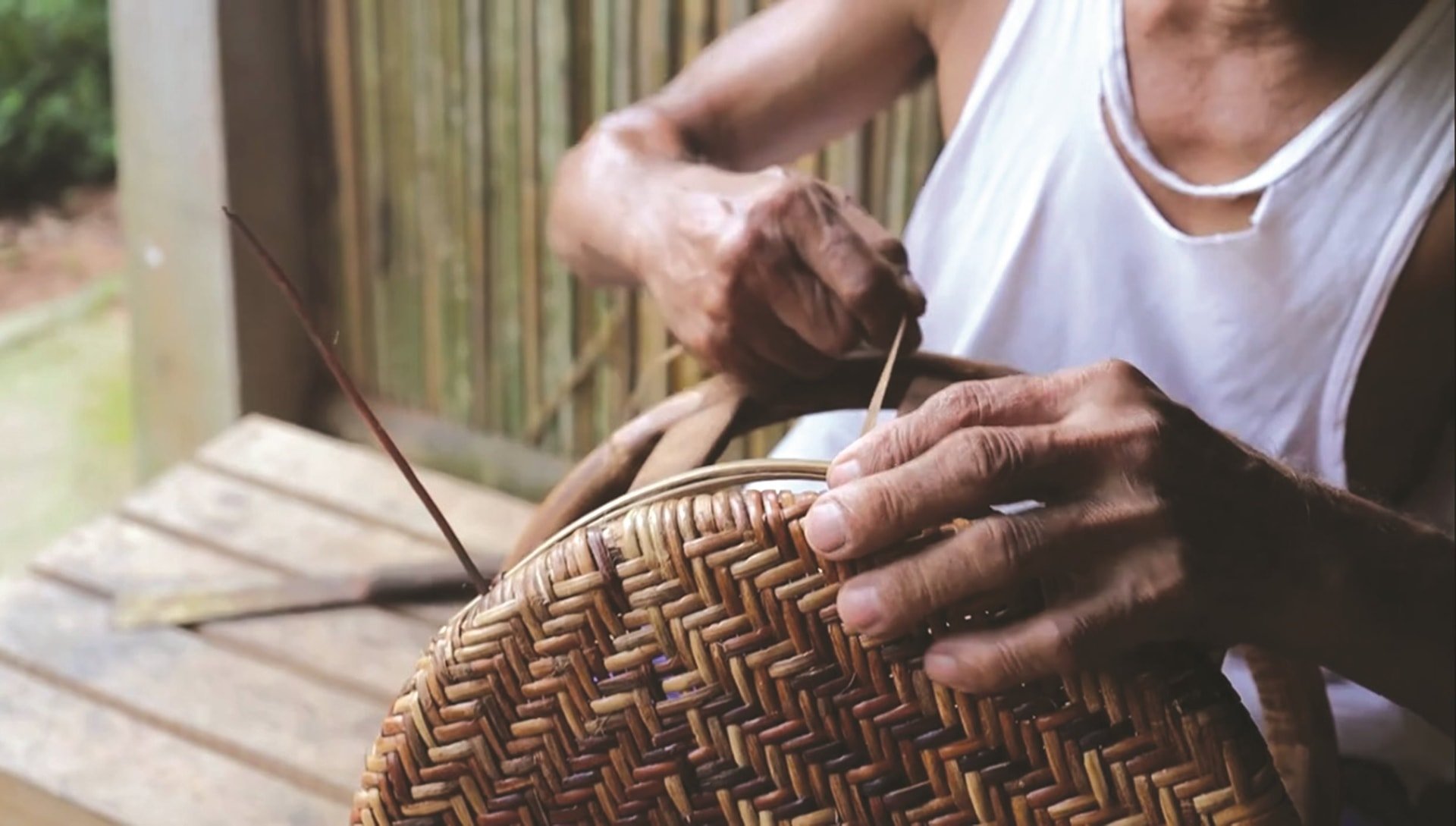
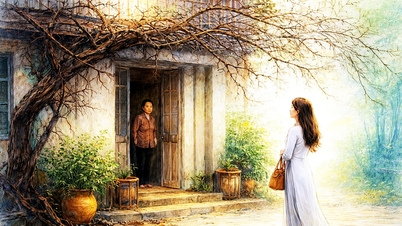
Illustrative image
The rattan chair has been with our Dao people for a long time. The chair has eight wooden legs, surrounded by two rings bent from rattan stalks. One ring is at the top, used to weave finely split rattan into the seat, and the other touches the ground. These two rings encircle the eight legs, making it beautiful and sturdy. A spiderweb pattern is woven on the underside of the seat, both supporting the surface and adding a touch of mysterious beauty.
The craft of making rattan chairs has been passed down in my family from generation to generation. My grandfather told us that the rattan chair is not only a useful household item that provides extra income to buy groceries, but it also holds a very deep meaning. The round base represents the grandparents, the eight wooden slats represent the grandsons and granddaughters, the circle at the top represents the parents, and the seat itself is the roof that shelters us from the rain and wind. The sturdy structure of the rattan chair is like the strong, close-knit family bond that no storm can break.
Ordinary rattan chairs are very durable; they last for more than ten years without breaking. My grandfather made one before I was born, and it's been used for almost thirty years. He said that once you've made rattan chairs, you can't give it up for life. The craft is intertwined with your life, and you, his children and grandchildren, should work hard to preserve it and not let it disappear. My father has continued my grandfather's craft for many years now.
During his leisure time, my father would go to the front yard and roll up a coil of rattan he had gathered from the forest to make rattan chairs. He would light a fire and throw the coil of rattan into it. After a while, he would bring the coil of rattan to a wooden post. My mother, understanding his intention, would hold one end of the rattan and stand behind him. My father would hold the strong, steel-like rattan and twist it into a circle around the wooden post, while my mother, standing behind him, would follow his twisting movements.
After wrapping the rattan, my parents would roll the wooden pole over the fire to burn the rattan again, bending it into the desired circular shapes before continuing with the next steps. I took on the task of weaving the seat because it was the simplest and most enjoyable part of making rattan chairs. My mother would use a very sharp knife to strip the rattan bark into long, thin strips, and I would quickly take the rattan strands and weave them tightly onto the frame my father had already prepared. Usually, when we girls talked about rattan, we only liked the clusters of ripe, brown rattan fruits with thin skins and a slightly sour, very fragrant flesh. The rattan plant has many thorns; when going to collect it, you have to wear boots and gloves carefully because if you accidentally get pricked by a thorn, it will be both painful and stinging. Rattan is very strange; it's rare to find one that grows at home, and usually, you have to go find it in the forest. The rattan leaves spread out, lush green, with a wild, mountain beauty.
Every time my father went to collect rattan vines, he would always bring back a bundle of rattan shoots. After peeling the outer layer, the shoots revealed a glossy white color. These shoots could be stir-fried with wild greens, stir-fried with meat, or grilled over charcoal and dipped in chili salt – they were delicious. Lately, my father has had to spend more time and go deeper into the forest to find rattan vines, and he no longer brings back the thorny shoots. He says he wants to let the rattan plants grow and consume all the vines, so where will they find the rattan for weaving and continuing the traditional craft?
I stacked the finished chairs, tied them together with rattan rope, and prepared to carry them to the market tomorrow to sell. In total, my father and I worked hard for two days and made twelve chairs. My father told me to sell them at the old price, not to raise it. I silently followed his instructions, even though I knew that with rising prices, selling a chair for 100,000 dong was a paltry sum. Well, I'll just make a profit from my labor, hoping that many more people will appreciate traditional products so that the rattan chair-making craft can survive.
I ran my hand over the smooth surface of the rattan chair, gazing intently at the pattern I had just created. I felt a sense of relief, a feeling of love, joy, and pride from ancient times flowing into me. I will continue the craft, carrying on the tradition from my father so that rattan chairs will accompany the people of the mountains as a unique cultural feature on their journeys.
According to Hanoi People's Magazine online
Source: https://baophutho.vn/chiec-ghe-may-cua-cha-226495.htm

![[Photo] General Secretary and President To Lam presides over a working session with the Central Policy and Strategy Committee on the development of the materials industry.](https://vphoto.vietnam.vn/thumb/1200x675/vietnam/resource/IMAGE/2026/05/21/1779359935432_a3-bnd-3129-1412-jpg.webp)



















































































Comment (0)